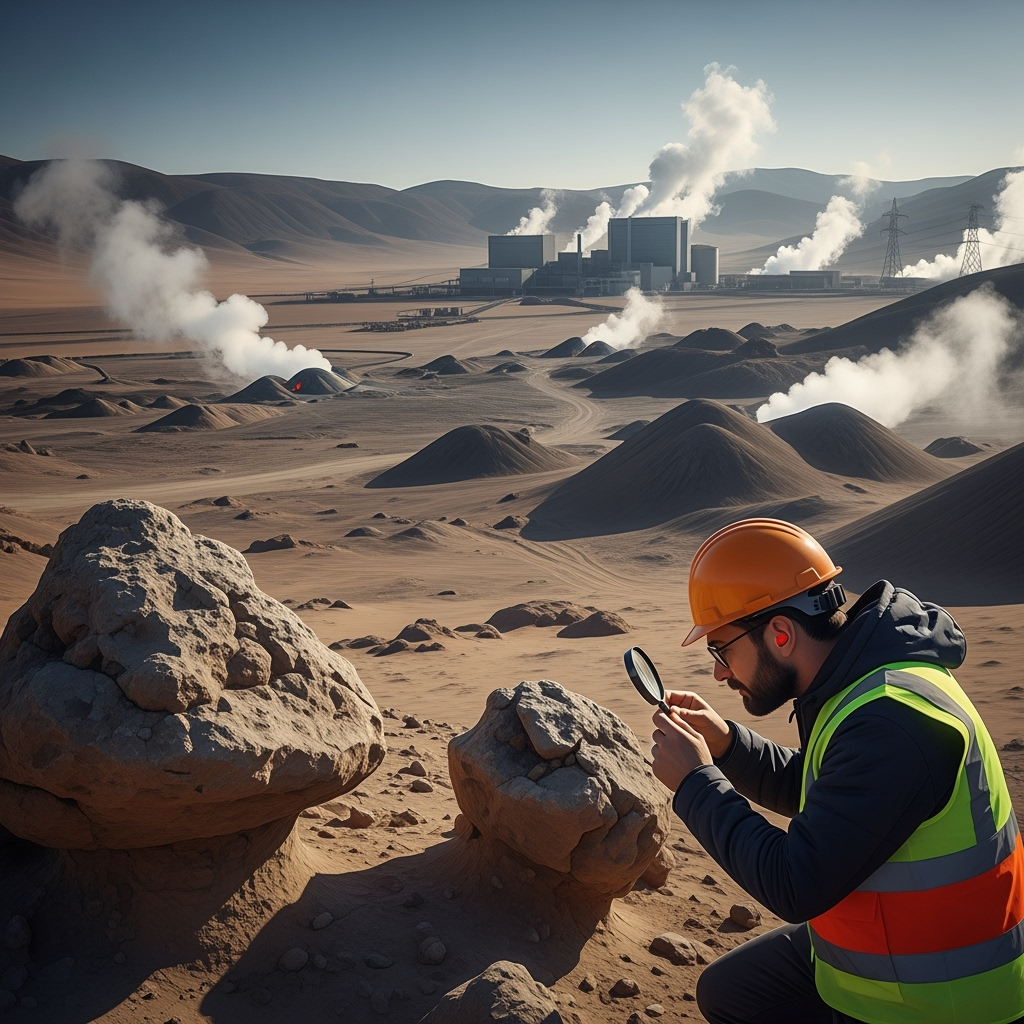
According to the specialized platform ‘Energy’, Saudi Arabia holds immense potential to transform underground reservoirs into sources for cooling, heating, and electricity. Efforts are underway to extract geothermal energy from relatively shallow depths, ranging between 150 and 200 meters, for use in commercial and industrial air conditioning systems. Experts in the field emphasize the need to expedite the necessary approvals for exploration and drilling to achieve Saudi Arabia’s goal of harnessing geothermal energy as part of its efforts to meet clean energy targets.
Geothermal energy relies on extracting steam or hot water from hydrothermal rocks to power turbines. It is a renewable, clean, and constantly available energy source but requires advanced technology and significant initial investment for installation, whether for simple heat pump systems or more complex power stations. Over the past decade, Indonesia, Kenya, and Turkey have led the world in terms of the volume of new geothermal energy established, according to the Carnegie Endowment for International Peace.
A research paper published by the Carnegie Foundation lists Saudi Arabia as one of the few countries with ‘notable long-term potential’, alongside Malaysia, Tanzania, and Argentina, as reported by the Arabian Gulf Business Insight platform. The authors of the research paper wrote, ‘The hot dry rocks in Saudi Arabia are mainly concentrated in the western parts of the country, strongly overlapping with major cities such as Jeddah, Medina, and Yanbu, which is an emerging industrial hub. Additional resources are also found near Riyadh.’
The Carnegie Foundation found that the absence of a dedicated regulatory system or support for geothermal energy restricts the growth of this sector in the country. However, Saudi Arabia’s globally renowned oil production and industry, increasing demand for data, and sovereign wealth funds all provide long-term prospects for diversification. Amar Al-Ali, CEO of the startup Strataphy, stated that simplifying permit procedures would contribute to the large-scale growth of the geothermal energy sector in Saudi Arabia, according to the Arabian Gulf Business Insight platform.
Al-Ali noted that collaboration with Saudi national entities has been ‘extremely fruitful’; however, obtaining multiple permits may be necessary before drilling can commence, depending on the project’s location and the supervising local authorities. He said, ‘We don’t need incentives, nor financial support; all we need is to ease the process of obtaining permits,’ pointing out that the economics of direct use geothermal energy are already competitive compared to other cooling mechanisms.
According to details from the specialized energy platform, harnessing geothermal energy resources for electricity generation is more complex, requiring drilling at least 500-1000 meters underground, and is still under study along the Red Sea coast in Saudi Arabia. Assistant Professor Esra Abu Mafhouz from King Fahd University of Petroleum and Minerals stated that some of the most prominent geothermal prospects could be found in areas surrounding Al Lith and Jazan, at the southwestern tip of Saudi Arabia.
In statements reported by the Arabian Gulf Business Insight platform, she explained that her team has had positive interactions with the government and industry sector and is working to secure approvals and the necessary capital to begin experimental drilling specifically in Al Lith, where research is at its peak. Abu Mafhouz pointed out that the launch of the geothermal energy sector in Saudi Arabia has been slow since energy infrastructure, financing, and regulatory frameworks have traditionally focused on oil exploration. She added, ‘This will be the first project anywhere, and we aim to succeed. That’s why everyone is moving a bit slowly. It must be done precisely.’
Geothermal energy projects have been launched in Saudi Arabia in recent times, with Nabaa Al-Sahha Medical Services Hospital partnering in July 2025 with Strataphy to deploy advanced geothermal cooling systems in its new hospital complex under construction in Riyadh. Saudi Arabia has more than 2,300 healthcare facilities across the kingdom. Each facility requires an average of 1.5 megawatts of thermal cooling capacity, representing a total thermal demand for the national healthcare sector of about 3.45 gigawatts thermal, putting immense pressure on the power grid and creating a good opportunity for cleaner and more efficient solutions.