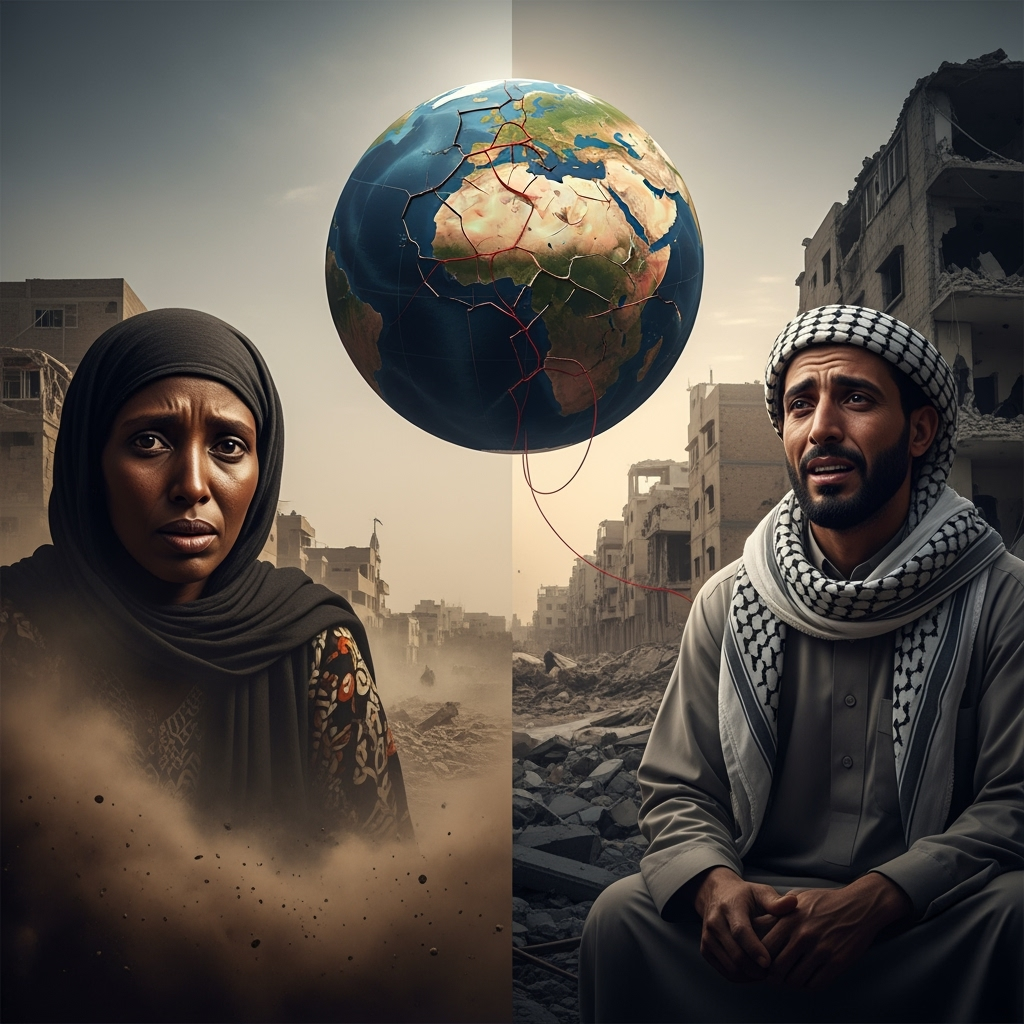
The conflicts in Sudan and Gaza have highlighted the breakdown of global conflict resolution mechanisms, Arab leaders have cautioned.
This was discussed during a high-level panel at the Hili Forum for Geostrategic Dialogue in Abu Dhabi.
Cease the Conflict
Abdalla Hamdok, Sudan’s former prime minister, described Sudan as the largest humanitarian disaster globally and criticized the international community for abandoning solutions.
“Sudan is currently the world’s most severe humanitarian crisis. However, there is no resolution. At the heart of this geopolitical upheaval, global political discourse has shifted from resolving conflicts to merely containing them.”
Stay informed with the latest updates. Follow KT on WhatsApp Channels.
Hamdok noted that institutions once central to resolving wars are now ineffective. “Previously, the United Nations had key mechanisms to tackle these crises. Today, they have vanished entirely, and each conflict is addressed in isolation, without interconnection.”
He cautioned that Sudan’s crisis should not be simplified as a personal power struggle. “For too long, it’s been seen as a power struggle between two generals, ignoring the complex political, economic, and social dimensions.”
His focus was on ending the war and securing humanitarian aid. “The priority is to end the war — a ceasefire means stopping the guns, delivering aid, and ensuring international oversight.”
Gaza: A Pivotal Moment
Hoshyar Zebari, Iraq’s former foreign minister, described the Gaza conflict as a pivotal moment for the region and international law’s credibility. “The October 7 events and subsequent developments in Gaza marked a turning point, exposing double standards and the fragility of the international system.”
Zebari warned that the broader Middle East is again embroiled in conflict. “Unfortunately, the region has returned to conflict — Iraq, Syria, Yemen, Libya, Palestine.”
He emphasized that the unresolved Palestinian issue remains central to regional instability. “The Palestinian issue is the root of instability. Without a fair resolution, stability is unattainable.”
Leadership Void
The Iraqi politician highlighted a decline in US leadership as a source of instability. “The absence of American leadership has left a vacuum filled by militias, regional powers, and non-state actors, leading to a new situation.” He noted that the global system has shifted from building peace to managing crises. “We once spoke of peace initiatives and accords. Now, it’s just crisis management — an unsustainable approach.”
State Fragility
Bisher Al Khasawneh, Jordanian Senate Member and former Prime Minister, emphasized the importance of the nation-state. “The nation-state is the only defense against fragmentation. Without it, we face chaos and division.”
He stressed restoring governance legitimacy to prevent further collapse. “Rebuilding political legitimacy is essential. We cannot continue with sectarian quotas in governance, as seen in Iraq, Lebanon, Libya, and Sudan.”