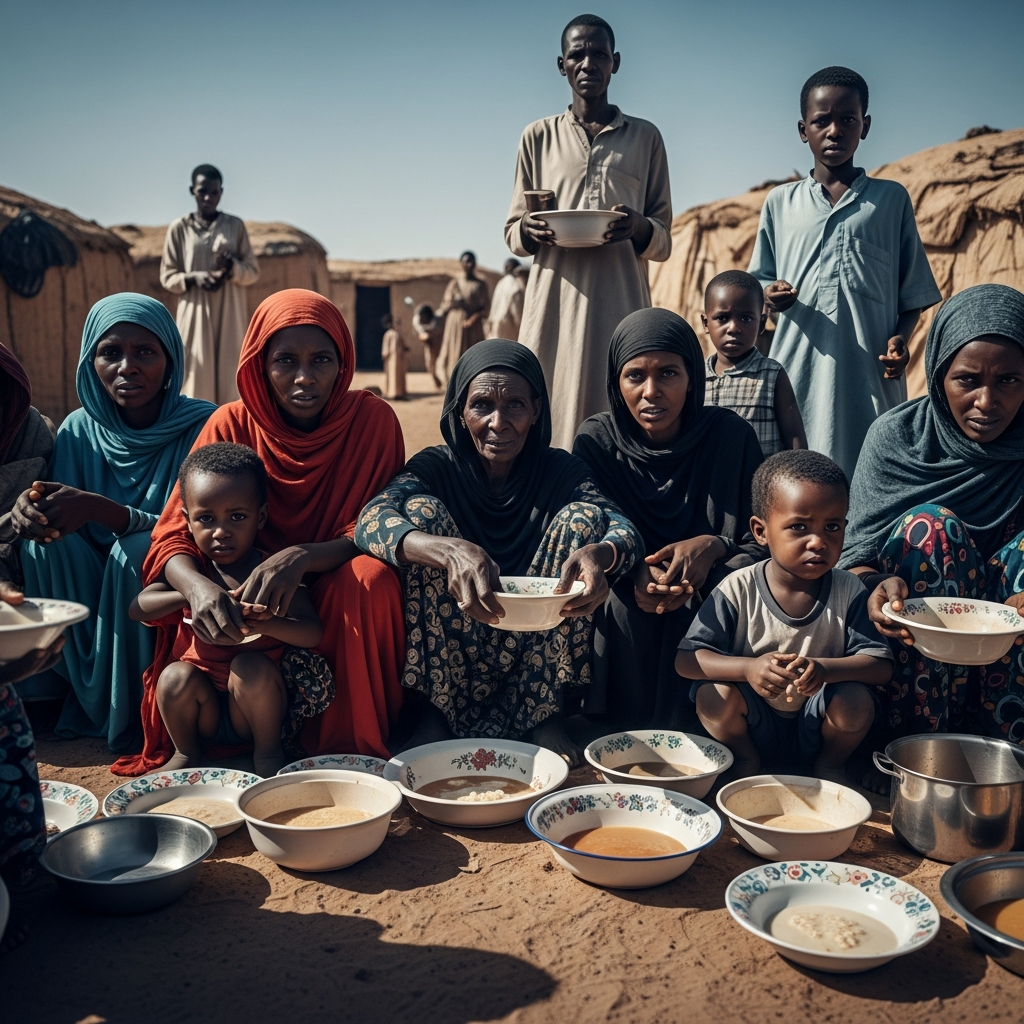
Ross Smith, the Director of Emergency Preparedness and Response at the World Food Programme, stated during a press conference in Geneva via video from Rome: “Starting from January, we will have to reduce the food rations to 70% for communities already suffering, and to 50% for those at risk of falling into hardship,” according to Western media reports.
The decision comes at a time when the humanitarian crisis is considered the worst globally, as described by the United Nations, due to the ongoing war since April 2023 between the Sudanese army and the Rapid Support Forces.
The UN program warns that the continued lack of funding will exacerbate the humanitarian disaster threatening the lives of millions of Sudanese.
In April 2023, intense and widespread clashes erupted between the Sudanese army and the Rapid Support Forces in various parts of Sudan, with both parties attempting to control vital locations.
Disputes between the Chairman of the Sovereign Council, leader of the Sudanese Armed Forces, Abdel Fattah al-Burhan, and the leader of the Rapid Support Forces, Mohamed Hamdan Dagalo, came to public attention after the signing of the “Framework Agreement” for the transitional period between the military component, which includes the Rapid Support Forces, that agreed to the army’s withdrawal from politics and the transfer of power to civilians.
Dagalo accused the Sudanese army of “planning to remain in power and not handing over authority to civilians” following the army’s demands to integrate the Rapid Support Forces under the armed forces, while the army considered Dagalo’s moves as “a rebellion against the state.”
The war has resulted in the death of tens of thousands and the displacement of about 13 million people, some of whom have fled to neighboring countries, and has caused a humanitarian crisis considered one of the worst in the world, according to the United Nations and the African Union.