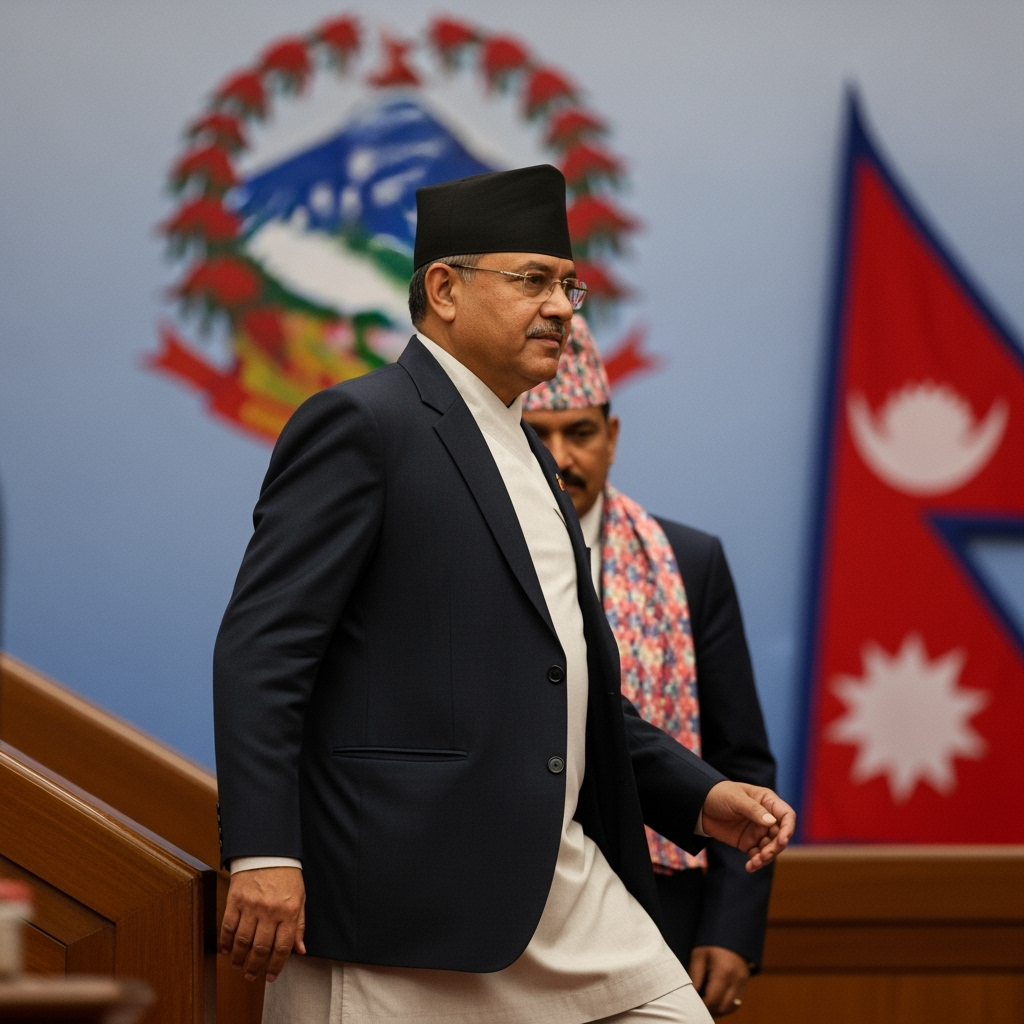
Nepal’s new interim prime minister pledged on Sunday to address the protesters’ demands to “end corruption,” following the ousting of her predecessor by “Gen Z” youth demonstrations.
Sushila Karki, a 73-year-old former chief justice, is now responsible for restoring order and meeting the protesters’ aspirations for a corruption-free future, with elections slated in six months.
The protests, which erupted on Monday due to a social media ban, quickly intensified, leading to arson at government buildings and reflecting Nepal’s ongoing economic struggles.
“We must align with the Gen Z mindset,” Karki stated in her first public address since assuming office on Friday.
The World Bank reports that 20% of Nepal’s youth aged 15-24 are unemployed, with a GDP per capita of merely $1,447.
“This group demands an end to corruption, better governance, and economic equality,” she added. “We must commit to achieving these goals.”
‘From the streets’
Karki observed a moment of silence on Sunday for those who died during the unrest before starting meetings in the Singha Durbar government complex, where several buildings were burned during Tuesday’s mass protests.
According to the government’s chief secretary, Eaknarayan Aryal, at least 72 people died and 191 were injured in two days of protests, revising an earlier count of 51.
This was the most severe unrest since the end of a ten-year civil war and the monarchy’s abolition in 2008.
Karki’s appointment, noted for her independence, resulted from intense negotiations involving army chief General Ashok Raj Sigdel and President Ram Chandra Paudel, along with “Gen Z” representatives, the youth protest movement’s collective name.
Thousands of young activists used the Discord app to nominate Karki as their leader of choice.
“I didn’t seek this position. My name emerged from the streets,” Karki remarked.
Parliament has been dissolved, and elections are set for March 5, 2026.
“We will not extend our term beyond six months under any circumstances. We are committed to fulfilling our duties and transitioning power to the next parliament and ministers,” she declared in a national address.
‘Challenging times’
Workers installed a new sign for the prime minister’s office in a building within the complex that was spared from arson.
Paudel, who swore Karki into office, announced late Saturday that a “peaceful solution has been reached through a challenging process.”
He described it as a “very difficult, intricate, and critical situation” in the Himalayan nation of 30 million people.
“I earnestly urge everyone to capitalize on this opportunity to ensure the success of the March 5 election,” he said.
Military presence on the streets has decreased, following their deployment in large numbers post-protests.
However, over 12,500 prisoners who escaped during the chaos remain at large, posing significant security challenges.
Regional leaders, including Nepal’s neighboring giants India and China, have congratulated Karki.
Prime Minister Narendra Modi expressed New Delhi’s support for “peace, progress, and prosperity” in Hindu-majority Nepal, while China’s foreign ministry expressed a desire to “advance China-Nepal relations steadily.”
Buddhism, the second-largest religion in the country, saw the Dalai Lama, the exiled Tibetan spiritual leader, wish Karki “success in meeting the hopes and aspirations of Nepal’s people during these challenging times.”