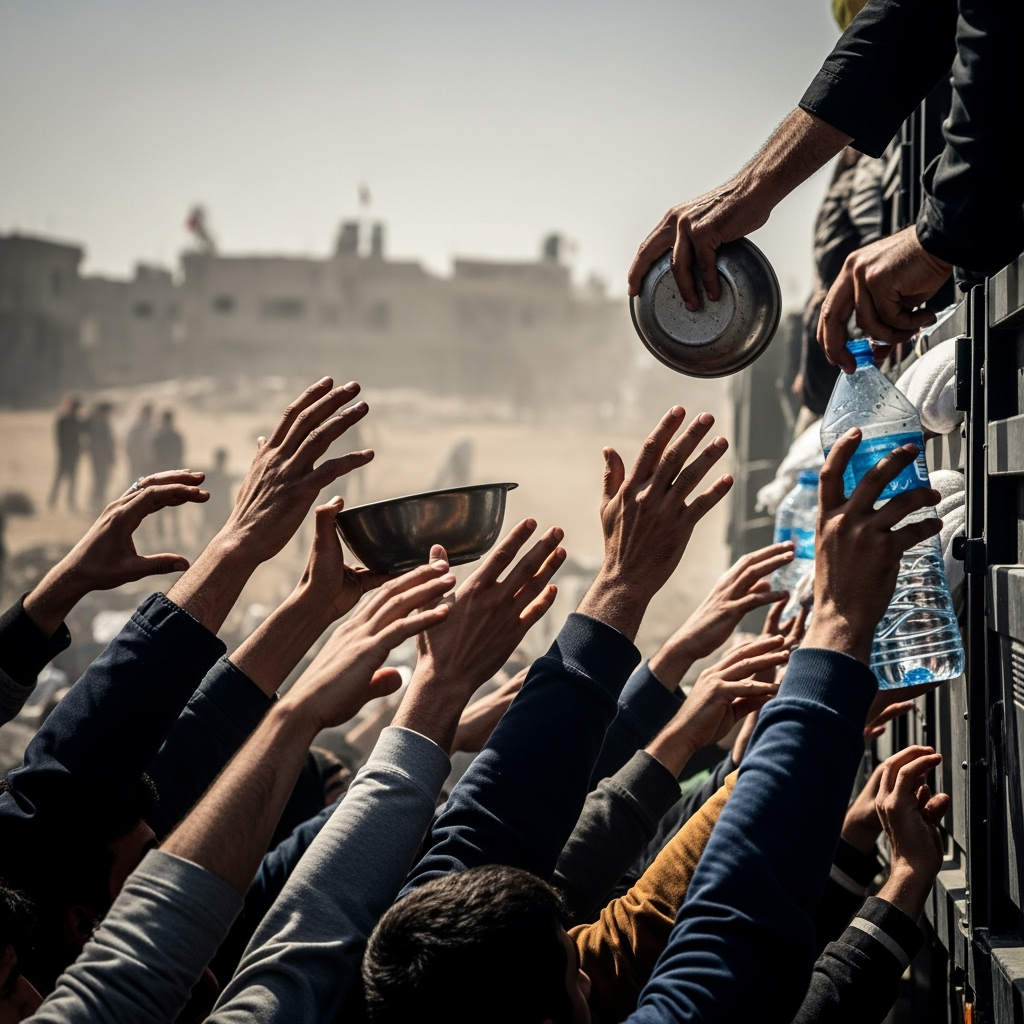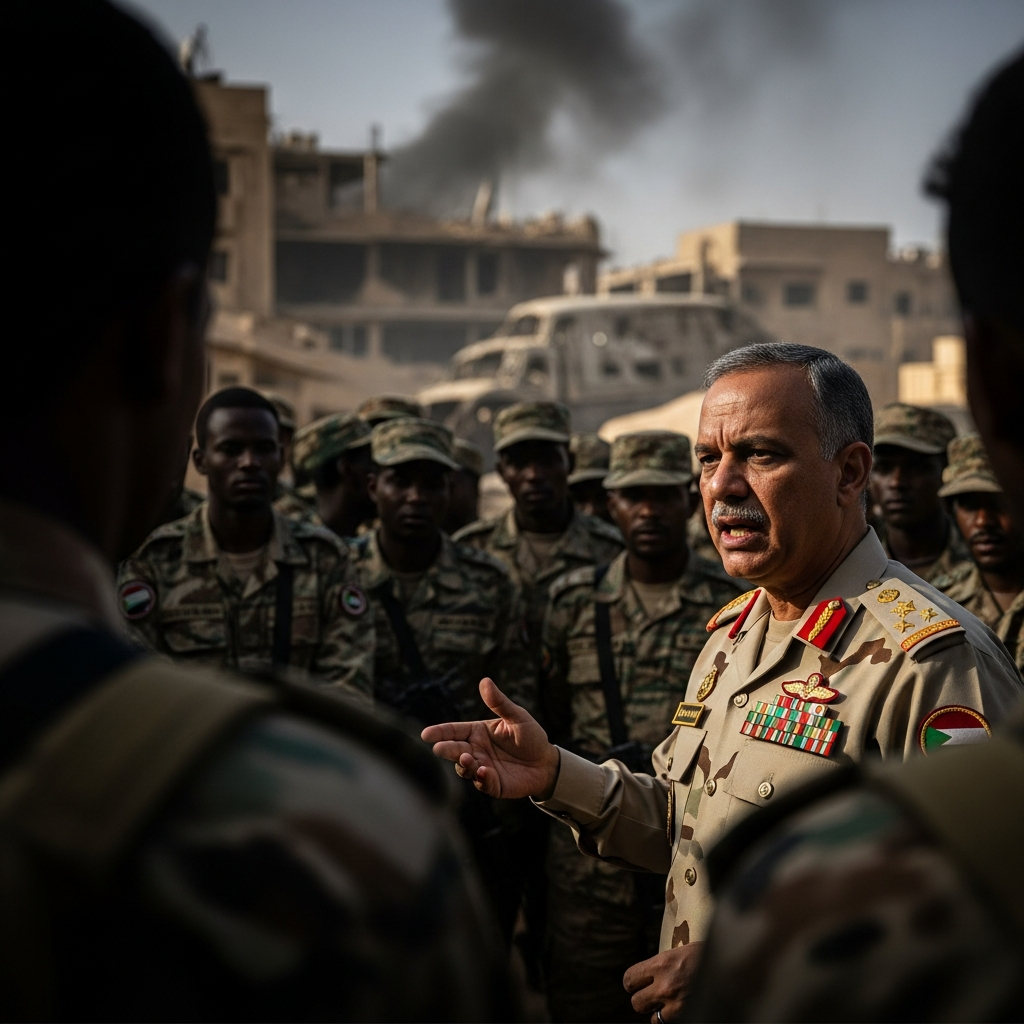
The Sudanese army clarified in a statement that “the Rapid Support Forces continued to attack the city of Babnousa despite announcing a truce they described as a ‘misleading political and media maneuver aimed at deceiving regional and international public opinion and covering up their field movements and the influx of external support.'” The army confirmed that “the announcement of the rebellion’s truce is merely a cover for military movements that it said exacerbate the humanitarian crisis in the country,” emphasizing that it will not allow the exploitation of the humanitarian situation in any military activities or movements that threaten civilians and complicate the humanitarian scene.
The statement added that “the recent attack was a continuation of the Rapid Support Forces’ attempts to breach the truce they declared themselves,” asserting that the armed forces “dealt with the attack firmly in defense of the city and its residents.” The Sudanese army reiterated its commitment to protecting civilians and continuing its operations to thwart any military movements aimed at destabilizing security and stability in conflict areas.
The Chairman of the Transitional Sovereignty Council and Commander-in-Chief of the Sudanese Armed Forces, General Abdel Fattah al-Burhan, stressed on Monday the need to “reformulate the Sudanese state on true foundations.” Al-Burhan stated that his country “will not accept any solution that does not dismantle the Rapid Support Forces and disarm them,” emphasizing that “there is a special suffering and tragedy in El Fasher.” He added that “the only solution in Sudan is the end of militias,” pointing out that all Sudanese have tasted the bitterness of war, and called on any Sudanese capable of bearing arms to join us in fighting the militia.
In April 2023, intense and widespread clashes erupted between the Sudanese army and the Rapid Support Forces in various parts of Sudan, with each side trying to control vital sites. Disputes between the Chairman of the Sovereignty Council and Commander of the Sudanese Armed Forces Abdel Fattah al-Burhan and the Commander of the Rapid Support Forces Mohamed Hamdan Dagalo surfaced publicly after the signing of the “framework agreement” establishing the transitional period between the military component, which includes the army and Rapid Support Forces, that agreed on the army’s exit from politics and the transfer of power to civilians.
Dagalo accused the Sudanese army of “planning to remain in power and not handing over authority to civilians,” after the army’s demands to integrate the Rapid Support Forces under the banner of the armed forces, while the army considered the movements of the Rapid Support Forces as “a rebellion against the state.” The war resulted in the deaths of tens of thousands and the displacement of about 13 million people, some to neighboring countries, causing a humanitarian crisis considered one of the worst in the world, according to the United Nations and the African Union.