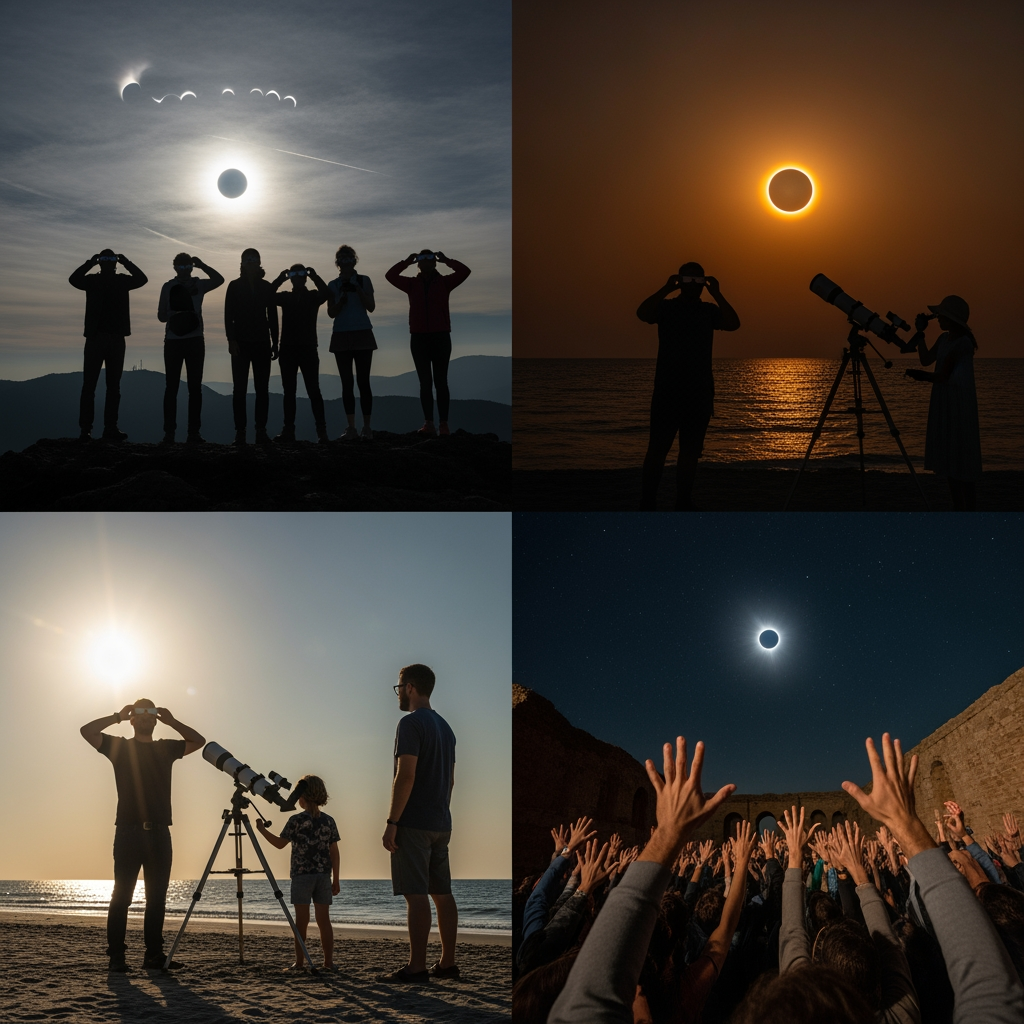
This rare moment, which once instilled awe in the ancients, has now become the goal of tens of thousands of travelers worldwide who chase the ‘shadow of the moon’ wherever it appears, in a phenomenon now known as eclipse tourism. On April 8, 2024, I sat on a green hill in the town of Imperial, Missouri, USA, wearing my special solar glasses, eagerly watching the moon’s approach. Gradually, the light faded, the air cooled, and the birds fell silent, until a mysterious darkness prevailed for a few minutes, though it felt like an eternity. When the shadow lifted, I felt changed. This personal experience is not an exception but part of a growing global passion that has made following a total solar eclipse a unique journey combining science, adventure, and contemplation of the universe’s grandeur. For thousands of years, ancient peoples observed it as a mysterious omen, but with the advancement of science, this phenomenon has become a scientific and tourist event attracting visitors from everywhere. Historians point to the 1970 eclipse that crossed the eastern coast of the United States as reviving global interest in this phenomenon, which led to the first eclipse-chasing trips at sea. Today, the eclipse tourism industry is estimated to be worth billions of dollars annually. NASA announced that over 300,000 people participated in activities dedicated to observing the eclipse in North America in 2024, while special tour programs sell out within days of being offered. Astronomer Martin Griffith notes that the growing interest in eclipses post-COVID-19 is linked to people’s need to reconnect with nature and the sky after years of isolation. Astronomy enthusiasts will have a date with a total solar eclipse on August 12, 2026, passing over Greenland, Iceland, and northern Spain. However, the greatest opportunity will come just a year later, on August 2, 2027, when the world will witness the longest solar eclipse of the 21st century — lasting more than six minutes and stretching across southern Spain, North Africa, and the Middle East. Astronomers say that once someone sees a total solar eclipse, they are always searching for it. The scene is not just a temporary disappearance of the sun but a rare sensory and spiritual experience. Griffith sums up the experience by saying, ‘If you have never witnessed a solar eclipse before, don’t miss the opportunity. It is a moment that will stay with you for a lifetime.’