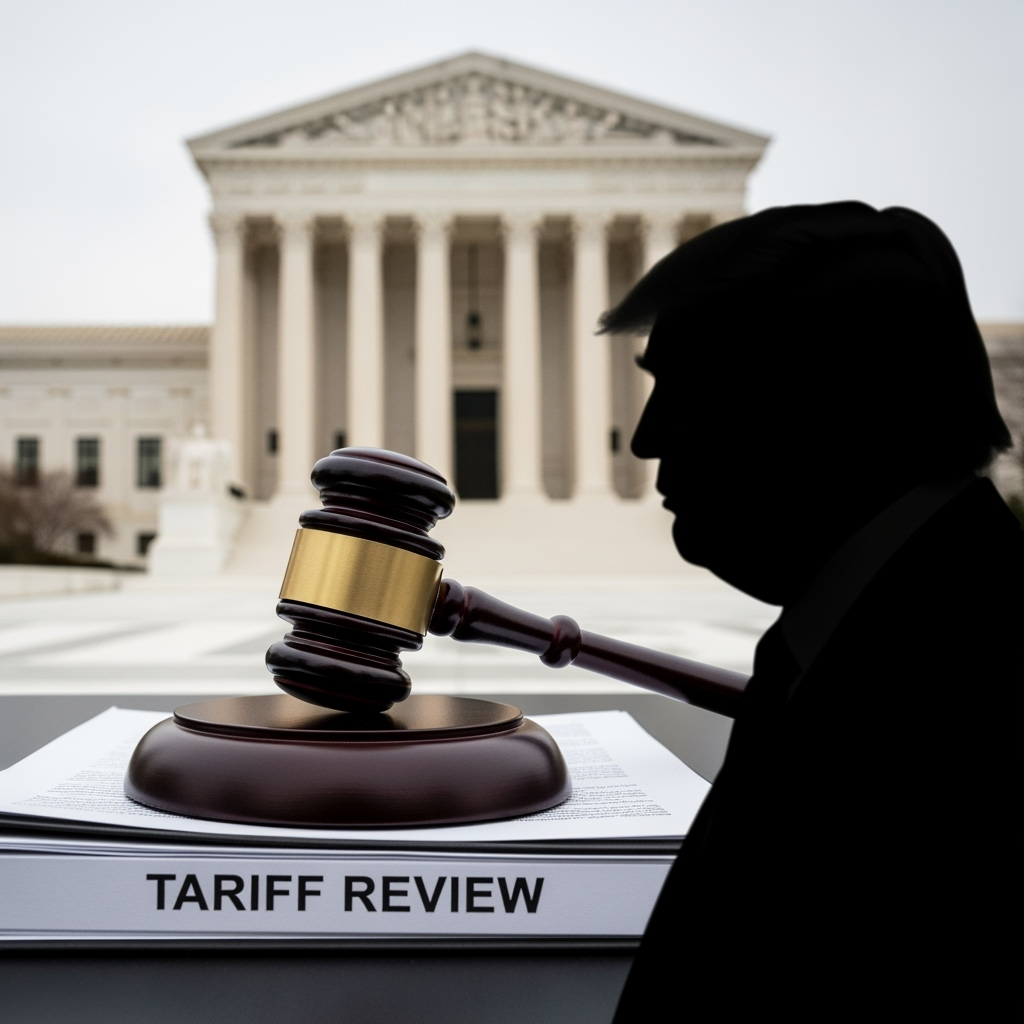
The Trump administration has petitioned the US Supreme Court to review a case aiming to uphold extensive tariffs enacted under a 1977 emergency law. This follows a lower court’s decision that invalidated many of these tariffs, which are crucial to Trump’s trade agenda.
On August 29, a federal appeals court ruled that Trump exceeded his authority by using the International Emergency Economic Powers Act (IEEPA) for tariffs, challenging a key part of his economic policy.
While the tariffs continue to be in effect due to a pause on the court’s order, the Justice Department has asked the Supreme Court to decide by September 10 if it will take the case. An expedited schedule was suggested, with arguments set for early November, soon after the court’s 2025-2026 term begins.
Small business lawyers challenging the tariffs are not opposing the Supreme Court hearing. Jeffrey Schwab from Liberty Justice Center expressed confidence in their case, hoping for a swift resolution.
These tariffs are part of a trade conflict initiated by Trump since his presidency resumed, straining international relations and heightening global economic uncertainty.
Trump has utilized tariffs as a cornerstone of US foreign policy to renegotiate trade agreements and pressure countries exporting to the US.
The legal challenge involves Trump’s use of IEEPA to impose “reciprocal” tariffs targeting trade deficits and separate tariffs as leverage against China, Canada, and Mexico over fentanyl trafficking concerns.
IEEPA has historically been used for sanctions or asset freezes during national emergencies but never for tariffs. The Justice Department contends the law permits emergency tariff imposition.
The appeals court ruling arose from challenges by small businesses and 12 states, primarily Democrat-led, arguing that tariff imposition is Congress’s domain.
The Federal Circuit Court in Washington, D.C., agreed, stating the president’s regulatory power does not extend to tariff imposition.
The court noted that Congress likely did not intend to grant the president unlimited tariff authority under IEEPA.
The expansive interpretation of IEEPA by the administration was deemed to violate the Supreme Court’s “major questions” doctrine, which necessitates clear congressional authorization for significant executive actions.
The U.S. Court of International Trade previously ruled against Trump’s tariff policies, as did another court in Washington, leading to ongoing appeals. Multiple lawsuits, including one from California, challenge these policies.
The administration’s legal battles over tariffs and Federal Reserve independence may lead to significant Supreme Court decisions on Trump’s economic strategies.