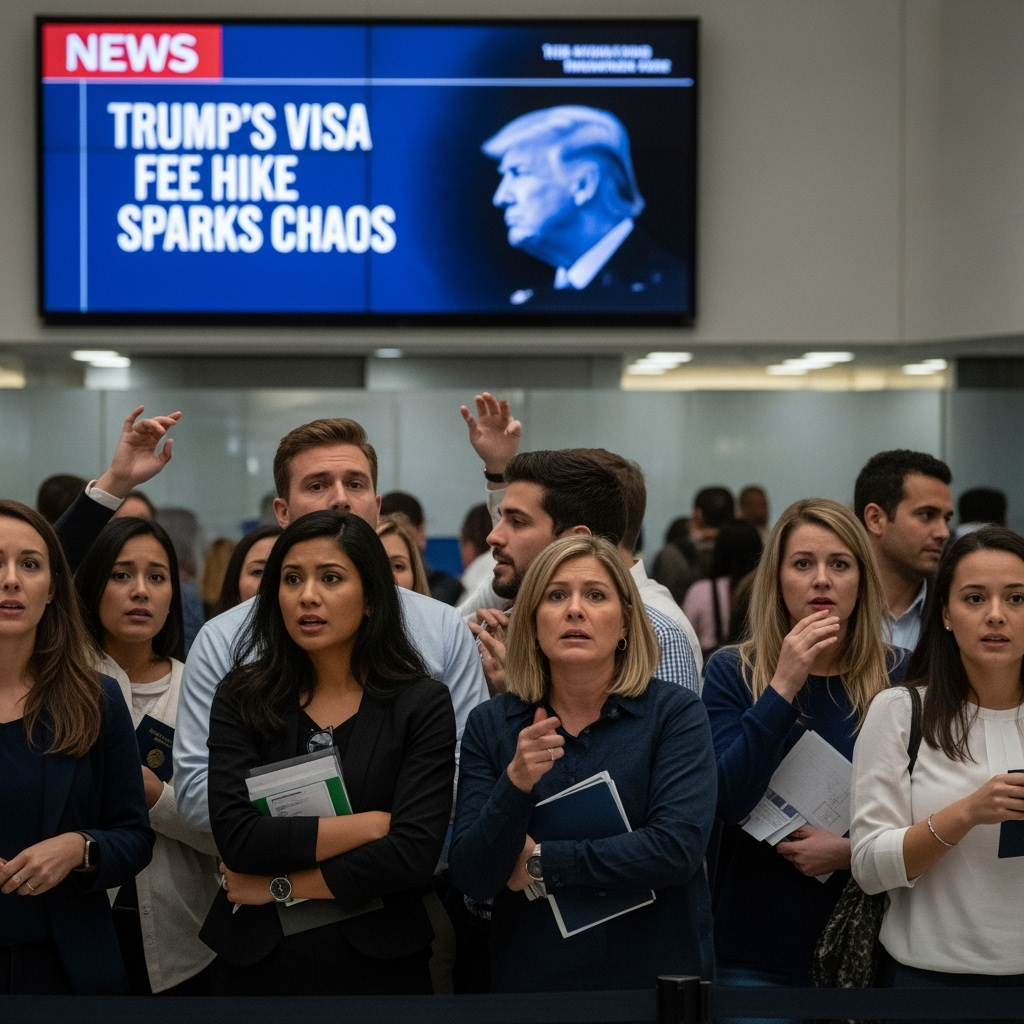
Panic and confusion erupted among Indian and Chinese workers on H-1B visas, forced to cancel travel plans and return to the US after President Trump’s new visa fees aligned with his immigration crackdown.
Tech companies and banks urgently informed employees to return before the deadline of 12:01 am US Eastern Time Sunday (4:01 am GMT), advising against leaving the country.
A White House official clarified on Saturday that the order affected only new applicants, not existing visa holders or those seeking renewals, addressing some confusion.
Stay informed with the latest updates. Follow KT on WhatsApp Channels.
However, Trump’s announcement had already alarmed Silicon Valley.
Flight Delays
Several Indian nationals at San Francisco airport, fearing they wouldn’t be allowed back, cut vacations short. An engineer from a major tech firm said his wife was on an Emirates flight from San Francisco to Dubai, scheduled to depart at 5:05 pm local time (12:05 am GMT) Friday.
The flight was delayed over three hours as some Indian passengers demanded to deplane after receiving news or employer memos, the engineer said anonymously. At least five passengers were eventually allowed off.
A video showing some passengers leaving circulated on social media, but Reuters couldn’t verify its authenticity.
The engineer’s wife, also on an H-1B visa, decided to go to India to care for her ill mother. “It’s tragic. We’ve built a life here,” he told Reuters.
On the Chinese app Rednote, H-1B visa holders shared rushing back to the US, sometimes just hours after landing elsewhere.
Some compared the panic to their rush during the COVID-19 pandemic to return to the US before a travel ban.
“I’m feeling disappointed, sad, and frustrated,” said a woman using “Emily’s Life in NY.” She was on a United Airlines flight to Paris but returned to the gate after discussions with the airline.
Describing feeling “insignificant” and “shaken,” she canceled her France trip, abandoning plans with friends from China, after receiving a company letter urging employees abroad to return.
Companies like Microsoft, Amazon, Alphabet, and Goldman Sachs sent urgent travel advisory emails to employees.
Trump’s Policy Shift
Since January, Trump initiated a broad immigration crackdown, aiming to limit some legal immigration forms.
This move to reshape the H-1B visa program is the administration’s most significant attempt to alter temporary employment visas, emphasizing what critics call a protectionist agenda.
It marks a reversal from Trump’s earlier support for the H-1B program, despite opposition from some supporters.
Trump officials argue the visa lets companies suppress wages, opening more jobs for Americans. Supporters say it brings essential skilled workers, keeping firms competitive.
After Trump’s announcement, social media saw debates on the order’s scope and concerns over its impact on America’s appeal as a work destination.
‘Fast and Furious’
An anonymous Rednote user described life as an “H-1B slave,” cutting a Tokyo holiday short to rush back, likening it to a “real-life ‘Fast Furious’ return to the US.”
Trump’s proclamation stated: “Some employers have abused the H-1B statute, suppressing wages and disadvantaging American citizens.”
Homeland Security Secretary Kristi Noem could exempt petitioners from the fee at her discretion, the proclamation noted.
Commerce Secretary Howard Lutnick said companies must pay $100,000 per H-1B worker visa annually.
However, White House spokesperson Karoline Leavitt clarified on X that it’s a one-time fee per petition, not annual.
A Nvidia engineer, in the US for 10 years, told Reuters at San Francisco airport he was vacationing in Japan with family when he rushed to reschedule after hearing the news.
“It’s surreal,” he said. “Everything changes instantly.”