This rejection by the House of Representatives, following attempts by Republican Congressman Joe Wilson, aided by the “Syrian-American Coalition,” to pass a law repealing sanctions by integrating it into amendments to the defense budget law, is in fact a continuation of U.S. policy trends that began with the imposition of sanctions for the first time in 2019. The law also provides Washington with internal legal cover to impose sanctions on countries that violate this law. As a result, the sanctions imposed under the “Caesar Act” contribute to the situation, at a time when it is suffering from the effects of the long war.
Despite some hints during President Donald Trump’s visit to Saudi Arabia last May, where he showed some openness toward the transitional Syrian authorities headed by Ahmed Sharaf through Saudi mediation, this shift was limited. Trump sometimes used sanctions as a tool for reward, later lifting some presidential sanctions imposed on Damascus and issuing a decision to freeze those sanctions, including the “Caesar Act,” for six months. During this period, the possibility of completely repealing the law was consistently hinted at, but this hint did not turn into actual action, and the law remained in force as before.
Meanwhile, the United States appointed its ambassador to Turkey, Thomas Barak, as a special envoy to Syria, granting him powers similar to those of a “high commissioner,” to begin shaping the Syrian scene according to the American vision. One of the main objectives of this mission was to promote superficial economic breakthroughs aimed at convincing everyone of progress in the complex Syrian file. Barak sought to present these breakthroughs as achievements that would improve the economic and humanitarian situation in Syria, despite the political complexity there.
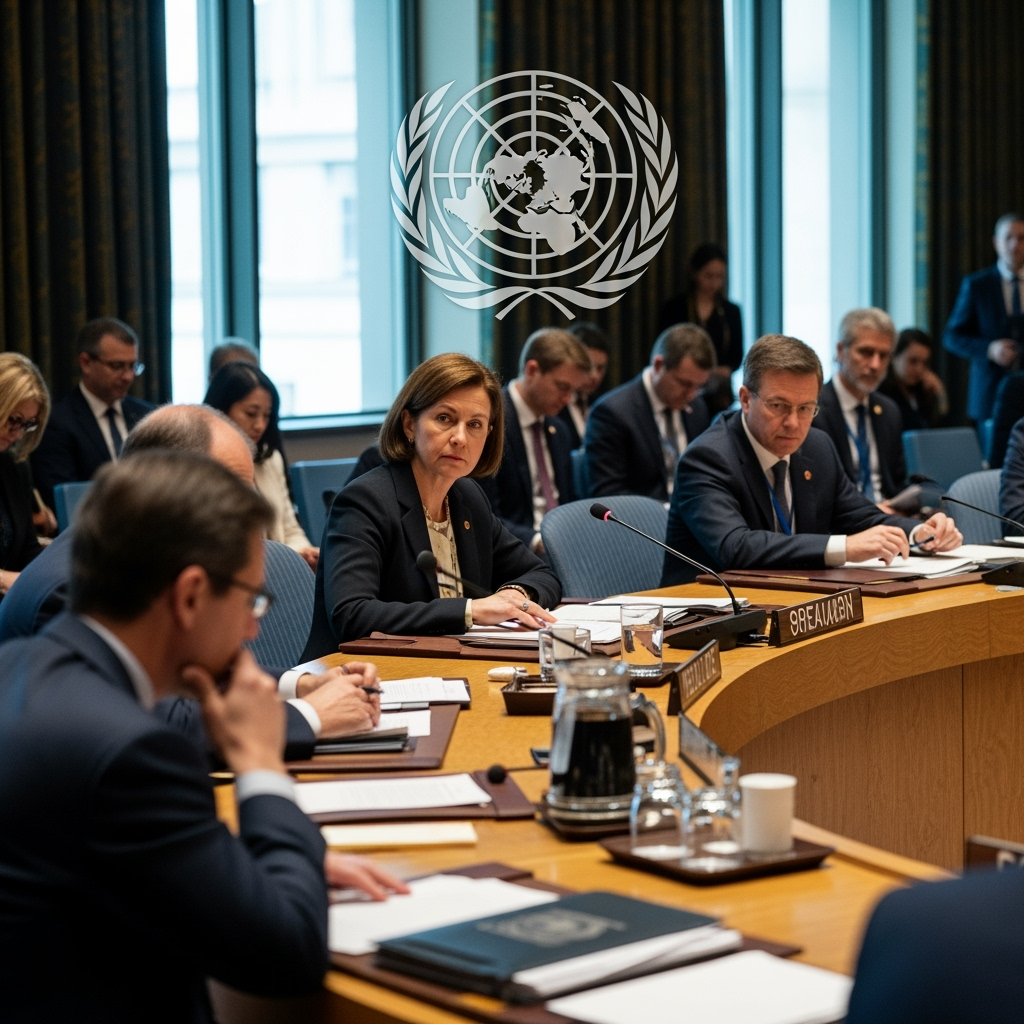
In another move demonstrating Washington’s attempts to show success in handling this file, the United States removed Ahmed Sharaf’s name from its terrorism lists and lifted some sanctions that prevented the Syrian delegation from traveling beyond 25 kilometers outside New York in the United Nations. In line with this policy, American officials began efforts to remove the names of Sharaf and his group from the UN terrorism list in the Security Council to facilitate his participation in the UN General Assembly meetings. Damascus announced that Sharaf would participate in these meetings scheduled between the 21st and 24th of this month.
Returning to the “Caesar Act” and the reasons for rejecting its repeal, it becomes clear that maintaining this law is not merely a matter of disagreements or differences in U.S. policy but represents an effective strategic tool for Washington to ensure complete control over the Syrian file, especially given the multiple regional and international forces involved in Syrian affairs. Despite the efforts of some regional and international parties to revive investment projects in Syria, the “Caesar Act” ensures that any investment on Syrian soil must pass through the American gate. This means that Washington provides the necessary guarantees for these projects in exchange for the risk of implementing them, reflecting its complete control over this file.
At the same time, “Caesar” enhances the American ability to impose its conditions on any project or investment in Syria, at a time when the country suffers from massive destruction, making it an attractive ground for investments. On the other hand, the continuation of “Caesar” in effect seems to be a suitable outlet for the American administration, which finds itself in a difficult position after failing to fulfill a promise made by its president during his visit to Saudi Arabia. During that visit, agreements for Saudi investments in the United States were signed, estimated at about $600 million, increasing the complexity of Washington’s positions.
In any case, the continued application of the “Caesar Act” represents a primary tool in the hands of the United States to control the course of events in Syria and prevent any attempt to expand the influence of other powers, especially given the intense competition for reconstruction and investment in Syria after years of war and destruction.