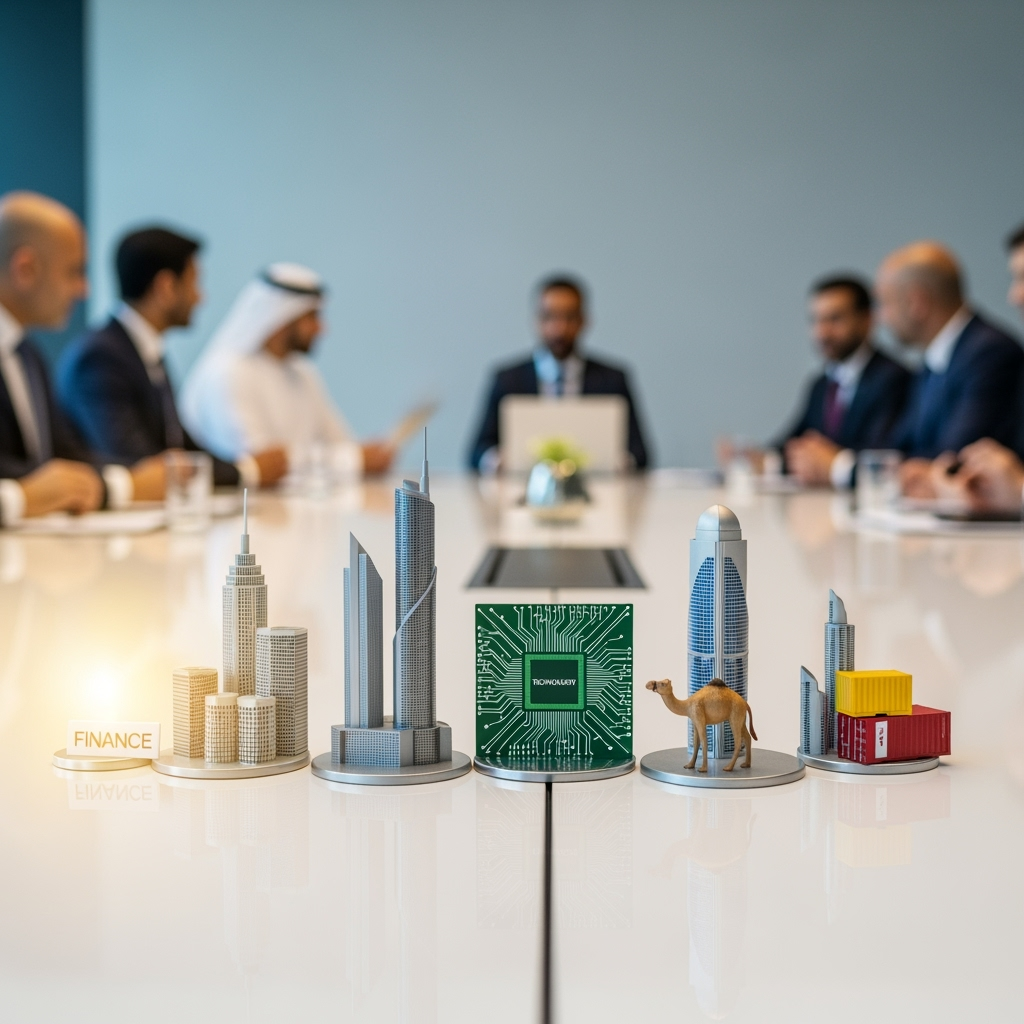
On Wednesday, the UAE Cabinet endorsed a National Policy for Economic Clusters aimed at enhancing sectoral capabilities, boosting access to global markets, and adding over Dh30 billion annually to the national GDP.
This policy is projected to increase the nation’s foreign trade value by Dh15 billion within seven years, focusing on key sectors like financial services, tourism, space, communications, data analytics, and food.
Industry and service clusters with common traits will be developed across the UAE at both macro and sectoral levels, utilizing each emirate’s unique strengths. The policy will harness the UAE’s natural resources, strategic location, business-friendly environment, strong corporate links, and advanced sectors.
Stay informed with the latest updates. Follow KT on WhatsApp Channels.
During the Cabinet meeting at Qasr Al Watan in Abu Dhabi, led by Sheikh Mohammed bin Rashid Al Maktoum, Vice President, Prime Minister of the UAE, and Ruler of Dubai, the agenda for the UAE Government Annual Meeting was also approved. Scheduled for November 4–6 in Abu Dhabi, it will gather 500 senior government officials.
“This year’s agenda focuses on education, healthcare, national identity, economy, and AI applications, aiming to foster a unified national team spirit and enhance government service competitiveness,” Sheikh Mohammed stated.
The Cabinet also approved a set of national cybersecurity policies to fortify the country’s digital infrastructure with a unified approach to information security, aligning with global standards to counter emerging cyber threats.
The focus includes strengthening risk management, workforce readiness, system resilience, and setting up advanced monitoring, prevention, and rapid response mechanisms.
Additionally, the Cabinet restructured several federal councils and committees, including the UAE Digital Economy Council, headed by Omar Sultan Al Olama, Minister of State for Artificial Intelligence, Digital Economy and Remote Work Applications; the National Committee to Combat Human Trafficking, led by Abdullah Sultan Al Nuaimi, Minister of Justice; the Economic Integration Committee, chaired by Abdulla bin Touq Al Marri, Minister of Economy and Tourism; and the Industry Development Council, chaired by Dr. Sultan bin Ahmed Al Jaber, Minister of Industry and Advanced Technology.
The Cabinet also ratified and signed 85 international agreements and memoranda of understanding with governments and global organizations. These agreements focus on investment protection, trade facilitation, aviation services, financial cooperation, food safety, AI applications, digital transformation, and regulatory collaboration across key sectors.