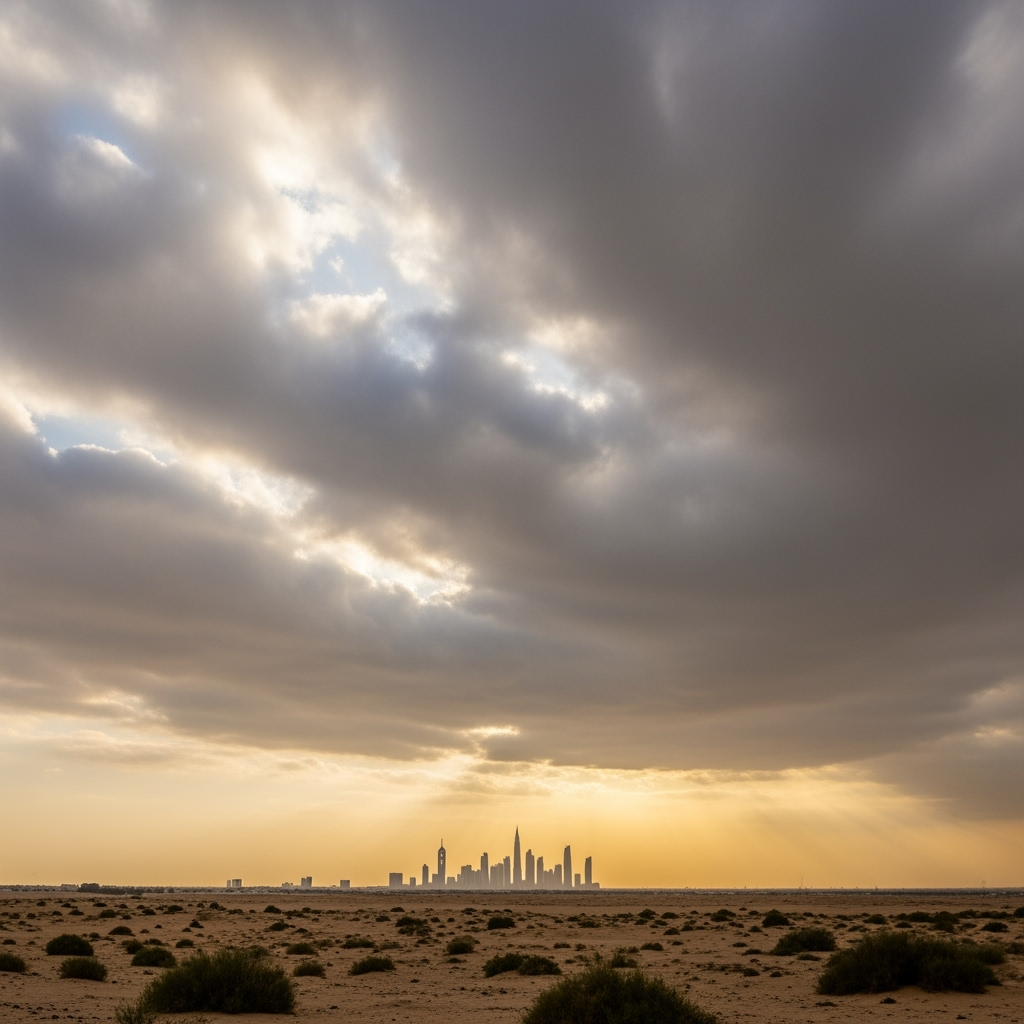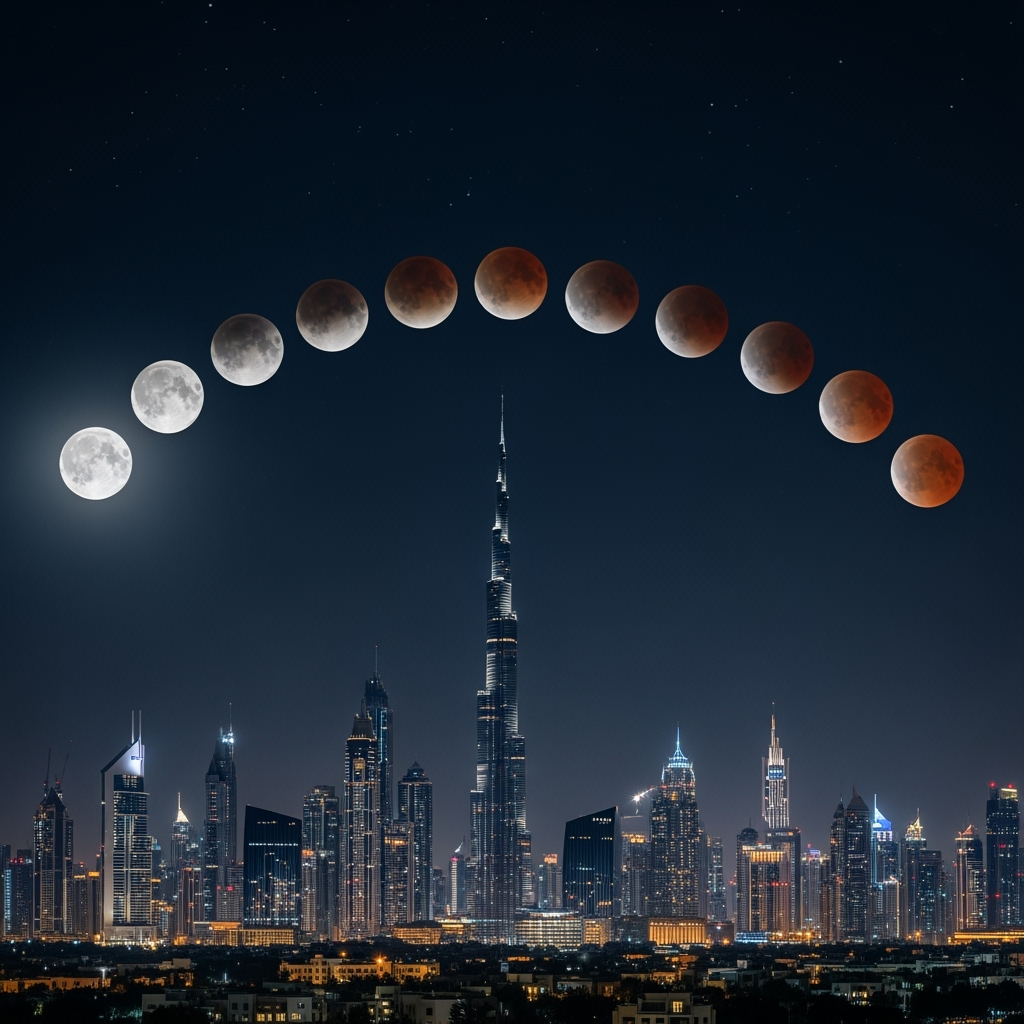
Next month, the UAE will experience the year’s most significant astronomical event—a total lunar eclipse lasting 1 hour and 22 minutes, one of the longest in recent history.
UAE residents can observe various stages of the eclipse over nearly five and a half hours, even though the total eclipse phase lasts just over an hour.
Khaleej Times interviewed the Dubai Astronomy Group (DAG) to explore why this celestial phenomenon is rare, the optimal viewing times, and the origin of the term ‘Blood Moon’.
Stay updated with the latest news by following KT on WhatsApp Channels.
Lunar eclipses occur several times a year, but many are partial or penumbral. Total lunar eclipses are less common, and long, widely visible ones are even rarer.
The September 7 eclipse stands out for its 82-minute totality and broad visibility, with nearly 87% of the world’s population able to see at least part of the eclipse, according to DAG.
When and where will it occur?
On September 7, skywatchers worldwide can view what DAG calls one of the ‘most photogenic eclipses of the decade’.
The full totality will be visible from the UAE, the broader Middle East, Asia, Africa, Australia, and Europe. However, only partial phases will be seen at moonrise or moonset in eastern South America and western North America.
During totality, the eclipse won’t be visible in central and western South America.
Blood Moon
In the UAE, the moon will appear red as Earth comes between the sun and the moon, casting a shadow on the lunar surface, explains Khadijah Al Hariri, Operations Manager at DAG.
During totality, the moon is fully within the ‘umbra’—the Earth’s central shadow where all sunlight is blocked.
The red glow arises from sunlight filtered and bent through Earth’s atmosphere, scattering shorter blue wavelengths and allowing longer red and orange wavelengths to reach the moon.
This creates the Blood Moon effect, offering a striking red view in the sky.
Viewing times in UAE
The total lunar eclipse will occur on the night of Sunday, September 7, 2025, extending into early Monday, September 8, depending on your location. In the UAE, the eclipse phases are as follows:
-
7:28pm – Penumbral eclipse starts
-
8:27pm – Partial eclipse begins
-
9:30pm – Total eclipse starts
-
10:12pm – Maximum eclipse (Totality)
-
10:53pm – Total eclipse ends
-
11:56pm – Partial eclipse ends
-
12:55am – Penumbral eclipse concludes
How to watch
Watching a lunar eclipse is completely safe with the naked eye, requiring no special glasses or filters, according to DAG.
For the best experience, telescopes can enhance views of the moon’s surface features, shadow progression, and the rich red hues during totality.
Astrophotography enthusiasts should use a tripod and long exposure settings, or attach a smartphone to a telescope eyepiece for stunning lunar images.
Choose a location away from city lights to avoid visual interference and check local weather conditions.
Blood Moon with Burj Khalifa?
DAG will host a public viewing event, allowing UAE residents to enjoy the Blood Moon’s red splendor under the stars. Details will be shared on the group’s website soon.
For those unable to attend, DAG will provide a global livestream with real-time coverage from Abu Dhabi’s Al Sadeem Astronomy and international partners.
“We aim to celebrate the universe’s wonders, inspire curiosity, and create a shared global experience where everyone can marvel at the same celestial event,” DAG stated.
The livestream will feature a special shot of the eclipse with Burj Khalifa, in collaboration with renowned photographer Rami Dibo.
Different phases of the eclipse
Now that you know the timings for each phase, what do these stages signify? Dubai Astronomy Group explains the unique aspects of each phase:
-
Penumbral phase: The first stage when the moon enters Earth’s outer, lighter shadow. The moon starts dimming, which may be difficult to notice with the naked eye.
-
Partial phase: The second stage as the moon moves into the umbra, Earth’s darker central shadow, where a noticeable “bite” appears on the lunar surface.
-
Totality: The most exciting phase, where the moon is fully within the umbra, turning shades of red, copper, or orange depending on Earth’s atmospheric conditions.
-
Ending phases: The Moon gradually exits the umbra and penumbra, reversing the process.
Upcoming eclipses
The next lunar eclipse visible from the UAE will be a partial one on July 6, 2028. In three years, UAE residents can witness a total lunar eclipse on New Year’s Eve, December 31, 2028.