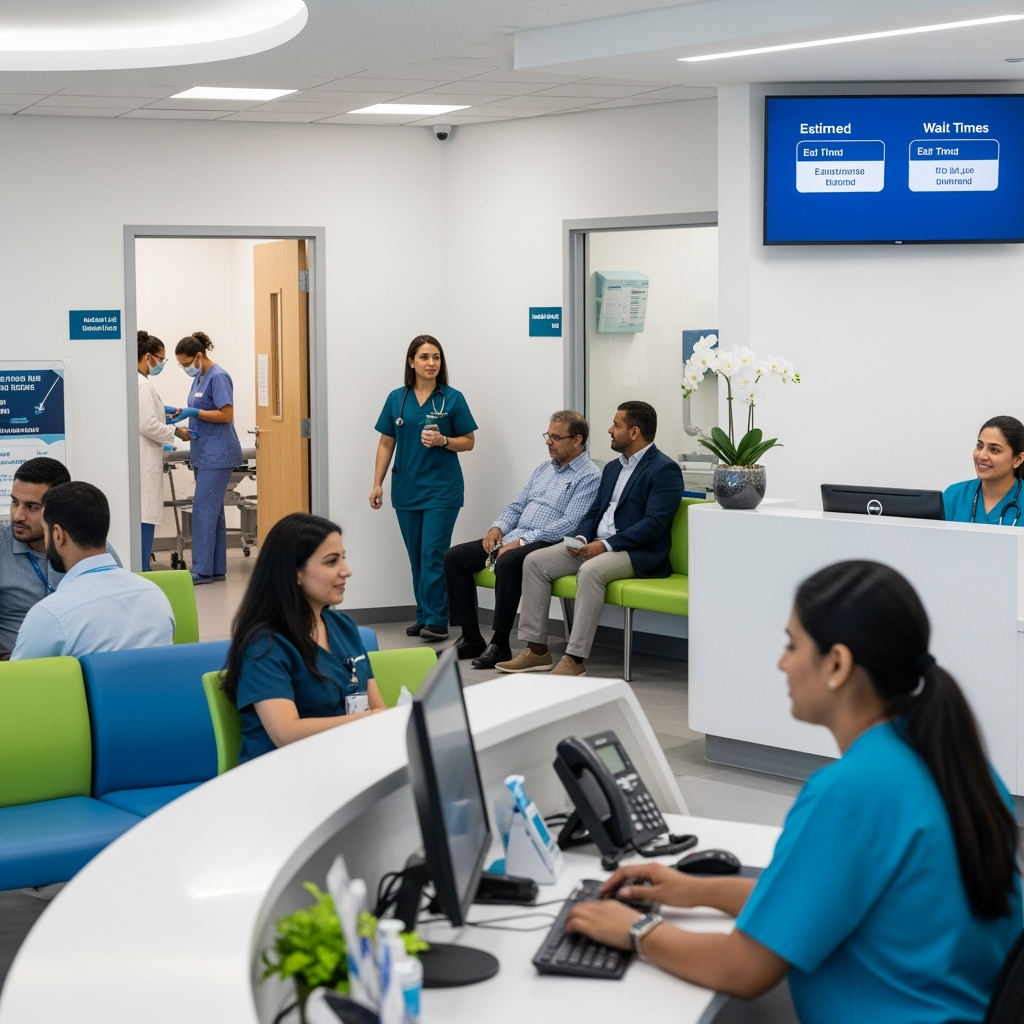
In the UAE, more healthcare organizations are establishing urgent care centers (UCCs) to ease the burden on hospital emergency rooms (ER). Experts highlight that these centers “address a crucial gap” in the healthcare framework.
Dr. Sherbaz Bichu, CEO of Aster Hospitals and Clinics in the UAE, Oman, and Bahrain, stated, “ERs often become overcrowded with patients whose conditions aren’t critical but still require urgent attention. By setting up a General Practitioner-led urgent care clinic within the hospital, we ensure these patients receive prompt care in a more comfortable setting, allowing ERs to focus on true emergencies.”
In July, Aster Hospital Al Qusais introduced such a clinic, operational daily from 10 PM to 6 AM, specifically catering to patients needing urgent but non-life-threatening care.
Stay informed with the latest updates. Follow KT on WhatsApp Channels.
Dr. Srikanth Padmanabhan, an Emergency Medicine Specialist at NMC Specialty Hospital in Al Nahda, Dubai, affirmed that these centers “significantly reduce the load” on ERs. He noted, “UCCs were created to fill the gap in healthcare by providing immediate attention for non-life-threatening conditions, thus reducing ER congestion.”
NMC’s clinic operates in Abu Dhabi on a walk-in basis, similar to Aster’s model.

Dr. Srikanth Padmanabhan
Shorter Wait Times
UCCs are known for significantly shorter wait times compared to standard ERs. “Most patients are seen by a doctor within 15 minutes of arrival,” Dr. Sherbaz stated. “This is much quicker than an ER visit, where waits are longer.”
He added that these clinics are “designed for rapid assessment, treatment, and discharge,” offering short wait times with full hospital support if needed.
Dr. Srikanth elaborated on the efficiency, “While ERs prioritize based on severity, UCCs often use a first-come, first-served approach. Studies indicate ER visits can last hours, whereas urgent care is much quicker.”
Cost Efficiency
These centers can lower overall healthcare costs. “By redirecting non-emergency cases from costly ERs, clinics save money for patients and the system,” Dr. Srikanth said. “ERs with specialist consultations have higher overheads.”
Dr. Sherbaz emphasized affordability, stating, “The cost of visiting an urgent care clinic is similar to a general practitioner visit and much cheaper than a specialist, offering quality care at a reduced price.”

Dr. Sherbaz Bichu
He noted that UCCs handle ailments such as fevers, flu, infections, mild asthma, sprains, minor cuts, ear and throat issues, stomach upsets, and minor burns. “Patients with chest pain, stroke symptoms, severe trauma, uncontrolled bleeding, or conditions needing critical intervention are directed immediately to the ER,” he added.