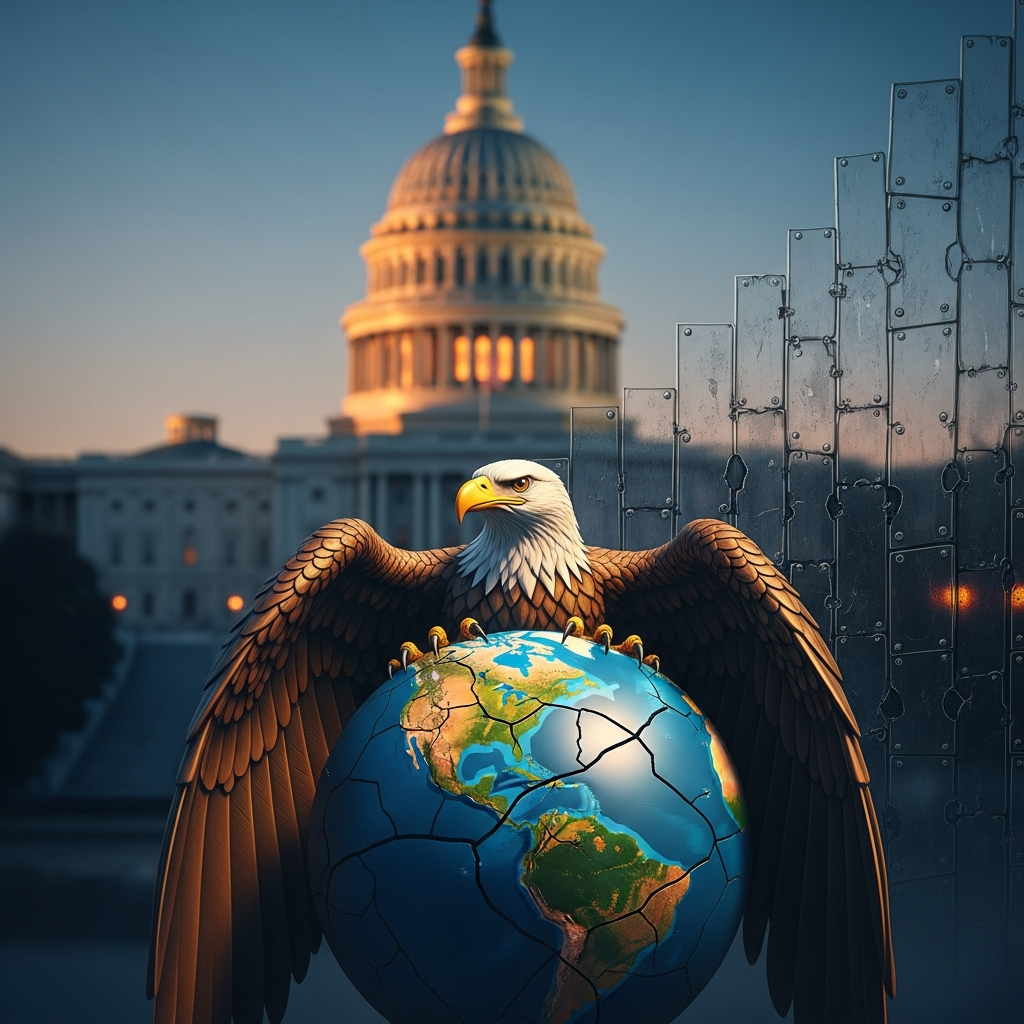
The document released by the White House yesterday, Thursday, indicates that American superiority in this region is fundamental to security and prosperity, emphasizing that any aid or alliances are conditional on reducing hostile external influence. Such strategies, typically issued by presidents once every term, can help shape how parts of the US government allocate budgets and set policy priorities. The strategy criticizes some European countries’ policies, considering them politically restrictive and a deviation from democratic principles, while noting that immigration could change European identity in the long term, potentially affecting NATO alliances with Washington.
In contrast, Trump’s strategy gives relatively limited attention to the Middle East and Africa, focusing only on issues that directly impact US national security interests, such as terrorist threats or increasing Iranian influence. The document rephrases the “Monroe Doctrine” under the title “Trump Doctrine,” a principle proposed by the late US President James Monroe in 1823, stating that America will not tolerate any malicious foreign intervention in the Western Hemisphere.
The strategy allocates considerable attention to Latin America and the Caribbean, a shift from previous US administrations that tended to prioritize confronting great powers or terrorism in the Middle East. Plans include enhancing naval and coast guard presence to control maritime routes, prevent illegal immigration, and curb drug and human trafficking, using military and diplomatic pressure on countries like Venezuela.
President Donald Trump’s strategy indicates that the United States will deal with the Middle East selectively, focusing on protecting its vital interests, including Israeli security and Gulf stability, emphasizing the need to limit Iranian influence, while not paying significant attention to broader conflicts unless they directly threaten American interests, such as the war in Syria or Turkish influence in certain areas. China is considered a long-term economic challenge, with emphasis on rebalancing the trade relationship and protecting America’s economic interests. The document stresses preventing conflict in the Indo-Pacific, supporting Washington’s allies like Japan and the Philippines, while maintaining the status quo in the Taiwan Strait to avoid potential escalation.
The strategy focuses on the necessity of negotiating a quick cessation of hostilities in Ukraine and reducing the risk of confrontation with Russia, avoiding direct criticism of Russia, reflecting a calmer approach compared to the intense competition with China. Instead, the Trump administration allocates some of its harshest remarks to US allied countries in Europe, specifically attacking, in somewhat veiled terms, European efforts to curb far-right parties, considering these steps political censorship.
The strategy indicates “The Trump administration finds itself at odds with European officials who hold unrealistic expectations regarding the Ukrainian crisis, relying on unstable minority governments, many of which trample on fundamental democratic principles to suppress opposition.” The strategy encourages American companies to acquire strategic assets in the Western Hemisphere, including vital minerals, to enhance the United States’ industrial capacity and self-sufficiency, as part of strengthening the country’s economic and military power in the region.
This national security strategy is the first significant defense and political document of the Trump administration, with a national defense strategy expected to follow, likely aligning with Trump’s vision for national security.