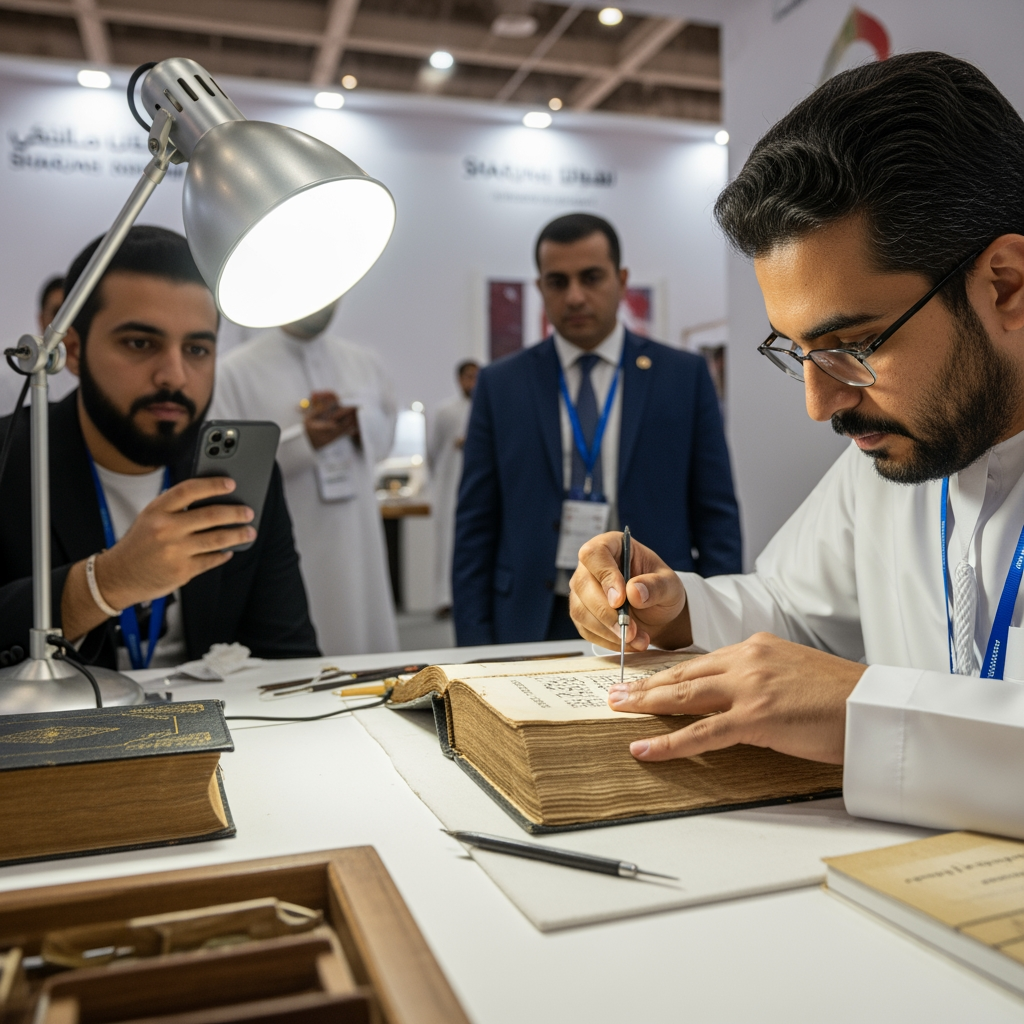
Ever witnessed the revival of a centuries-old book — ravaged by insects, tattered, full of holes, and with delicate pages? At the Sharjah International Book Fair (SIBF), visitors can now see this rare restoration process live. Experts from the UAE National Archives are meticulously restoring ancient documents, including a centuries-old copy of the Holy Quran.
Inside the restoration booth, each action is intentional and precise. Wearing gloves and magnifying lenses, book conservators work under bright lights, surrounded by brushes, fine tweezers, and fragile sheets of Japanese paper. “We aren’t rewriting history; we’re preserving it,” said a senior restorer at the UAE National Library and Archives booth. “Every torn edge and fragile word requires careful attention.”
Carefully lifting a page on the brink of disintegration, the restorer shared, “This Quran was penned hundreds of years ago. Some pages are missing, others have holes, and the ink has faded over time. We utilize natural glues and fine Japanese tissue to support the paper from underneath. It’s nearly invisible, but it adds strength to the page.”
Stay updated with the latest news. Follow KT on WhatsApp Channels.
To flatten warped pages, conservators use a small heating tool that gently blows warm air and a precise iron-like device. “It’s like giving the page a soft breath,” said the restorer. “Too much heat or moisture can ruin it, so precision is crucial.”
Once cleaned and repaired, pages dry under special sheets to prevent curling. “We never fill in missing words or rewrite anything,” she added. “That would detract from its originality and value. Our work concludes where the paper ends.”
How long does the restoration take?
The process duration depends on the damage extent, ranging from days to weeks. Starch-based natural adhesives bond the Japanese tissue to the fragile paper, reinforcing it to prevent further damage. “We use materials that endure for decades but can be safely removed if needed,” explained the restorer.
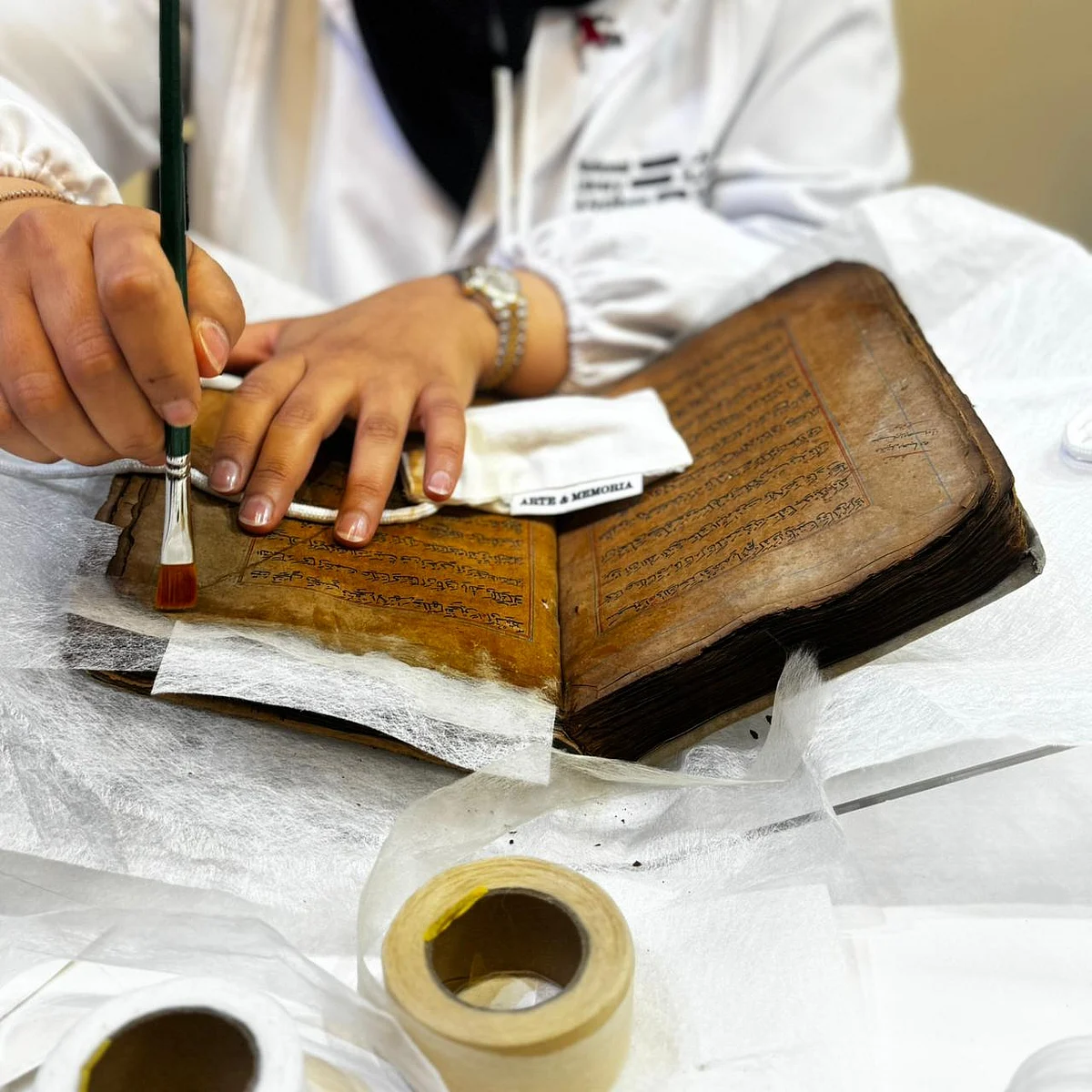
For many visitors, it’s awe-inspiring to see something so fragile transform into something with lasting life.
“Touching these pages connects me to the person who wrote them centuries ago. Every mark tells a story. We aren’t just restoring books; we’re restoring memories.”
Upon completion, the restored Quran won’t be rebound or on display for reading. Instead, it will be stored securely in a temperature-controlled archive. “After restoration, it becomes invaluable. It’s no longer just a book; it’s a historical piece.”
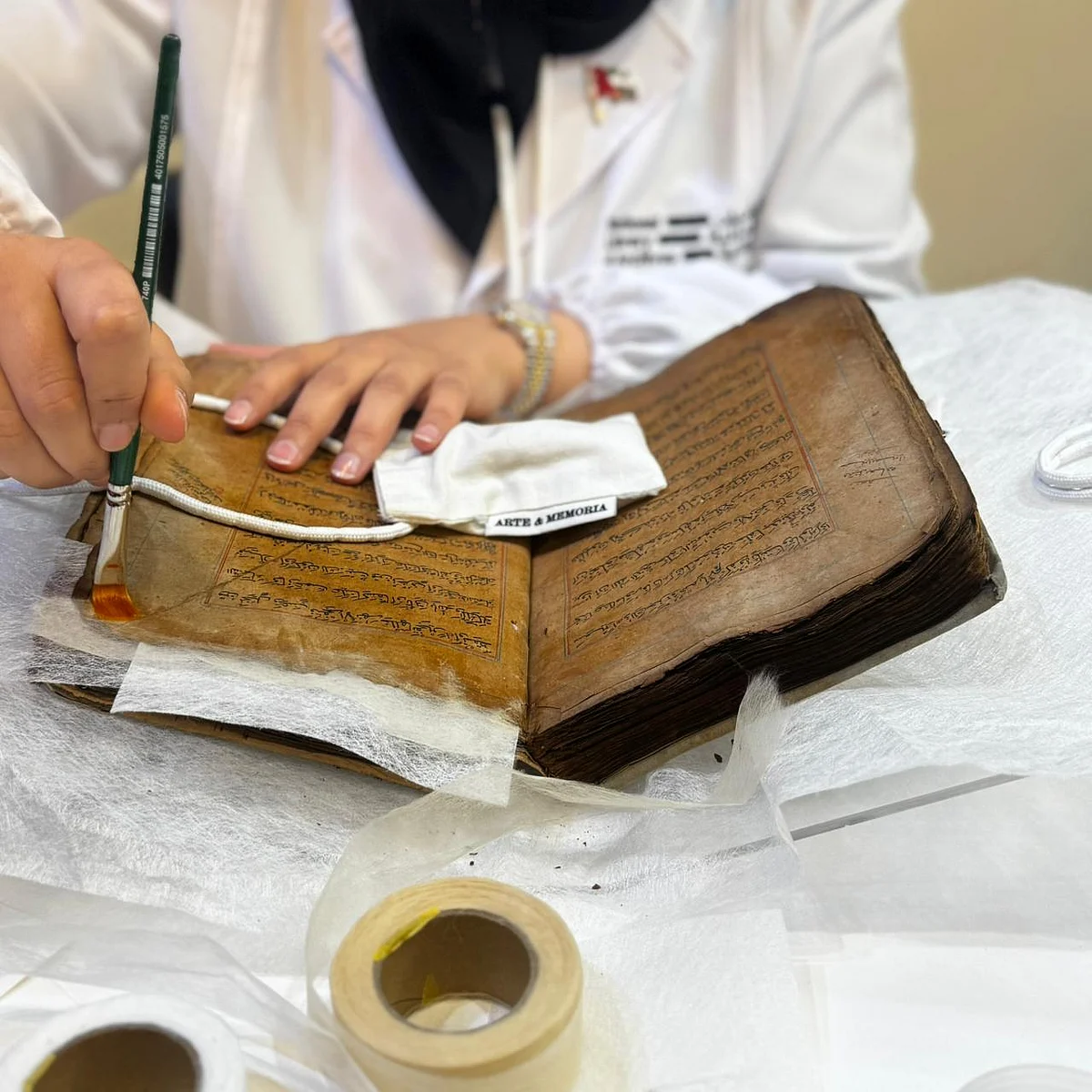
She emphasized that their work is solely about preserving the pages and reviving them, not altering the text. “We never touch or rewrite the original script. Changing even one letter diminishes the book’s historical value,” she said.
“Our goal isn’t to make it look new, but to ensure its survival. The stains, faded ink, and torn edges all narrate a story. We preserve these signs of age because they make the book priceless,” she added.
For SIBF visitors, this live restoration corner offers a glimpse of craftsmanship and an educational session on how the UAE preserves the Islamic world’s written heritage.