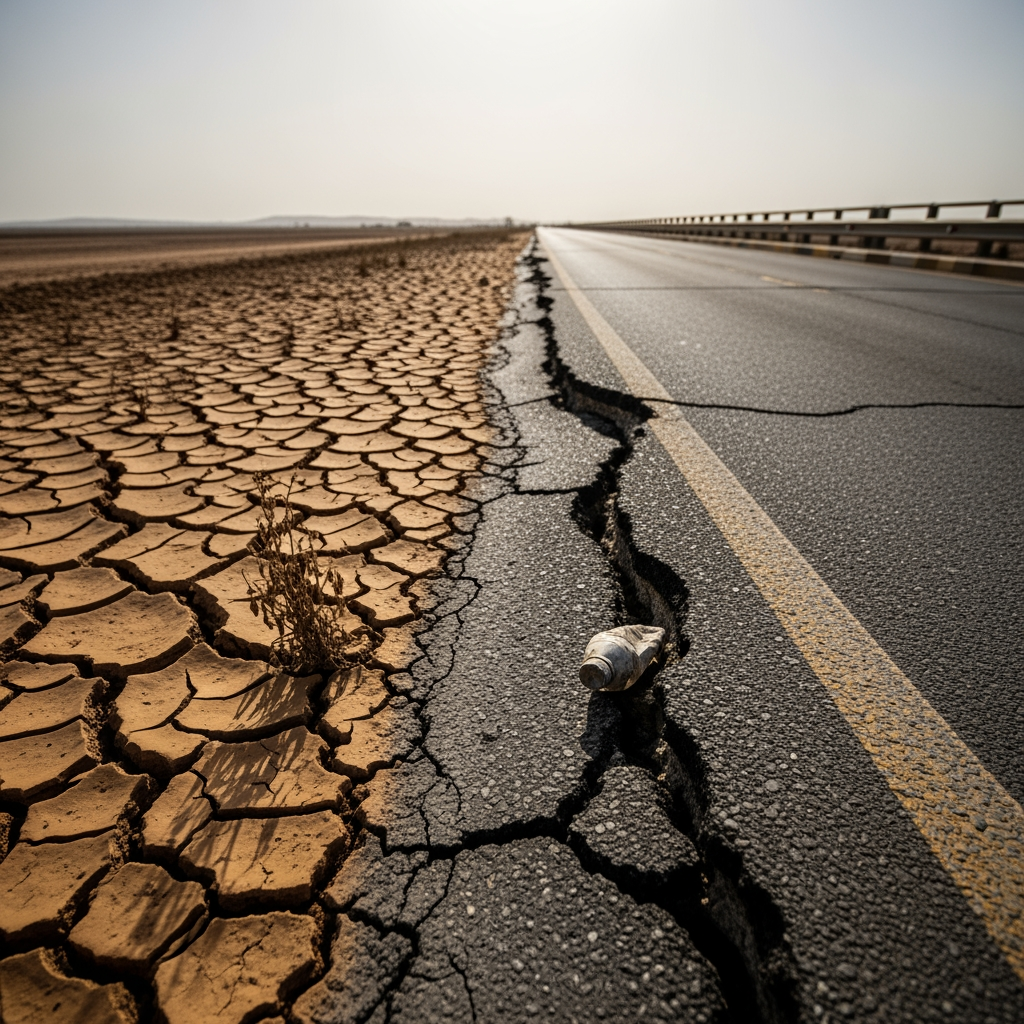
A concerning sequence of unusually high temperatures has positioned 2025 as potentially one of the hottest years on record, according to a statement from the United Nations on Thursday. However, they emphasized that this trend could still be reversed.
Although this year is not expected to surpass 2024 as the hottest on record, it is likely to rank as the second or third hottest, marking over a decade of unprecedented heat, according to the UN’s weather and climate agency.
Simultaneously, greenhouse gas concentrations have reached new peaks, increasing future heat retention, warned the World Meteorological Organization in a report released as many world leaders gathered in the Brazilian Amazon ahead of the COP30 UN climate summit next week.
These developments collectively suggest that maintaining global warming within 1.5ºC in the coming years without exceeding the Paris Agreement target is nearly impossible, according to WMO chief Celeste Saulo, speaking to leaders in Belem, northern Brazil.
The 2015 Paris climate accord seeks to limit global warming to well below two degrees Celsius above pre-industrial levels, ideally to 1.5ºC.
Saulo emphasized in a statement that while the situation is serious, “scientific evidence shows it is still entirely possible and crucial to reduce temperatures back to 1.5ºC by the century’s end.”
Surface Heat
UN chief Antonio Guterres described missing the temperature goal as a “moral failure.”
During a Geneva press conference, WMO’s climate science head Chris Hewitt noted, “We don’t yet know how long temperatures will remain above 1.5 degrees.”
“This heavily depends on decisions made now… It’s a major challenge for COP30.”
However, the world is significantly off course.
The years from 2015 to 2025 will individually have been the hottest since records began 176 years ago, stated the WMO.
Specifically, 2023, 2024, and 2025 rank at the top of that list.
The WMO report revealed that the average near-surface temperature — around two meters (six feet) above ground — for the first eight months of this year was 1.42ºC above the pre-industrial average.
Meanwhile, concentrations of heat-trapping greenhouse gases and ocean heat content continued to rise beyond 2024’s record levels, it observed.
The UN Environment Programme’s annual report on Tuesday also confirmed a 2.3 per cent increase in greenhouse gas emissions last year, driven by India, followed by China, Russia, and Indonesia.
‘Urgent Action’
The WMO noted that temperature increases have visibly affected the Arctic sea ice extent, which after this year’s winter freeze was the lowest ever recorded.
Antarctic sea ice extent also remained significantly below average throughout the year.
The UN agency also pointed out numerous weather and climate-related extreme events during the first eight months of 2025, ranging from severe floods to intense heat and wildfires, causing “cascading impacts on lives, livelihoods, and food systems.”
In this context, the WMO praised “significant advances” in early warning systems, highlighting their increased importance.
Since 2015, the number of countries with such systems has more than doubled, from 56 to 119.
Particularly, there has been notable progress in the world’s least developed countries and small island developing states, which have seen a five-percent increase in access over the past year alone.
However, it lamented that 40 percent of countries worldwide still lack early warning systems.
“Urgent action is needed to close these remaining gaps,” it stated.