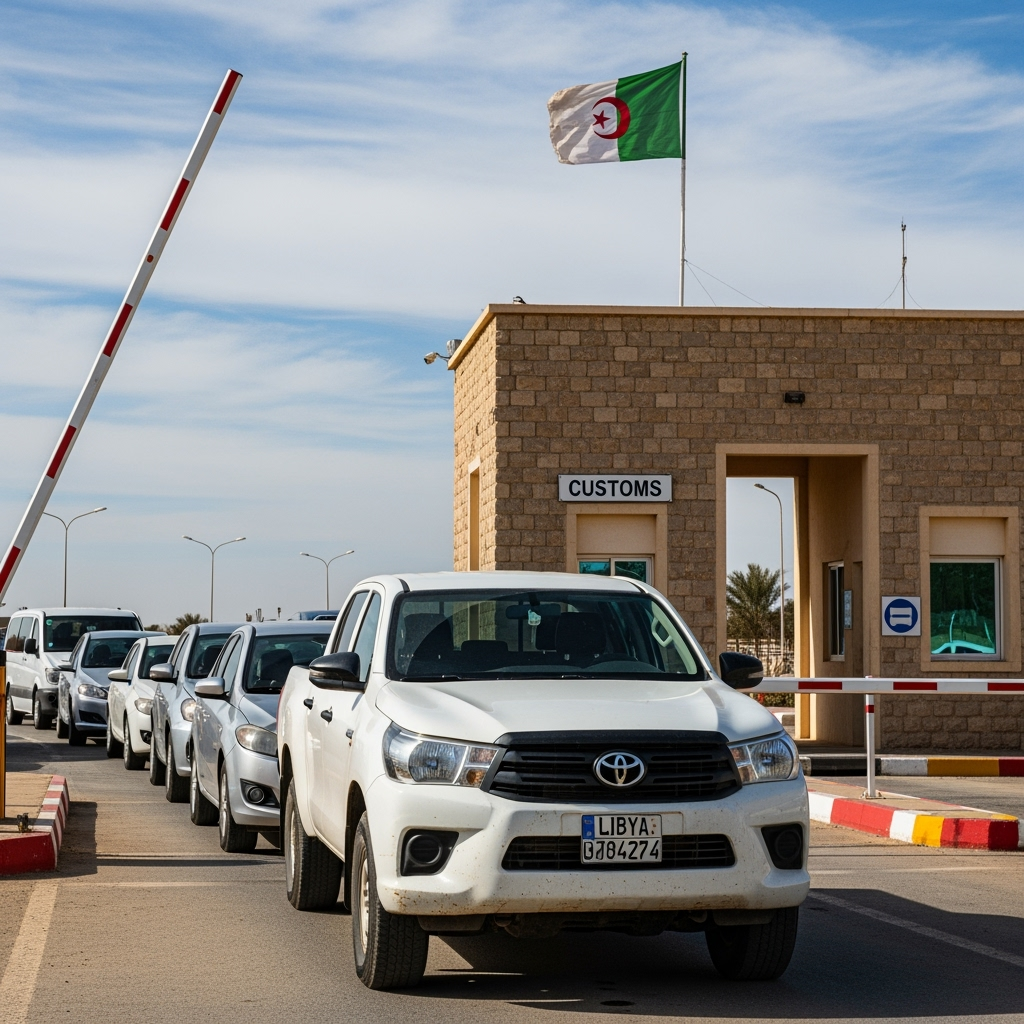
According to Al-Wasat, on the evening of Friday, the Algerian minister mentioned that this measure came after legal and technical difficulties faced by the documents attached to these vehicles. Coordination with the Libyan authorities is currently underway to address them.
An Algerian parliament member attempted to explain the reasons for freezing the issuance of customs clearance documents for vehicles imported from Libya, which prevented their owners from obtaining registration documents. The Minister of Finance clarified that “based on the conclusions of the meeting held on December 23rd, it was found that the issue relates to determining the first year of the vehicles’ entry into circulation and differences in the document models issued by the Libyan authorities, making it difficult to comply with Algerian legislation.”
The Libyan side confirmed that the current legislation in their country prohibits the permanent export of locally registered vehicles except in cases related to the expiration of foreigners’ residency. Additionally, export under the transit system is only allowed in two cases: “acquiring new vehicles in free zones, or import operations conducted by non-residents through Libyan border crossings.”
The Algerian Customs Directorate decided to suspend customs clearance for Libyan vehicles imported by residents in Algeria, while awaiting the receipt of official Libyan document models related to registration and customs clearance to prevent potential fraud attempts. Algerian Customs is working on establishing new procedures to settle the status of detained vehicles, ensuring compliance with Algerian laws, with subsequent monitoring operations set to begin, pending official clarifications from the Libyan side.
This issue opens the file of Algerians acquiring vehicles in recent years after a significant increase in their prices in their country since 2018, following the suspension of imports, which has led them to resort to fraudulent methods to bring them into Algeria via the Tunisian border.