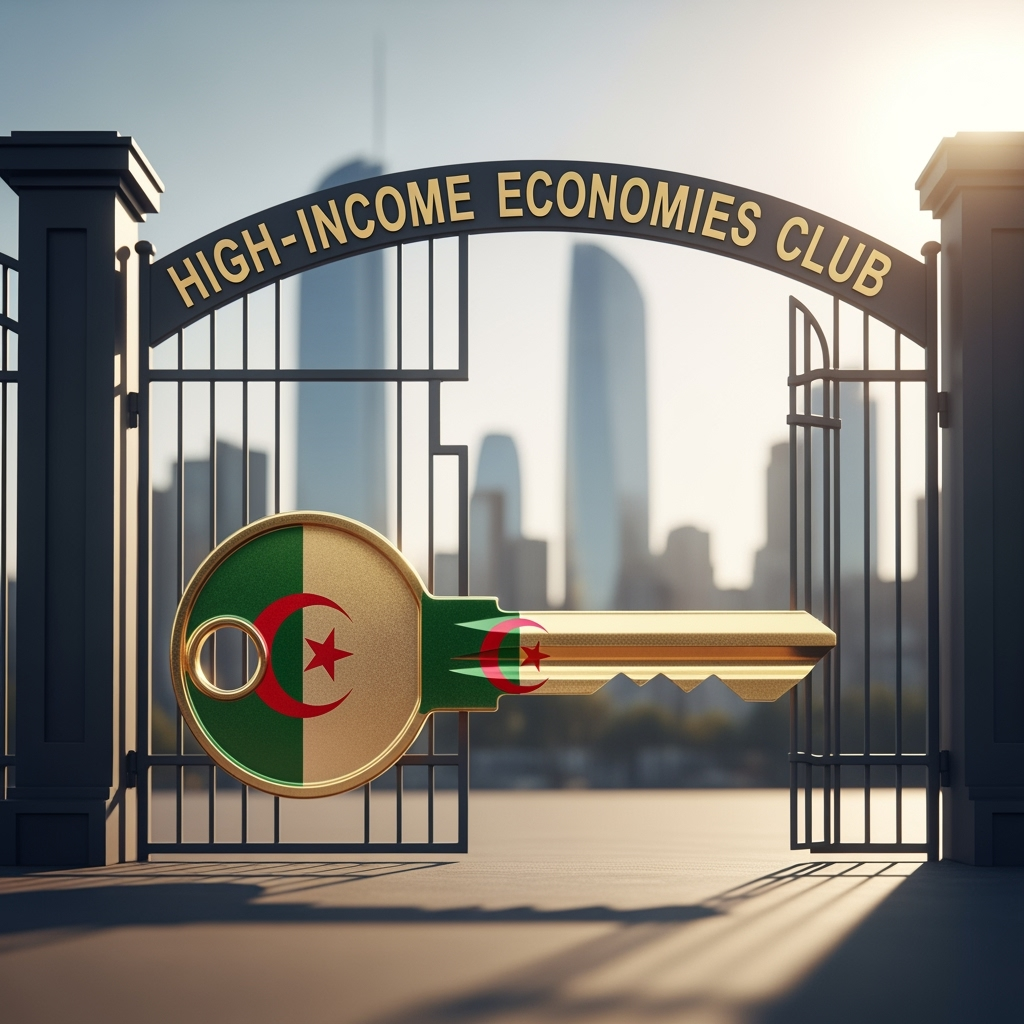
The Algerian newspaper “Echorouk” reported that this upgrade was based on the national statistical review conducted on GDP accounts, which included a comprehensive update of the adopted methodologies. According to the report, Algeria is one of only 10 African countries that have entered the high-income economies club. The World Bank attributed this change in classification to a “comprehensive review of national accounts,” where new sectors such as research and development were included as investments, as well as improvements in the methodology of measuring production in the public sector. It also confirmed that this classification reflects progress in Algeria’s national evaluation standards and their alignment with international standards.
The World Bank revealed in its latest report on the national income classification for 2025 the 10 African countries with high-income economies, with Algeria being listed for the first time, while Seychelles maintained its position as the first African economy in this category. Besides Seychelles and Algeria, the list includes: The classification is based on the Atlas methodology adopted by the World Bank to assess economic tiers globally, which is used as a reference for guiding development policies and international financial support.
Seychelles remains the most prominent African country on this list, with its economy primarily relying on tourism and financial services, along with institutional stability and a high per capita GDP. However, the report noted that the island, especially after its recent announcement to convert parts of its beaches into nature reserves to pay off debts. The economies of most of these countries rely on natural resources such as oil and minerals, while some, like Mauritius and South Africa, are characterized by active service and finance sectors.
The report warned that a rise in national income does not necessarily reflect an overall improvement in living standards, as many of these countries face chronic challenges such as high unemployment, weak basic services, and social inequality. For example, Equatorial Guinea still suffers from high poverty rates despite being classified among high-income countries.
Globally, the number of high-income countries reached 93 in 2025, while 55 countries were in the upper-middle-income tier, 50 in the lower tier, and the number of low-income countries did not exceed 25.