A decade ago, as Germany faced a surge of over a million migrants, the small town of Altena saw a chance to counteract years of population and economic decline.
In 2015, this industrial town in Western Germany gained national attention by choosing to accept 100 more migrants than required, embodying Chancellor Angela Merkel’s promise: “Wir schaffen das” – “We can do this.”
However, three current and former town officials told Reuters that while there were advantages for both parties, migration wasn’t a complete solution.
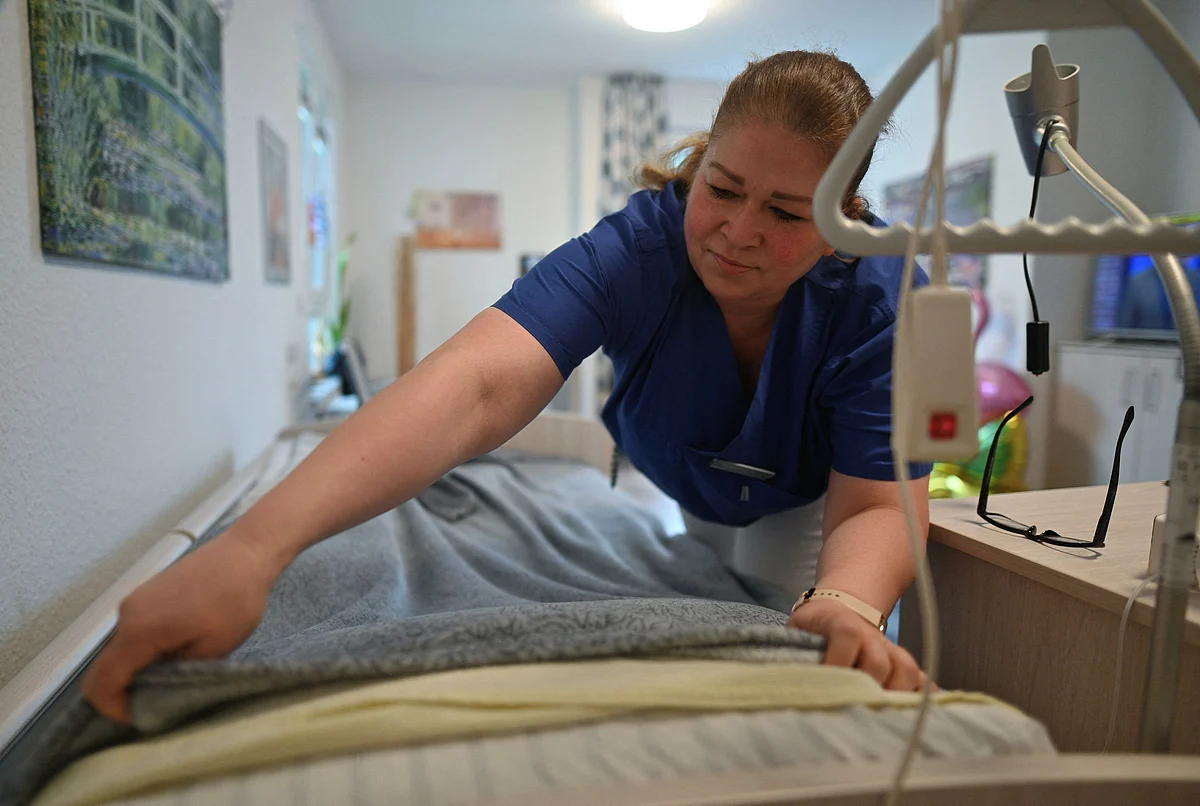
Former Syrian refugee Marwa Alshahal works at a retirement home in Altena, Germany, July 28, 2025. — Reuters
With the support of locals who rallied to aid newcomers, many migrants found homes and began contributing to the local economy, officials told Reuters. However, some moved to larger cities with more job and education opportunities.
Others faced challenges overcoming language and cultural differences, increasing welfare costs in a town with an aging population, officials noted.
Currently, some residents express concerns about the growing number of refugees and asylum seekers. Recent election results indicate rising support for the anti-immigration Alternative for Germany (AfD) party, driven by frustration over increasing living costs, strained public finances, and deteriorating infrastructure.
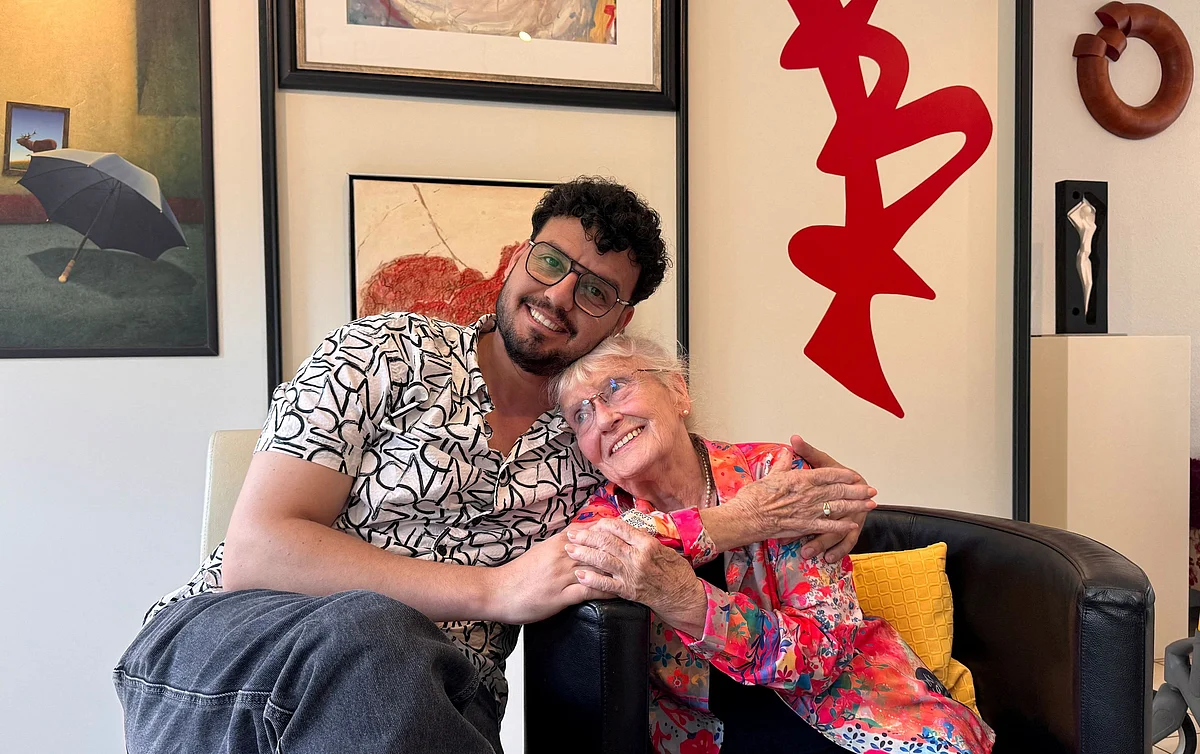
Iraqi refugee Humam Al-Gburi, 34, and retired nurse Ursula Panke, 85, pose for a picture in Altena, Germany, July 15, 2025. — Reuters
“The glass is half full and half empty,” said Thomas Liebig, a migration researcher who contributed to an OECD report in 2018 on Altena’s efforts to integrate refugees. “Many refugees found jobs, but social cohesion still lags behind.”
WARM WELCOME
Set amidst scenic wooded hills, Altena has been an industrial center since the Middle Ages.
The riverside town calls itself the birthplace of wire production. However, local ironworks struggled to remain competitive in recent decades, resulting in a loss of one-third of its jobs, according to former mayor Andreas Hollstein. Only the highly automated steel wire sector persisted.
By 2015, Altena was among the fastest shrinking towns in western Germany with a population of about 17,000, just over half of what it was in the 1970s, as per the World Bank.
The reduced tax revenue strained town finances, making it challenging to maintain basic services, officials said. Schools closed due to insufficient students.
When Hollstein proposed accepting more refugees and asylum seekers than the town’s quota of 270 in 2015, there was widespread support from local council members.
“Welcoming families allowed us to fill vacant housing, reopen classrooms, and breathe new life into the town,” said Anette Wesemann, Altena’s integration commissioner. “It was a win-win.”
The town had already integrated waves of migrant workers, including Italians and Turks recruited in the 1960s to staff its factories. Thus, locals were used to living alongside neighbors with different cultures and languages, Hollstein said.
Each refugee family or individual was paired with a local “kuemmerer”, or caregiver, to guide them. Many residents volunteered to assist, raising donations for care packages, furnishing homes for new arrivals, accompanying them to medical appointments, and helping with paperwork.
Taking advantage of the high vacancy rate, the town placed newcomers in apartments instead of shelters, facilitating neighborhood integration, the OECD report stated.
“For the children, we put dolls there,” recalled Dorothee Isenbeck, 81, one of the original volunteers. “A group of elderly men decorated the apartments so beautifully, making them feel welcome.”
Data on the program is incomplete. Officials said they didn’t track how many migrants arrived since 2015 or their outcomes.
By 2024, roughly half of the 100 additional arrivals that year remained in Altena, Wesemann reported. Most of the others relocated to larger cities, while a few Iraqis chose to return home, she mentioned.
Among those who stayed is Humam al-Gburi, a 34-year-old Iraqi refugee who arrived by bus in October 2015. He had no expectations, but the warm welcome relieved his fears.
Lasting bonds formed through the town’s integration program. A translator introduced him to Ursula Panke, an 85-year-old retired nurse he calls his “omi”, or grandmother.
Their friendship began when Gburi helped her set up an art exhibition. “He hung everything so precisely, so carefully,” she remembered, smiling.
She became a mentor, encouraging him to try various vocational courses until he discovered his calling. He now works as a nurse at a nearby orthopedics and trauma clinic.
“In a big city, you’re just a number. Here, people know me. Uschi is my family,” Gburi said, using Panke’s nickname. “Family doesn’t mean blood — it’s the people who listen, help, and stand by you.”
AfD’s RISE Not everyone was welcoming. Shortly after the first arrivals in 2015, a local firefighter set a building housing refugees on fire. No one was hurt in the arson attack.
Two years later, Mayor Hollstein survived a knife attack by a man who cited his refugee policy as the motive.
As more migrants arrived each year, the sentiment among some residents began to sour.
“Hardly any German is spoken anymore. It’s all foreigners here,” Hannelore Wendler said outside a grocery store. “I have nothing against foreigners; they’re all people. But it’s too much.” Anger over Merkel’s open-door policy for migrants, many fleeing war and poverty in the Middle East and Africa, fueled the rise of the AfD, now the main opposition party in the country.
Germany’s most populous state, North Rhine-Westphalia (NRW), where Altena is located, is less conservative than eastern regions. However, the AfD has been gaining ground in the state’s small towns and rural areas, said Manfred Guellner, head of the Forsa Institute for Social Research and Statistical Analysis, a leading German polling company.
Migration isn’t the primary concern in NRW, he noted, but rather rising inflation, job losses in the auto industry, and a sense of economic decline.
“Only about half of AfD supporters even believe the party could govern better. People vote for it out of frustration with the others,” Guellner explained.
The party secured nearly 24% of the vote in Altena during February’s federal election, up from around 10% in 2017 and 2021.
“Altena is a prime example of failed integration and failed politics,” said Klaus Laatsch, the AfD parliamentary group leader in the Maerkischer Kreis district council, which includes Altena.
“All around us … it’s going downhill,” he said, citing rising energy costs, shuttered businesses, trash-strewn streets, and inadequate transportation services. “Citizens experience these problems every day, and they see that past promises were never fulfilled.”
Still, the party has little visible presence in Altena. It has no office and isn’t fielding candidates in the town for the state’s municipal elections on Sept. 14.
Altena’s contributions to refugee assimilation in Germany were recognized in 2017 with a federal government award.
However, the population has continued to decrease. By the end of 2024, there were just over 16,600 residents, 4% less than in 2015, according to state statistics office figures.
The town’s finances improved, though Hollstein said this was due more to spending cuts, tax increases, and a rebound in local steel processing than the relatively small number of migrants who stayed.
Despite some leaving, others continue to arrive, officials noted.
They are drawn by the town’s affordable housing and welcoming reputation, said a Syrian supermarket owner and two of her customers, who wished to remain anonymous to avoid unwanted attention.
After years of effort, some early volunteers are now stepping back, and finding replacements is becoming harder, Hollstein remarked.
Nonetheless, the town remains largely unchanged, he added. “That’s positive. The newcomers live among us; their kids are in school; life goes on.”
Reflecting back, he remains convinced that Merkel was correct.
“We can do this,” he affirmed. “But critics are right too — Germany can’t absorb those numbers indefinitely.”