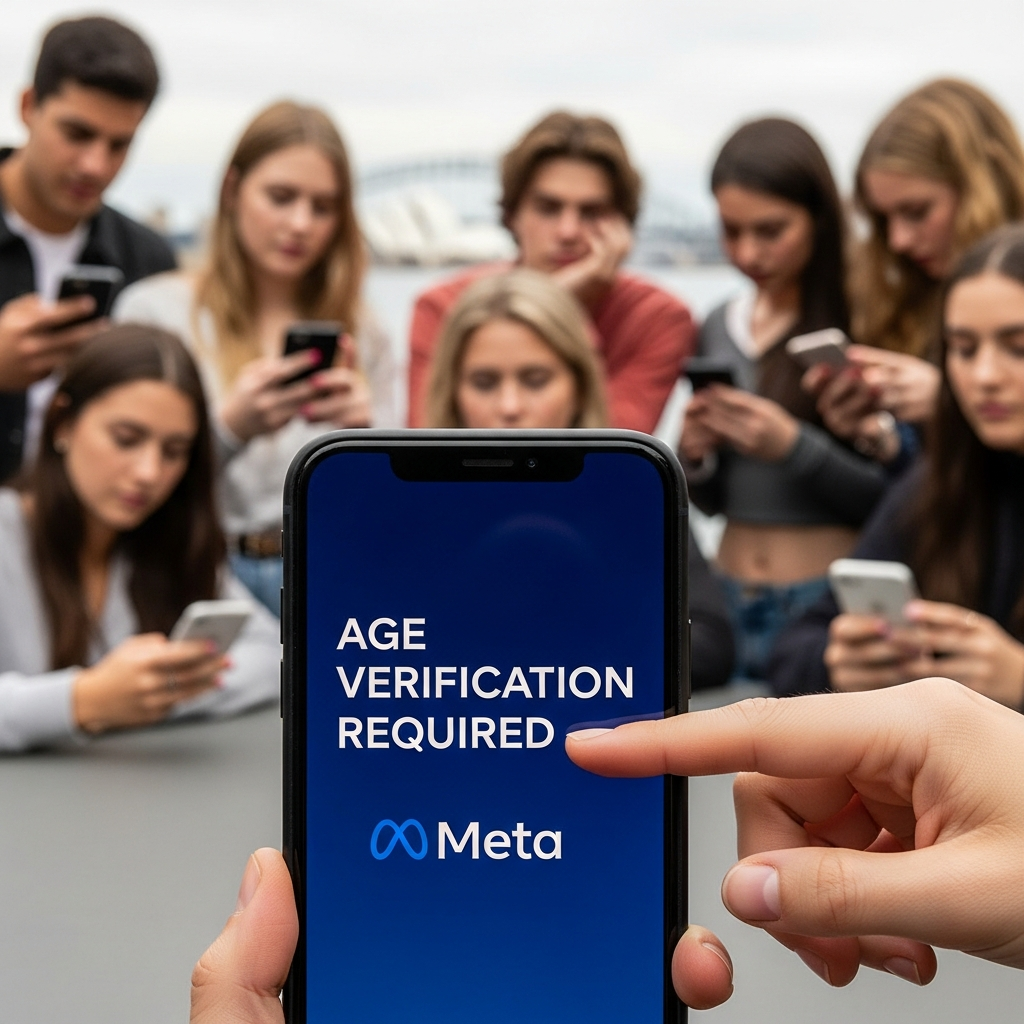
On Thursday, Meta announced its initiative to remove users under 16 from Instagram, Threads, and Facebook in Australia, ahead of a pioneering youth social media ban in the country.
By December 10, Australia mandates major digital platforms, including TikTok and YouTube, to prevent access for underage users, as the new regulation takes effect.
Non-compliance could result in fines of Aus$49.5 million (US$32 million).
A Meta spokesperson stated, “We’re diligently working to remove users under 16 by December 10, but compliance will be a continuous and complex effort.”
The spokesperson added that younger users can download their online histories.
“Before turning 16, you’ll be notified that you can soon access these platforms again, with your content restored as before,” the spokesperson mentioned.
The ban is expected to impact hundreds of thousands of teens, with Instagram reporting around 350,000 Australian users aged 13 to 15.
Some apps like Roblox, Pinterest, and WhatsApp are currently exempt, but the list is subject to change.
– ‘Strange’ –
Meta emphasized its commitment to the Australian law but suggested that app stores should verify ages instead.
“The government should mandate app stores to verify age and get parental consent for teens under 16 downloading apps, removing the need for repeated age verifications,” said the spokesperson.
“Social platforms could then use this verified data to offer age-appropriate experiences.”
YouTube has also criticized the social media ban.
The video platform stated that the new law might make young Australians “less safe,” as under-16s can still visit without an account but lose YouTube’s safety features.
Australia’s communications minister labeled this reasoning as “strange.”
– Self-Esteem –
“If YouTube admits its site contains unsafe or inappropriate content for minors, it’s an issue YouTube should address,” Communications Minister Anika Wells stated.
Wells noted that algorithms had targeted some Australian teens with content harming their self-esteem, leading to tragic outcomes.
“While this law won’t solve all online issues, it aims to help kids pursue a better self-image,” she said.
An internet rights group recently filed a legal challenge against the ban.
The Digital Freedom Project contested the law in Australia’s High Court, deeming it an “unfair” restriction on free speech.
Australia anticipates some rebellious teens will attempt to bypass the laws, possibly by using fake IDs or AI to alter their photos.
Platforms are tasked with finding solutions, though none are expected to be foolproof, according to the internet safety authority.
There’s significant global interest in Australia’s new measures as regulators worldwide grapple with social media’s risks.
Malaysia plans to ban children under 16 from creating social media accounts next year, while New Zealand is set to implement a similar prohibition.