The Burj Khalifa-Dubai Mall Metro Station is set for an expansion to boost passenger capacity by 65%. Upon completion, it will accommodate up to 220,000 daily passengers.
This initiative is led by Dubai’s Roads and Transport Authority (RTA) in partnership with Emaar Properties to meet increasing passenger demands, especially during New Year’s Eve, public holidays, and national events.
The expansion will enlarge the station’s area from 6,700 to 8,500 square meters, raising its hourly capacity from 7,250 to 12,320 passengers.
“This expansion addresses the ongoing increase in metro service demand, with forecasts up to 2040,” stated Matar Al Tayer, Director General and Chairman of the Board of Executive Directors at the RTA. “On New Year’s Eve, passenger numbers exceed 110,000, with a 7.5% average annual ridership growth over the last five years.”
Stay informed with the latest updates. Follow KT on WhatsApp Channels.
The project will also enhance entrances, pedestrian bridges, concourse and platform areas, and add more escalators and elevators. Entry and exit gates will be separated for smoother passenger flow.
There will be more fare gates and expanded commercial spaces to increase revenue. The station will be further integrated with public transport and other mobility forms, along with landscaping improvements.
Station
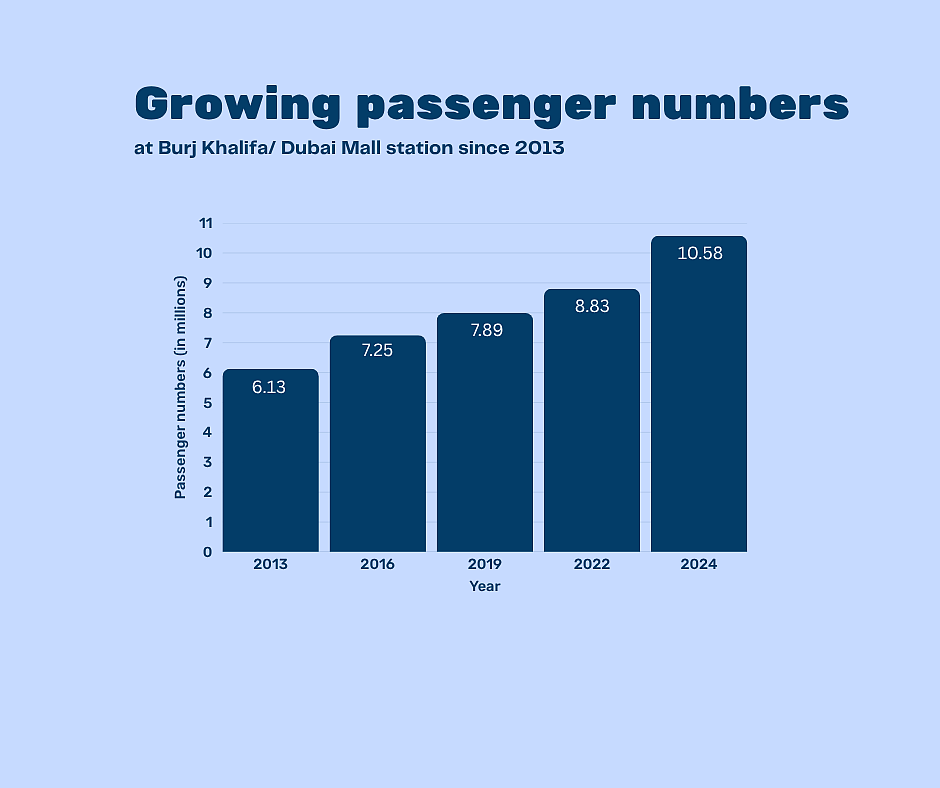
Since its 2010 opening, the Burj Khalifa-Dubai Mall Metro Station has seen steady growth, with passenger numbers rising from 6.13 million in 2013 to 7.25 million in 2016. Between 2022 and 2024, ridership surged by nearly two million, reaching over 10.57 million last year, equating to about 58,000 daily passengers.
In 2012, a walkway was constructed directly linking the station to Dubai Mall, eliminating the need for a feeder bus. The 820-meter temperature-controlled footbridge features 10 travellators.
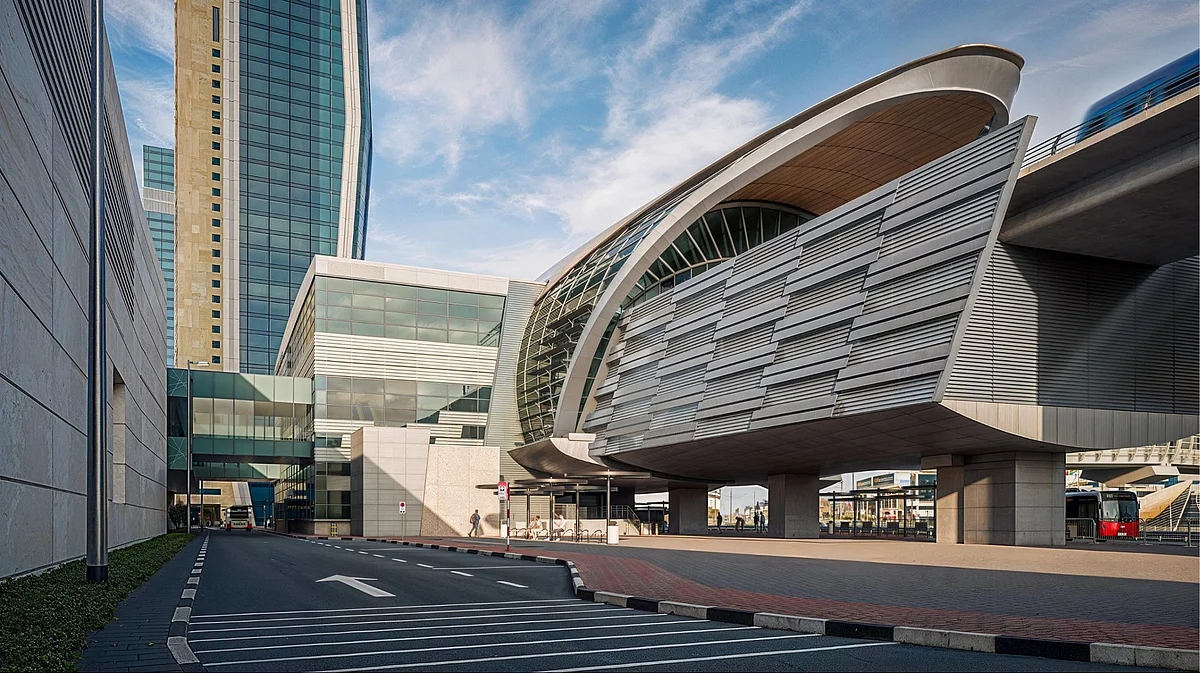
The station’s architectural design mirrors that of the elevated stations on Dubai Metro’s Red and Green Lines, inspired by seashells, emphasizing clarity and simplicity, while minimizing walking distances.
Ground-level entrances are integrated with public transport and alternative mobility options like bicycles and e-scooters. The station offers direct pedestrian access and seamless integration with the urban environment, catering to people of determination, seniors, residents, and parents with strollers.