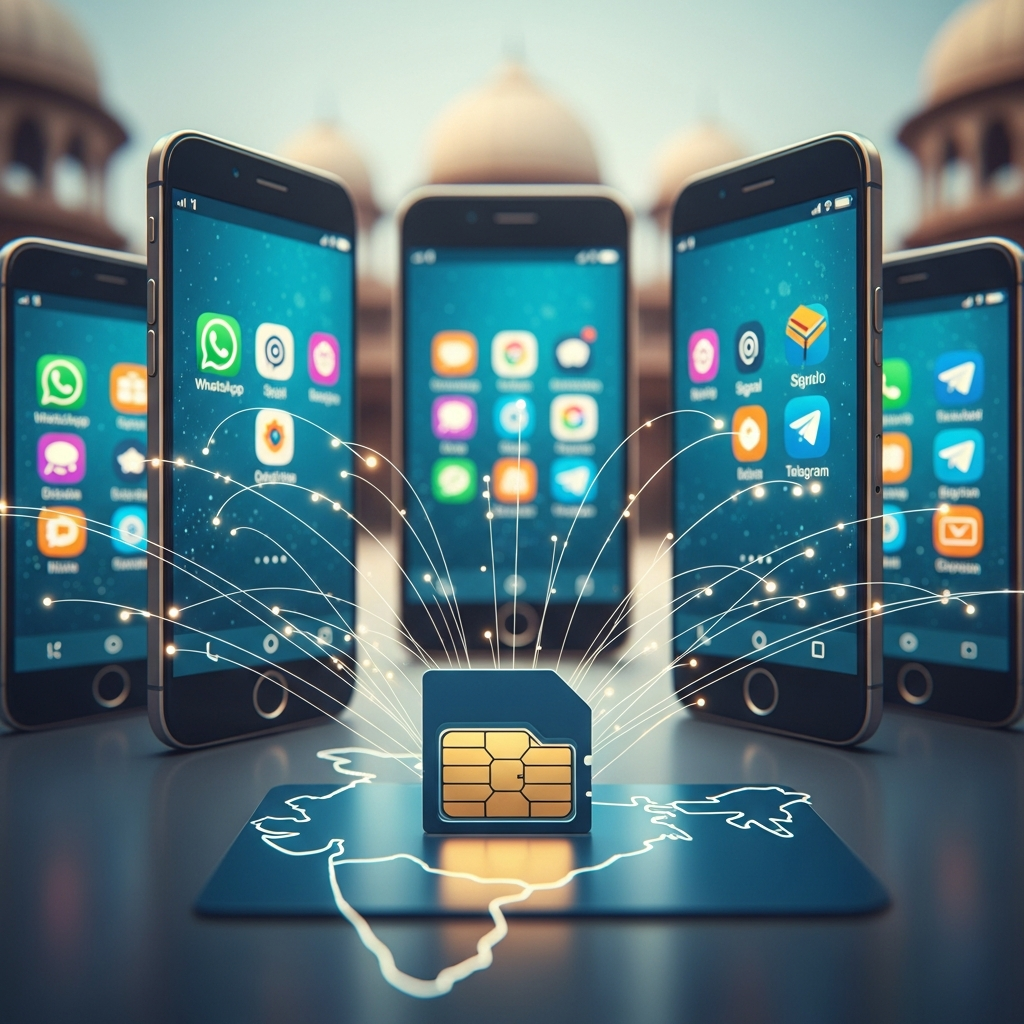
The Department of Telecommunications (DoT) in India has implemented an unprecedented regulatory measure, requiring popular communication apps like WhatsApp, Telegram, Signal, and SnapChat to be linked to registered SIM cards.
This SIM binding is aimed at preventing the misuse of telecom identifiers, networks, and equipment, enhancing cyber security in telecommunications.
Understanding the SIM Binding Rule
This rule mandates that app-based communication services must stay constantly connected to the SIM card, which is tied to the user’s mobile number for identification and service delivery.
Stay informed with the latest updates. Follow KT on WhatsApp Channels.
Platforms must:
-
Ensure their communication service is perpetually linked to the SIM card installed in the device, making the app unusable without the specific active SIM.
-
Ensure that the web version logs out periodically (within 6 hours) and allows users to re-link using a QR code.
-
Complete the implementation in 90 days and submit a report within 120 days.
Linking messaging apps to the registered SIM card means that removing the card from the device would deactivate the app. Currently, these services only connect to a mobile SIM card during initial setup and verification.
“Apps for messaging and calling remain functional even when the linked SIM is removed, deactivated, or relocated internationally, leading to anonymous scams and impersonation frauds,” stated the DoT on Monday.
Reasons Behind India’s SIM Binding Mandate
The Cellular Operators Association of India (COAI) emphasizes that continuous linkage ensures accountability and traceability for any SIM card activity and its associated app, addressing longstanding issues of anonymity and misuse.
“COAI commends the Department of Communications, Government of India for this groundbreaking regulatory measure, ensuring apps are tied to SIMs for safety and consistency,” they stated.
“The directive requires all communication apps to maintain a continuous link with the SIM/phone number used during registration, creating a more accountable digital environment by preventing anonymous misuse and safeguarding users online,” they added.
COAI believes this approach will significantly reduce spam and fraudulent communications and help mitigate financial fraud. Telecom operators are committed to supporting the smooth implementation of this directive.
The association also urged DoT to collaborate with the Reserve Bank of India (RBI) to ensure that SMS OTP remains the primary authentication method for financial transactions, as it is the most secure and traceable operator-verified channel.
[With ANI inputs]