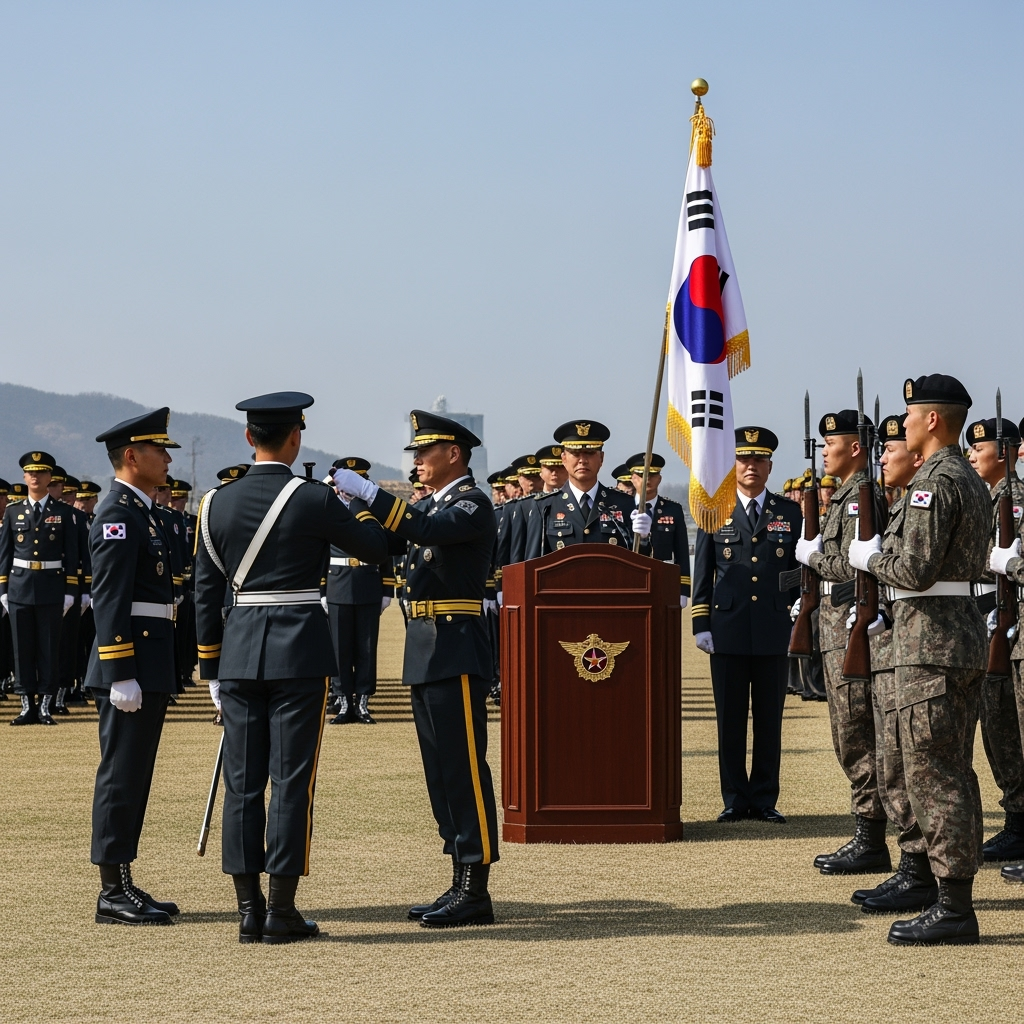
Members of the Central Military Commission of the Workers’ Party, senior leaders of the Ministry of Defense, and military and political leaders of major units in the Korean People’s Army participated in the ceremony, along with families of soldiers who fell during combat.
The ceremony began with the playing of the national anthem of the Democratic People’s Republic of Korea and a minute of silence in honor of the victims, followed by the reading of a decree from the Presidium of the Supreme People’s Assembly awarding medals and official titles, including the title “Hero of the Democratic People’s Republic of Korea.”
Kim Jong Un personally pinned the medals on the images of the fighters who perished in the battles.
In his speech, the leader of the Democratic People’s Republic of Korea affirmed that “the party and the state highly appreciate the sacrifices of those participants in the operation who defended the sacred authority and dignity of the state,” adding that these fighters “fought decisive battles outside the homeland with courage befitting the Korean army and people, and returned home with honorable military achievements.”
Kim pointed out that holding the ceremony at the Central Committee headquarters of the party aims to “glorify the heroes before the homeland and the people,” considering that these ceremonies represent “a special and valuable medal for the victors.”
It is noteworthy that Russian Chief of Staff Valery Gerasimov informed President Vladimir Putin last April that soldiers and officers in the Kursk region, including the participation of Korean special forces units, were involved in countering Ukraine’s attempts to penetrate the area.