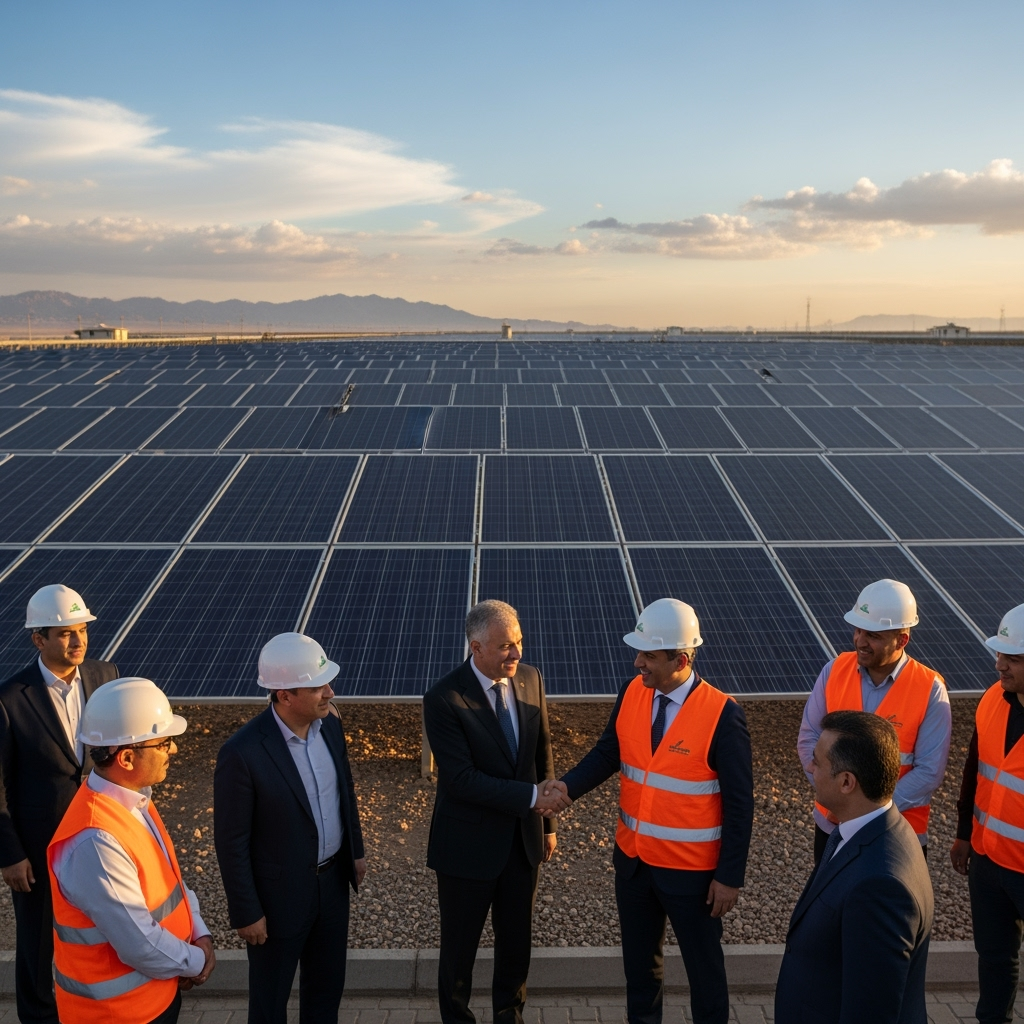
The station was established in Karbala Governorate on an area of 4,000 dunams, with investment from Al-Bilal Group and under the supervision of the Ministry of Electricity. It is considered the largest of its kind in Iraq. The first phase includes more than 39,000 solar panels, aiming for a total project capacity of 525 megawatts in Karbala and Babel. This enhances grid stability and reduces reliance on fossil fuels and harmful emissions.
The inauguration of the station was attended via video call by Iraqi Prime Minister Mohammed Shia’ Al-Sudani and Iraqi Minister of Electricity Ziyad Ali Fadel on Sunday. They confirmed that the project represents a starting point for additional investments in clean energy and sets Iraq on the path to sustainable development.
The project includes an integrated storage system and smart control technologies to manage surplus production and ensure supply stability during periods of low sunlight or increased demand. It also serves as a national training platform for young Iraqi staff to enhance technology transfer and localize renewable energy expertise.
This project is part of a strategic plan to raise the share of renewable energy to 12% of total electricity production by 2030, improving the national grid’s flexibility and ability to meet peak demand. It also includes the “Basra Sun” project in the south, with a capacity of 1,000 megawatts and 2 million solar panels, making it one of the largest renewable energy projects in the region.
The idea of establishing the Karbala solar power station began in 2021, with construction starting in early 2023, overcoming infrastructure and equipment transport challenges with government and investor support. This reflects a clear political will to transition towards sustainable energy sources and reduce reliance on traditional solutions.
The inauguration of the Karbala solar power station represents a historic step in Iraq’s energy sector, enhancing investor confidence and setting the country on the path to achieving its climate and economic goals in line with international commitments and sustainable development plans.