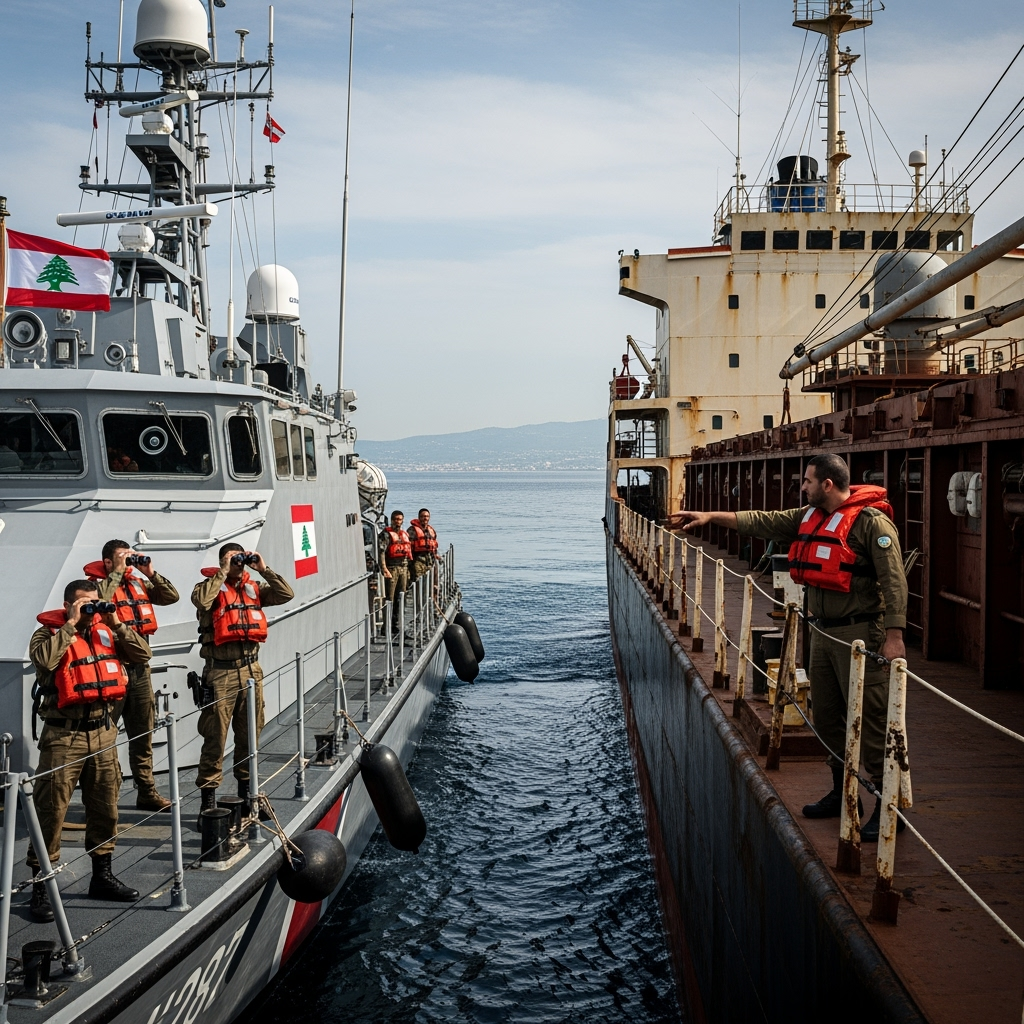
The Lebanese army announced in a statement on Friday that a unit of marine commandos, in cooperation with naval and air forces, conducted a chase operation that led to the detention of the ship ‘Hawk III’ about 30 nautical miles off the coast. This followed news yesterday about an attempted escape of the fuel ship docked at Jiyyeh port, despite the Lebanese Ministry of Electricity previously confirming its cargo met specifications and allowing its unloading last week.
Lebanon has been suffering from a chronic electricity sector crisis for decades, which has worsened in recent years due to the economic collapse and the declining production capacity of its dilapidated plants. The electricity crisis in Lebanon has remained unresolved since the end of the civil war in the early 1990s.
Before the economic crisis began in October 2019, government electricity was provided to residents in various cities and regions for 12 to 18 hours a day. After the crisis began, supply hours dropped to as little as two to eight hours daily. When the state’s fuel reserves ran out and it could not afford new supplies, the country experienced complete power outages lasting for weeks at a time. Under these conditions, diesel generators became the alternative power source, as their owners have long resisted solving the energy crisis to protect their business interests.