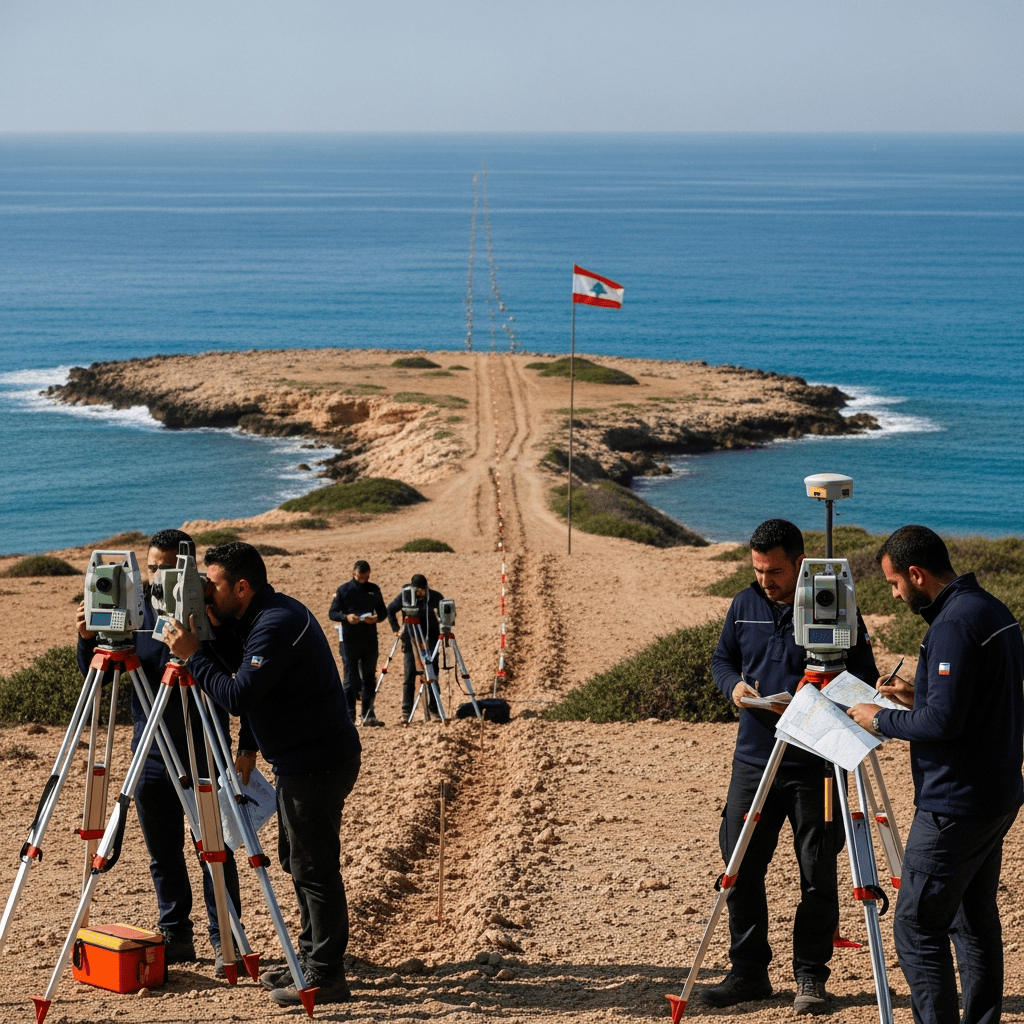
During his meeting with a delegation from the ‘Journalists for Freedom’ association, led by journalist Asaad Bechara at the Baabda Palace, Aoun stated: ‘France has provided us with precise maps regarding the borders, and we are fully prepared to demarcate the borders as soon as the Syrian side decides. We can establish a committee for land demarcation and another for maritime demarcation, while the Shebaa Farms, Kfar Shuba Hills, and the Lebanese part of Ghajar will be left for the final stage,’ according to the Lebanese National News Agency.
Speaking about the situation in the south, President Aoun considered that the confrontation with Israel has reached a ‘military dead end,’ questioning: ‘Is Lebanon capable of enduring another war? What are our options against an enemy that occupies our land daily, targets us, and holds our sons captive?’
He added: ‘In purely military terms, when an army reaches a dead end in battle, negotiation becomes the available option.’ Aoun had affirmed in a meeting with a delegation of members last Friday that ‘Lebanon has chosen negotiation with Israel to avoid another round of violence.’
Aoun further added: ‘Lebanon is convinced that wars cannot lead to positive results and that only negotiations can create a climate that leads to stability and security, finds solutions to unresolved issues, and alleviates the suffering of citizens,’ as reported by the Lebanese National News Agency.
The President clarified that what he is doing concerning negotiations within the ‘Mechanism’ committee is not to appease the international community, but because it is in Lebanon’s interest, stressing: ‘We have made the decision, and there is no turning back. I have communicated this to all Arab and foreign officials I met, including US Secretary of State Marco Rubio when I met him in New York, and we are committed to this choice.’
He added: ‘We hope these negotiations will lead to positive results. However, it must be emphasized that the success of these negotiations largely depends on the stance that determines whether the negotiations will lead to practical outcomes or fail.’
A ceasefire agreement between ‘ ‘ and Israel came into effect on November 27, 2024, more than a year after Hezbollah opened what it called the ‘Support Front for the Gaza Sector’ on October 8, 2023. The Israeli army was supposed to complete its withdrawal from the areas it occupied in southern Lebanon by the dawn of January 26, 2025. However, Israel did not adhere to the deadline and maintained its military presence in five strategic points in southern Lebanon, citing ‘ensuring the protection of the northern settlements.’ Despite the agreement, strikes are occasionally launched in Lebanon, claimed to remove ‘Hezbollah threats.’