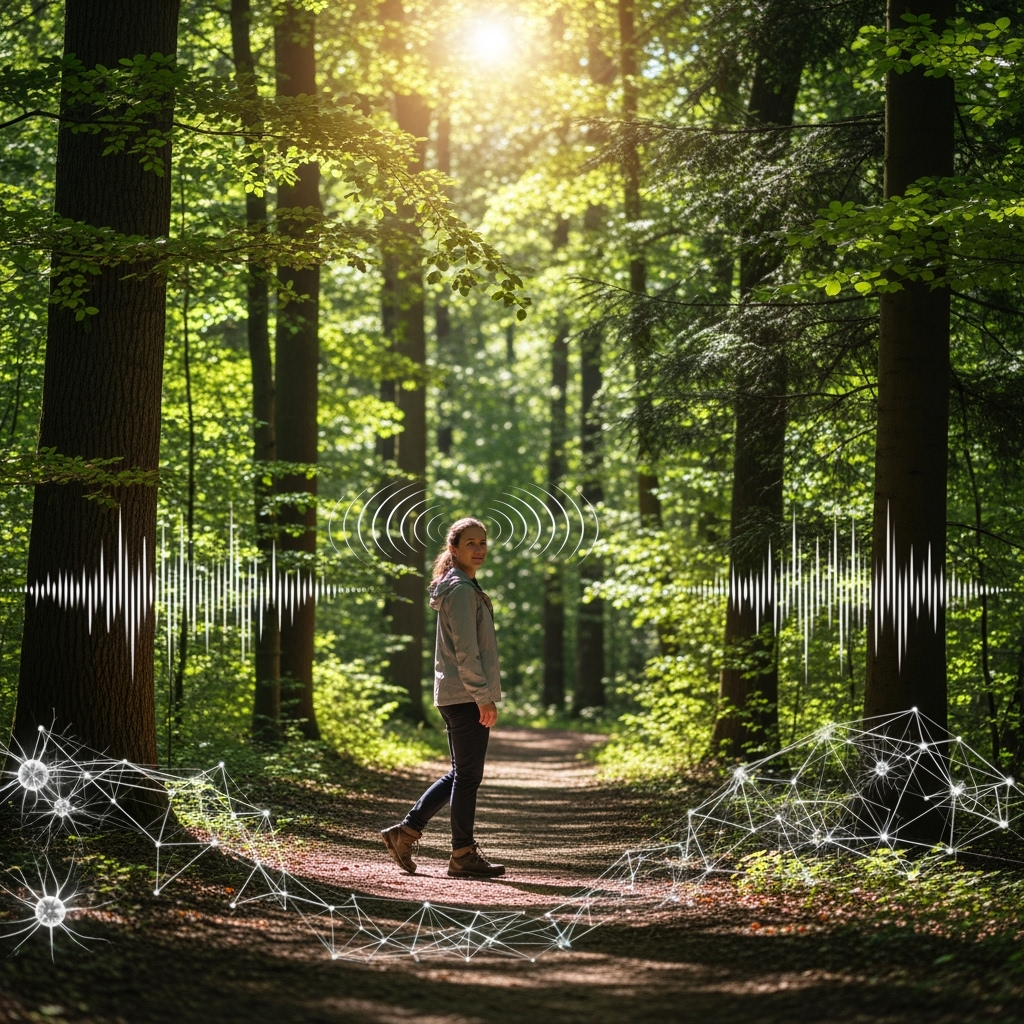
In 2008, 38 students from the University of Michigan embarked on a walk. Half ventured through the serene Nichols Arboretum in Ann Arbor for 2.8 miles, while the other half navigated the bustling downtown streets. A week later, they switched paths.
Before each walk, students took a test measuring attention and working memory, requiring them to repeat long sequences of numbers in reverse. Upon returning, they retook the test. Walking in the city slightly improved scores, but nature walks enhanced performance by nearly 20%.
“Enjoying the nature walk wasn’t necessary to reap cognitive benefits,” said Marc Berman, a psychology professor at the University of Chicago, who conducted the study while at Michigan. Participants benefitted equally, whether walking in January or July.
Numerous studies have explored nature’s impact on minds, often finding that green spaces enhance cognition, creativity, and mood.
Many have felt nature’s rejuvenating power firsthand—clarity after a mountain hike, or focus after a park stroll. Scientists are investigating the reasons behind this.
In his book, “Nature and the Mind,” Berman credits these benefits to “attention restoration theory.” Proposed in the 1980s by Rachel and Stephen Kaplan, it suggests our focus is finite and nature helps restore it.
Nature’s “soft fascination” gently engages our attention without overwhelming us, unlike urban environments that demand vigilance and exhaust us. Examples include watching ocean waves or fields of wildflowers.
Berman suggests nature’s curved lines and fractals, like river arcs and snowflake patterns, are easier for the brain to process than cityscapes, offering mental respite.
Attention restoration theory has been influential in environmental neuroscience, though some remain unconvinced.
“Evidence is growing that nature benefits attention,” said Gloria Mark, an informatics professor at UC Irvine. However, attention restoration remains a theory without definitive explanation.
Amy McDonnell, a postdoctoral fellow at the University of Utah, added that much research depends on cognitive tests and subjective reports, leaving gaps about brain activity.
McDonnell’s similar experiment showed that nature walks resulted in less immediate brain activity but greater efficiency during subsequent tasks, indicating a refreshing effect.
Debate persists on whether nature’s physical aspects or other factors provide restorative benefits. McDonnell questioned if solitude, exercise, or absence from work contribute, or if air quality plays a role.
Another theory suggests olfactory signals in nature, like tree-emitted chemicals, affect well-being.
Ruth Garside, from the University of Exeter Medical School, believes nature’s benefits likely stem from a combination of factors and warns against overanalyzing them.
“Part of the magic might be this mix at work,” Garside said, cautioning against losing insights by dissecting explanations.
This article originally appeared in The New York Times.