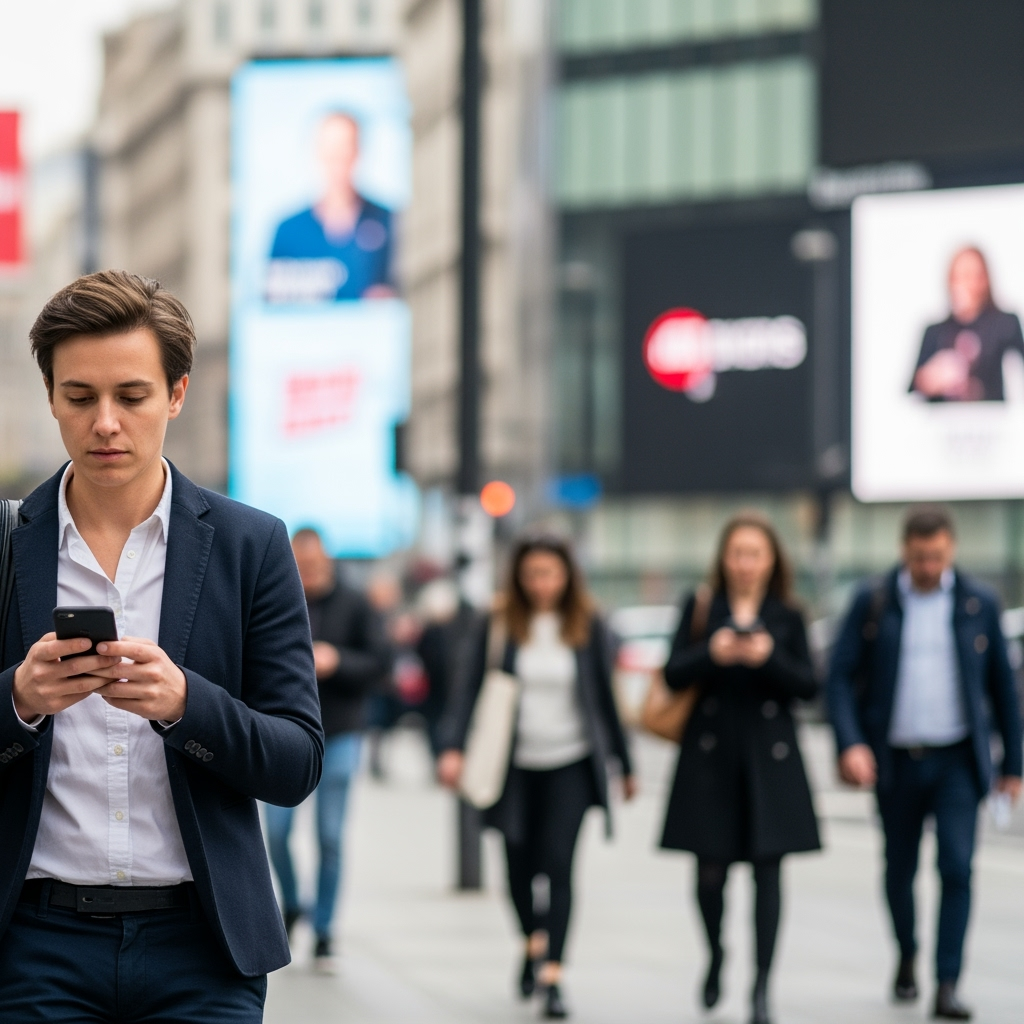
“I wake up, open my laptop, join meetings, and worry about deadlines. Sadly, I play my role in this act of ‘normal life.’ In between, I scroll. In seconds, my screen displays my people — a child pulled from debris; a man so thin you can see every rib.”
“Scroll again — Love Island drama. Skincare hauls. Top brunch spots… This is our world now; genocide, hunger, and mass death reduced to brief moments between content, swallowed by algorithms that serve us distractions right after unbearable news.”
These are the thoughts of Hazar Al-Kilani, a 27-year-old PR manager in the GCC, describing the unsettling pace of modern life: unimaginable suffering mixed with endless distractions and dopamine hits.
“As the genocide continues, our view of reality narrows even further,” Hazar says. “We’ve turned the unimaginable into background noise. We’ve learned to keep moving, keep working, while genocide happens before us. I can’t stop asking… how did this become our reality? And how do we live normally in it?”
What impact does this constant shift between tragedy and triviality have on our mental health? “This deliberate juxtaposition is the root of deep emotional incoherence,” explains Dr. Tara Wyne, clinical psychologist and director of The Lighthouse Arabia Centre for Wellbeing.
“Seeing horror, terror, and tragedy triggers emotional pain and moral outrage. With short-form content and scrolling, your brain can’t process this before being swung into the mundane, further disorientating your nervous system.”
The result? This overload fragments people’s sense of self, leaving the brain without pathways to cope effectively. There’s an increase in secondary traumatization, causing intrusive thoughts, sleep disturbances, and heightened anxiety. People become desensitized to trauma, showing emotionally-blunted reactions, compassion fatigue, and emotional withdrawal, leading to persistent low moods.
When algorithms continuously serve dopamine-inducing content mixed with horrific reality, many feel a dystopian “unreality.”
“At the beginning of the genocide, I would see things online and find myself crying daily, getting very emotional,” Al-Kilani said. “But now, I don’t anymore. I feel like I’ve gotten used to the images of death as they’re mixed with the mundane — like everyone else. It takes something truly shocking to make me realize this isn’t normal. I feel like I’m living in a simulation — how is this real life?”
People are defaulting into a false lightness and numbness, adds Dr. Wyne. “We flip through the serious and the ridiculous with the same attention. There’s a profound sense of alienation, of feeling misunderstood, along with an inability to convey how our perspectives have shifted while parts of the world continue as if nothing has changed.”
How can people stay informed without compromising their emotional wellbeing? “Awareness and intentionality are critical,” said Dr. Wyne. “Our values influence our behavior, so if being a humane, active global citizen is vital to your identity, you need to cultivate awareness of your own tolerance for witnessing others’ pain without collapsing due to it.”
In this case, healthy compartmentalization is crucial when global suffering is relentless. That means choosing when and how to connect with news, identifying when you have the most capacity, and selecting times when you’re not already overwhelmed and stressed by daily life. Additionally, it involves being mindful of your news sources to avoid accessing information while passively scrolling through social media clips and reels.
Despite this intentionality, managing personal mental health amid ongoing genocide doesn’t come without guilt and shame. “As painful as it is to see, [Palestinians] are literally risking their lives to show us what’s happening,” says Al-Kilani. “The least I can do is not dismiss it as ‘too much for my mental health’ and scroll away. I feel I owe it to them to watch, to engage in any way I can. Still, it leaves me feeling like my brain is split in two.”
That inner conflict is familiar to many: the guilt of witnessing humanity’s worst failures while still being safe enough to experience joy. The swing between empathy and helplessness creates distress and a sense of powerlessness.
Dr. Wyne emphasized that this safety privilege must be acknowledged and used to contribute meaningfully to alleviating others’ suffering: “However small these actions are — whether it’s raising awareness, having difficult conversations, writing to changemakers, or simply bearing witness — doing something, anything, helps restore a sense of agency and humanity.”
Which leads back to Al-Kilani’s opening question: how do we live normally amid a genocide folded into the social media scroll? For her, the only answer is refusing to disengage. “Hold on to your empathy,” she adds. “Keep watching, keep speaking up. Don’t surrender to the system that would rather have us indifferent than human.”