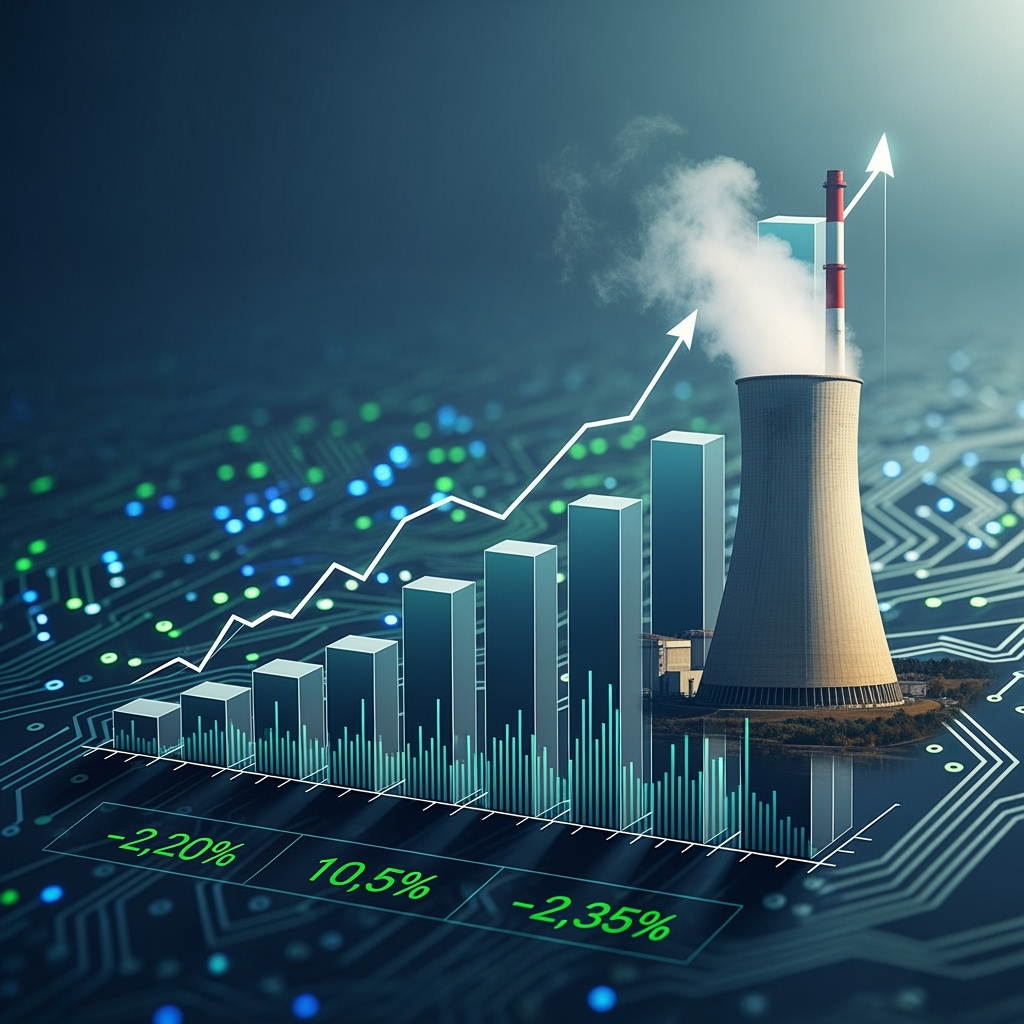
Investor excitement is surging in the nuclear energy sector, fueled by increasing demand from artificial intelligence and supportive policies from Washington and London.
Advanced nuclear stocks have soared. Oklo’s shares have climbed over 1,000% in the past year, with a 63% spike just last week. NuScale rose 26%, and Nano Nuclear jumped nearly 40%. Uranium producers like Cameco and Uranium Energy also saw more than 10% gains.
Key factors include a new US-UK nuclear partnership, fast-tracked licensing and fuel security plans from the White House, and pilot programs by the Department of Energy to speed up deployment. Investors are also recognizing AI’s massive power demands, with US data centers predicted to triple their electricity consumption to 8.6% by 2035.
“It’s a rare mix of policy momentum and tech demand,” says Jacob Falkencrone, Global Head of Investment Strategy at Saxo Bank. However, some are cautious. Oklo’s CFO plans to sell $9 million in stock, and Fluor, NuScale’s largest shareholder, is reducing its stake, hinting that valuations might be outpacing construction schedules.
Why AI is boosting nuclear energy
The nuclear revival is driven by physics, not ideology. AI workloads are driving electricity demand to new heights. The International Energy Agency projects global data centers could use as much energy by 2030 as Japan today.
Renewables can’t meet this demand alone. Nuclear provides a unique solution: carbon-free, 24/7 baseload power with over 90% uptime, outperforming wind, solar, or gas.
Tech giants are noticing. Google is committed to nuclear power for AI operations, Microsoft is considering reopening closed plants, and Meta has partnered with Constellation Energy. These early-stage projects reflect a growing synergy between Silicon Valley and nuclear power.
“AI has made nuclear relevant again as it’s one of the few sources that can operate continuously, 24/7, for decades,” Falkencrone explains.
The promise and challenges of small reactors
Enthusiasm is high for small modular reactors (SMRs) and microreactors—compact designs suited for factory production and quick deployment. Numerous startups are developing these in the US and Europe, with China already deploying its first units.
The appeal: lower costs, faster timelines, and flexible locations. But the economics are unproven. No SMR is completed in the US, and first-of-a-kind projects often face delays and cost overruns. Licensing challenges, immature fuel supply chains, and lack of binding agreements complicate financing.
A limited but growing investment field
Investor interest is heightened by scarcity. Oklo, NuScale, and Nano Nuclear are the only pure-play developers listed in the US, all via SPAC mergers—a structure that has underperformed in other sectors but excelled here.
More companies are preparing for SPAC listings, including Terra Innovatum, Terrestrial Energy, and Eagle Energy Metals, each with unique strategies from molten salt reactors to hybrid mining models. However, they are years from commercial success.
Risk-averse investors might prefer regulated utilities extending existing plants for steadier returns. Uranium producers and enrichment firms could benefit from efforts to reduce dependence on Russian supply. Engineering and component suppliers might become key players in the nuclear expansion.
Risks that could hinder the rally
Despite optimism, nuclear remains risky:
– Construction risks: Cost overruns average over 100%.
– Regulatory risks: Licensing is slow and politically sensitive.
– Community resistance: Local opposition has blocked projects before.
– Supply chain fragility: Enrichment relies heavily on Russia.
– Market psychology: Insider selling indicates caution even among industry leaders.
Investor focus points
Key milestones will determine the rally’s sustainability: binding agreements with clear pricing, regulatory progress on design and permitting, secured fuel supply, and credible financing. Future units must be cheaper and faster to complete.
The next few months are crucial. The Department of Energy will announce pilot awards, Illinois and New York legislatures are debating new plant moratoria, and several nuclear SPACs face shareholder votes. The first credible SMR construction in North America could mark a turning point.
Conclusion
The nuclear rally is driven by AI’s electricity demand, favorable policies, and a shortage of investable companies. However, hype often outpaces reality in this industry.
Investors should maintain balance. Uranium producers and regulated operators offer lower-risk exposure, while SMR developers and SPACs are high-risk investments. A wise strategy is to monitor milestones—not headlines—and view nuclear as a long-term investment, not a short-term trade.