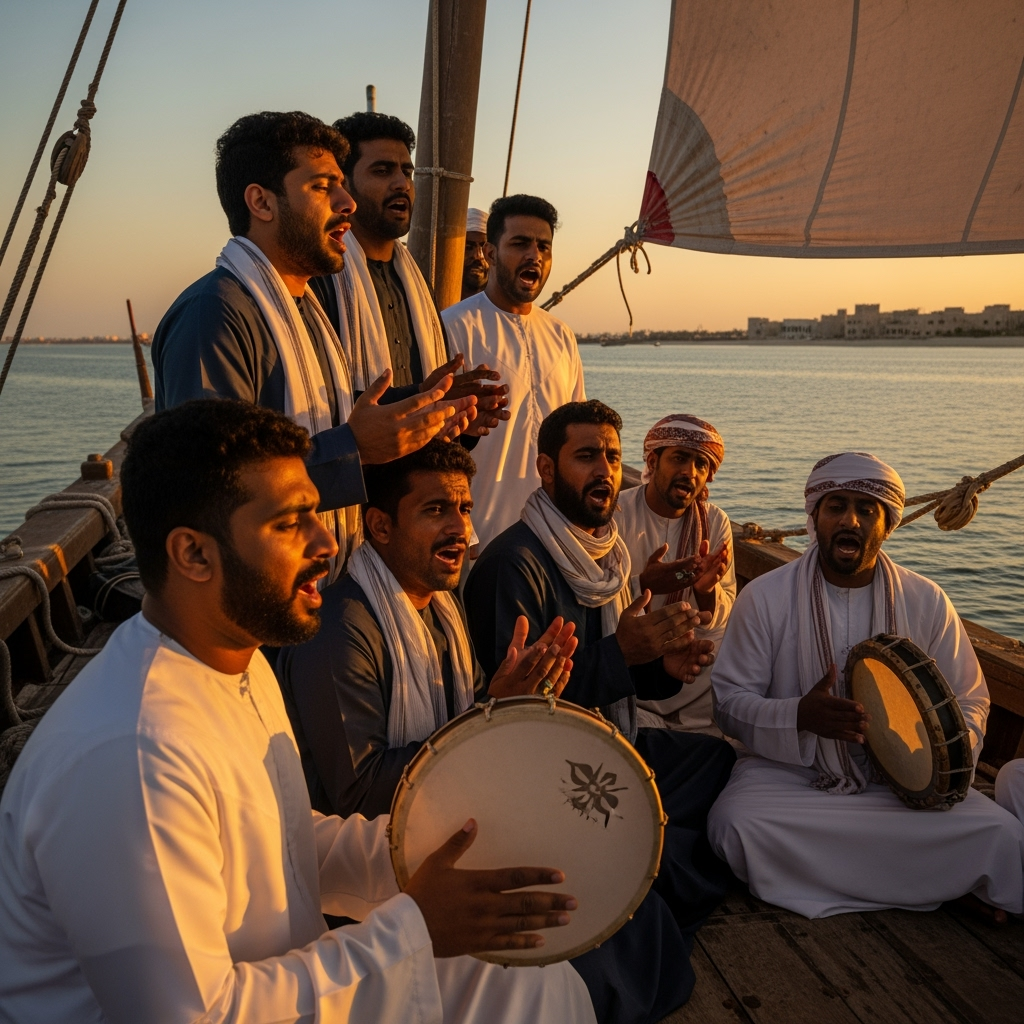
During a recent cultural gathering in Dubai, a calm room suddenly resonated with the rhythmic clapping of hands and harmonious deep voices. The sound was captivating, reminiscent of the ocean’s own melody. These were nahma, or sea chants, traditionally sung on pearl diving vessels navigating the Arabian Gulf.
For many attendees at the Sharjah Maritime Museum, it offered a glimpse into a nearly forgotten world. For the Emiratis leading the event, it was a poignant reminder of how music supported their forefathers through arduous maritime journeys.
“Each task on board had its own chant,” explained Emirati artist and composer Ibrahim Jumaa, an arts advisor at the Hamdan bin Mohammed Heritage Centre. “The crew sang while preparing the ship, hammering nails, hoisting sails, or dropping anchors. These chants were more than music; they synchronized the work.”
Stay updated with the latest news. Follow KT on WhatsApp Channels.
Before engines and GPS, pearl diving excursions could span months. Divers risked their lives in search of oysters, while the crew labored to keep the vessel steady. Singing was both entertainment and a means of survival.
“The ship’s singer, called the Naham, was crucial,” Jumaa said. “He boosted morale, coordinated movements, and offered solace during losses. Without the chants, the sea’s silence could be overwhelming.”
The Naham’s role was so valued that he received one and a half shares of the voyage’s profits, more than a regular crew member. Larger ships sometimes had multiple Nahams, each with a unique voice.
Ali Khamees, a researcher at the Sharjah Institute for Heritage and an author on pearl diving history, described the chants as a “living diary of the sea.”
“Through these songs, we hear tales of bravery, fatigue, longing, and sometimes sorrow,” he noted. “They weren’t documented; they were memorized. Thus, each performance today is an act of preservation.”
Certain chants corresponded to specific actions. When casting Al Sinn (an iron weight) to stabilize the ship, the Naham initiated a hymn called Al Taqseera. The divers and pullers responded in unison: “Aaaah.” This sound reverberated over the water, akin to a prayer before diving into the unknown.
Other chants were more playful. During lengthy evenings, the Naham would perform Samar songs, sharing stories and jokes to keep the crew alert.
Here’s a glimpse into this ancient tradition:
“The chants weren’t solely serious,” noted Khamees. “They were also about joy and laughter. Even in hardship, sailors found space for entertainment.”
What captivated the modern audience was the interactive nature of the performance. The chants required call and response, with voices rising together like waves. These weren’t passive songs but ones that drew everyone into the rhythm.
“This is why we continue to perform them,” Jumaa concluded. “They remind us of our people’s resilience. These weren’t professional musicians; they were sailors and divers. But through their songs, they left us a cultural legacy as profound as the sea they navigated.”