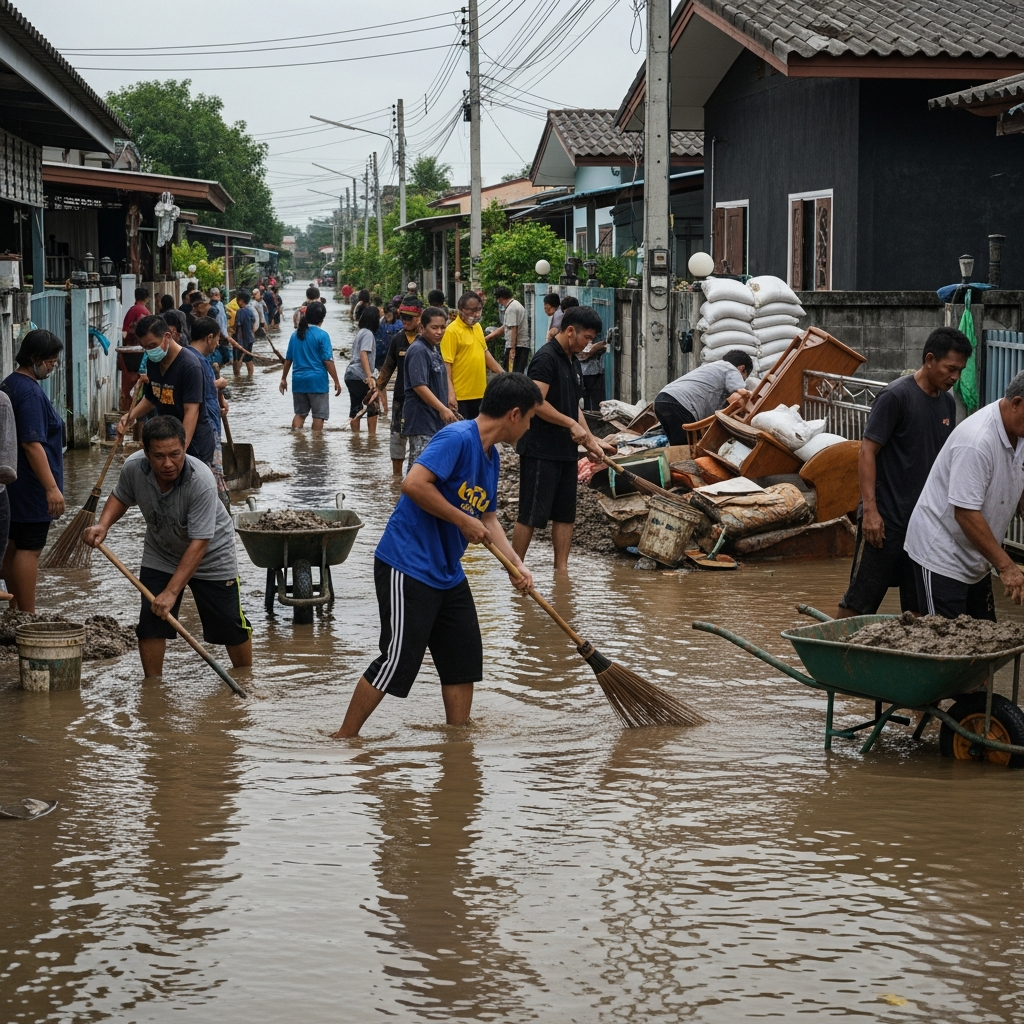
Extensive cleanup operations commenced in southern Thailand on Saturday after the prime minister issued an apology for the severe damage caused by the most significant flooding in years.
This week, intense monsoon rains inundated regions of Thailand, Malaysia, and Indonesia, resulting in over 300 fatalities and leaving thousands trapped, many on rooftops awaiting rescue.
On Friday, Indonesian rescuers faced challenges reaching the hardest-hit areas of Sumatra island, while hospital staff in southern Thailand resorted to using refrigerated trucks for bodies as the morgue surpassed its capacity.
Stay updated with the latest news. Follow KT on WhatsApp Channels.
In southern Thailand’s Songkhla province, water levels soared to three meters (9.8 feet), claiming at least 145 lives in one of the decade’s worst floods.
Prime Minister Anutin Charnvirakul visited a shelter for evacuees in the severely affected Hat Yai district on Friday.
“I must sincerely apologize for this happening under my administration,” he stated to reporters in footage aired on AmarinTV.
“The next step is to prevent further deterioration,” he added, setting a two-week timeline for the district’s cleanup.
The Thai government has introduced relief measures for flood victims, including compensations of up to two million baht ($62,000) for households that lost family members.
Public Criticism
As floodwaters subsided, shop owner Rachane Remsringam sifted through debris scattered across his general goods store, mourning losses worth hundreds of thousands of dollars.
His store, Madam Yong, was looted and vandalized after the disaster, he reported.
Public criticism of Thailand’s flood response has intensified, leading to the suspension of two local officials for alleged incompetence.
An opposition People’s Party MP criticized the government, stating it “misjudged the situation” and committed “errors in managing the flood crisis.”
Indonesian officials reported that this week’s floods and landslides have claimed at least 200 lives, with about 90 still missing.
In Malaysia, two people died due to floods caused by torrential rains that submerged parts of the northern Perlis state.
The annual monsoon season, typically from June to September, often results in heavy rains, causing landslides and flash floods.
A tropical storm has worsened the situation, making the death tolls in Indonesia and Thailand among the highest in recent years for such events.
Climate change has influenced storm patterns, affecting the duration and intensity of the season, resulting in heavier rainfall, flash floods, and stronger winds.
A warmer climate holds more moisture, leading to intense rain events, while warmer oceans can amplify the strength of storms.