[Editor’s Note: This article is a part of Khaleej Times’ Schools and Parents, a section dedicated to assisting families in the UAE in navigating educational options. It provides guides, expert advice, and insights from parents to help make informed decisions about schools, curricula, and communities.]
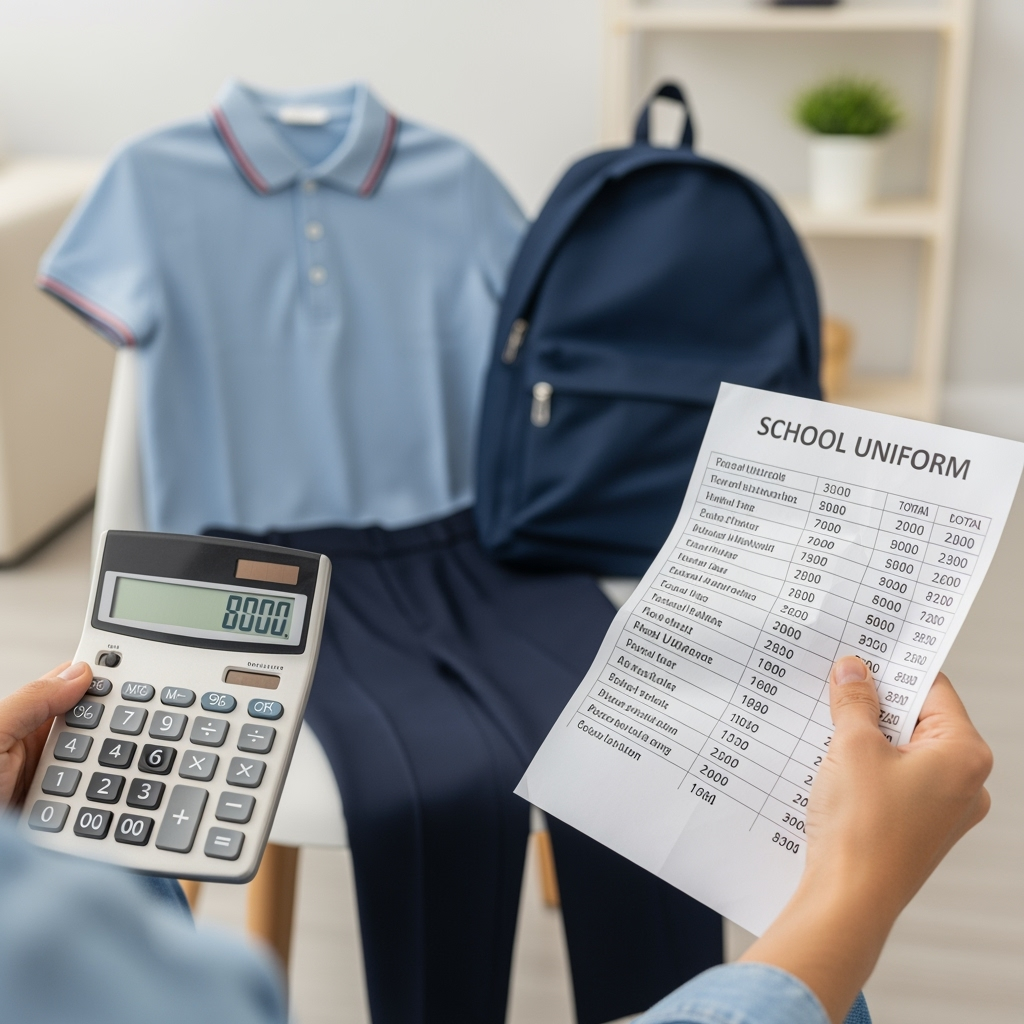
For some families in the UAE, buying school uniforms costs just a few hundred dirhams annually. For others, it can reach Dh2,000 per child, impacting the family budget significantly.
With rising costs and additional items like jackets, shoes, and bags, families are being cautious about what’s necessary.
Schools in the UAE will reopen on Monday, August 25, after nearly two months of summer break. As Khaleej Times spoke with various parents, we discovered that some schools require mandatory uniforms for grades K–11 costing about Dh600, including shirts, pants or skirts, PE clothes, and a jacket. However, the addition of blazers, shoes, accessories, and seasonal items at other schools can push costs to nearly Dh5,000 annually.
Stay updated with the latest news. Follow KT on WhatsApp Channels.
Comparing UAE uniform costs globally
International comparisons indicate UAE parents face higher uniform costs than many others worldwide, placing the UAE among the pricier educational markets.
According to the National Retail Federation, US K-12 shoppers budget $253 (about Dh923) per child for clothing and accessories, whereas in the UK, research by the Children’s Society shows parents spend around £287 (Dh1,355) for primary and £422 (Dh1,992) for secondary students.
Parents scrutinizing expenses
Syrian expat Aiham Joratli, whose daughter is starting Year 1, spends approximately Dh1,500 in Al Ain on back-to-school items.
“Two uniforms cost Dh600. A branded school bag is Dh350, shoes Dh200, and lunch supplies Dh300–400,” he explained. “Prices in Al Ain are more reasonable than in Dubai or Abu Dhabi, but it depends on your choices.”

For Dubai parent Ami Rasheed, whose children attend a GEMS school, uniforms alone cost Dh1,000.
“That covers two sets of shorts and pants, two regular uniforms, one sports uniform, and one winter jacket per child,” she mentioned. “Shoes are separate — about Dh50 each for regular ones — as kids outgrow them fast. I buy reasonably priced sports shoes for this reason.”
She added, “I prefer purchasing everything from ‘Threads’, the official supplier, instead of searching for cheaper alternatives in Sharjah. Convenience matters too.”
American expat Natalia Miranda said, “With a nine-year-old son, I’m budgeting Dh2,000 for his back-to-school uniform, PE kit, trainers, boxing gear, lunch bag, and extras. However, I wish the uniforms were of higher quality with more natural fabrics.”

Tailoring and second-hand solutions
Many parents use community WhatsApp groups, Facebook pages, or school sales to find pre-loved school items. However, not everything is available second-hand, making tailoring a viable alternative.
Neimat Ilyas, whose son attends a GEMS school, said, “I’ve been getting school uniforms tailored for three years now. Word spread in WhatsApp school groups that some tailoring shops replicate school uniforms. These shops source fabric, stitch the uniforms, and embroider the logo from an internet image. The difference is the official store uses a digitally printed logo, while tailors stitch theirs. The school hasn’t raised any issues so far.”
She emphasized that the cost difference is significant. “In the first year, we saved around Dh100 per set. We ordered nearly four sets of uniforms — what costs Dh95 for a shirt and Dh105 for pants at the official store only costs Dh50 at the tailor.
The main problem with the official uniform center is their sizing — everyone complains about it. You either pay extra for alterations or choose customization. But even then, designated vendors charge an additional Dh50 for customization on top of the high uniform price.”
Smart strategies for cost-cutting
To manage expenses, some parents buy one set now and another mid-year to spread costs. Uniform swap programs, where gently used items are exchanged or donated, help reduce costs and waste.
Others suggest buying accessories and non-logo basics from hypermarkets, provided they match school color and style guidelines.
French expat, Marie Dubois, said, “I usually buy one set at the year’s start and another midway to spread costs as I have three children. Uniform swap programs organized by schools help, and for basics without logos, I buy them from UAE shops when on sale or from my home country while traveling, as long as they match school colors and style.”
Uniform rules and transparency
Education authorities urge schools to clearly state in fact sheets if uniforms must be bought from official suppliers.
Many Dubai schools now allow parents to purchase from external vendors if items match the required design. Uniform costs must be transparently shared with parents before the school year begins.
For instance, North London Collegiate School (NLCS), one of Dubai’s most premium schools, lists uniform prices in its fact sheet ranging from Dh300 to Dh5,000, available directly from the school or approved suppliers.
Schools advocate uniform benefits
While parents struggle with rising uniform costs, school leaders argue uniforms promote student equality, convenience, and school spirit, though balancing cost and quality remains a challenge.
Lisa Johnson, Principal, American Academy for Girls, said, “We believe uniforms foster a sense of belonging and reduce social pressures around clothing brands, allowing students to focus on learning. My support for uniforms stems from my experience as principal of the first public school in Oklahoma (US) to adopt uniforms, where they proved effective in fostering equity in a community with varied economic backgrounds. Uniforms also reduce morning stress over outfit choices, especially for adolescents.
Collaborative uniform design
Headteachers reiterated the importance of community feedback for uniforms.
“If major changes are made, we consult families from the start. As a small school, offering a wide variety of uniform options while keeping stock can be challenging, but we explore ways to allow girls to individualize style while adhering to guidelines.
“Our supplier, Magrudy’s, is one of Dubai’s largest vendors and incorporates sustainable practices, including using recycled fabric. We also host a uniform drive at the end of each school year for parents to donate outgrown items for exchange, extending garment life and reducing landfill waste,” Johnson added.
GEMS American Academy – Abu Dhabi takes a collaborative approach prioritizing student comfort and preferences.
Acting Head Dr. Ethan Hildreth said, “We offer alternative fabrics for students with specific needs. Students wear polos instead of ties, aligning with an American team spirit. Students, parents, and school colleagues were consulted. Student government representatives brought designs they liked, and various designs were discussed. Students tried samples, modeled them, and tested them practically. Parents were consulted and tested uniforms’ functionality, providing feedback on aesthetics.”