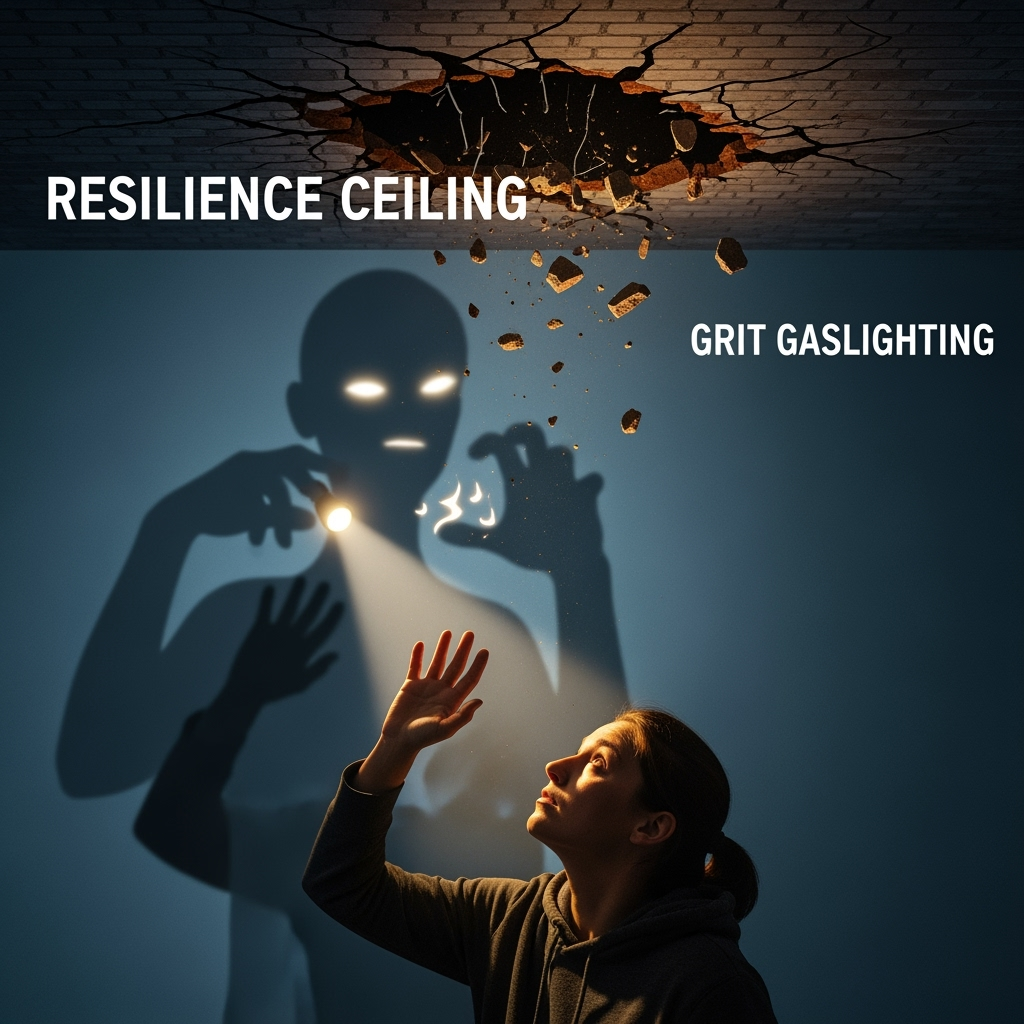
Many people experience frustration at work regularly. While most suppress these feelings and move forward, some reach a breaking point, a phenomenon described by a renowned psychologist as the ‘resilience ceiling’.
Tasha Eurich, an organizational psychologist and New York Times bestselling author, discussed this concept at the Mohammed Bin Rashid Leadership Forum on Wednesday.
The term ‘resilience ceiling,’ coined by Eurich, refers to when someone hits or exceeds their endurance limit. “It’s when we’ve been strong for so long that we can no longer maintain it; we all have a limit,” she explained.
Stay updated with the latest news by following KT on WhatsApp Channels.
Reaching the resilience ceiling often results in exhaustion and shame, Eurich noted. Exhaustion comes from hitting a breaking point, while shame stems from feeling vulnerable and mentally weak.
As a business coach, Eurich recounted a story of an executive who reached his limit. Typically calm and composed, he lost his temper upon receiving bad news, yelling at others. “That’s what hitting your resilience ceiling feels like. It feels like you’re managing until suddenly you’re not,” Eurich said.
She added, “True strength means never stopping. However, if we feel like we’re hitting our resilience ceiling or running low on resilience, it’s not a weakness. It’s a warning sign.”
Grit Gaslighting
Eurich also introduced ‘grit gaslighting,’ a concept where leaders, colleagues, or even parents and teachers, push themselves or others to work harder despite exhaustion. “We shame ourselves into pushing through, even when we’re depleted,” she explained. “That isn’t strength. It’s a warning signal.” Anyone who has been told to “toughen up” instead of being supported will recognize this feeling.
Another issue Eurich highlighted is the self-awareness gap. While many believe they know themselves well, research shows only 15% actually do. “Ninety-five per cent of leaders think they are self-aware, but the real figure is just 15%,” she said. “Leaders lacking self-awareness are 600% more likely to derail.”
This problem isn’t limited to executives. It affects everyone, from managers overestimating their communication skills to friends or family misjudging their words’ impact.
Her solution is called shatterproof leadership, which focuses on transforming challenges instead of merely enduring them. “Shatterproof leaders don’t wait for the world to break them. They view disruption as a signal and chaos as a catalyst,” she stated.