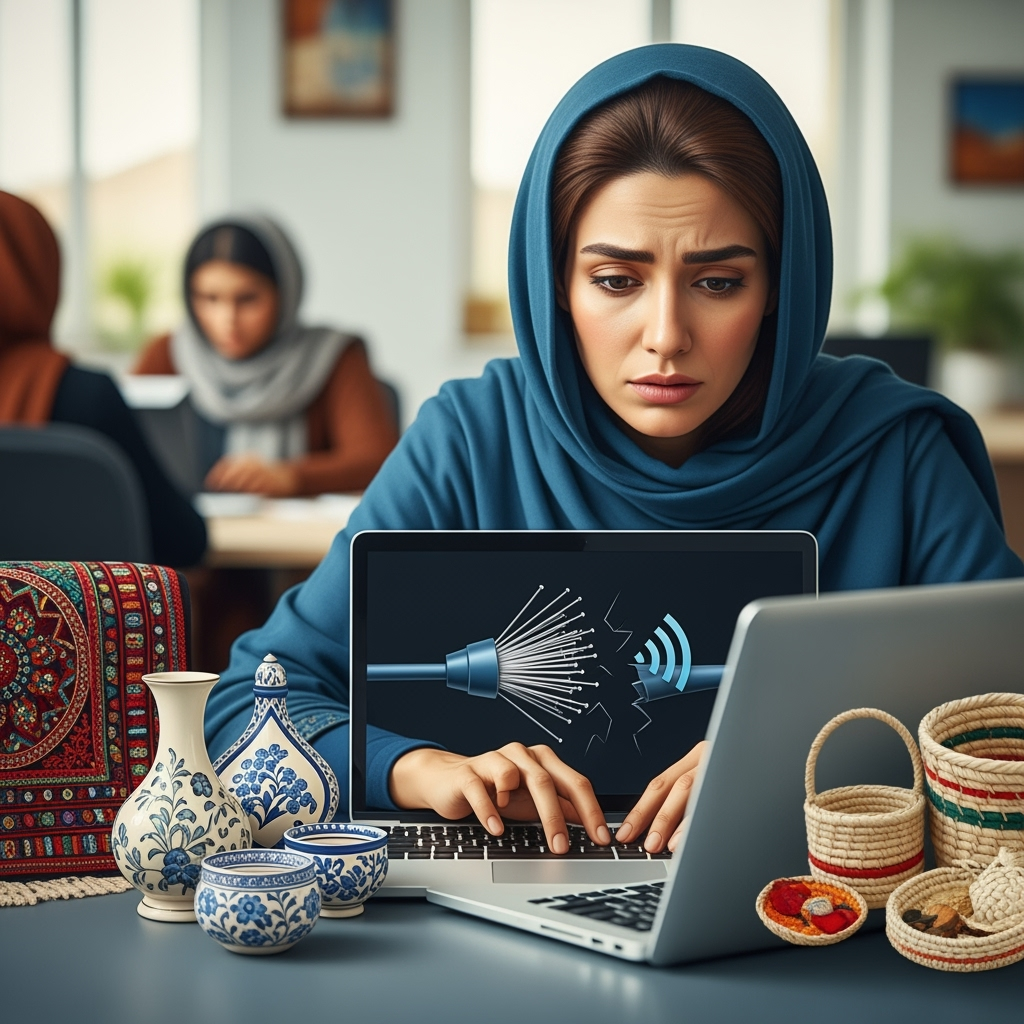
In a dimly lit Afghan home serving as a small business, women diligently embroider intricate designs on vibrant fabrics. However, their fiber-optic network in Kandahar, crucial for connecting with buyers, has gone offline.
Local authorities have confirmed a fiber-optic service ban in five northern provinces—Balkh, Kunduz, Badakhshan, Takhar, and Baghlan—citing the prevention of “immoral activities” as the reason. Residents in other provinces, including Kandahar, Herat, and Parwan, have also reported disruptions, though these are not officially acknowledged.
The network loss has left thousands of homes, businesses, and schools dependent on expensive and unreliable mobile connections.
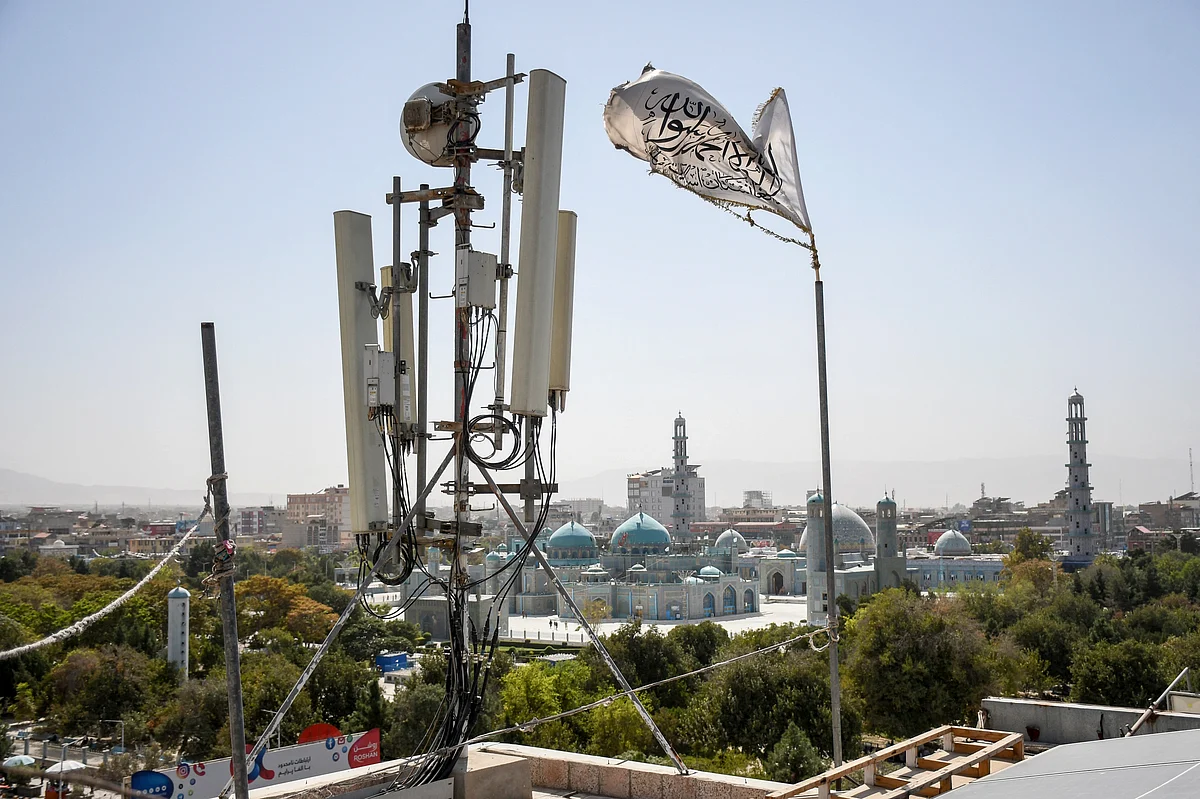
A Taliban flag flies near telecom equipment atop a building providing internet services overlooking the Hazrat-e-Ali Shrine, or Blue Mosque, in Mazar-i-Sharif on September 16, 2025, as the Taliban administration bans fiber-optic internet in Balkh province. — AFP file
This marks the first large-scale internet shutdown since the Islamist group took control in 2021, although it is not nationwide.
For Sabrinna Hayat, who leads Hayat Handicrafts with nine women supporting families by stitching firaq partug and other handmade items, the outage has tripled internet expenses.
She explained that previously they received orders from both Afghanistan and abroad, but now must repeatedly activate costly mobile internet packages to maintain customer connections.
“A complete ban on fiber-optic cable has been enforced to prevent immoral activities, and a domestic alternative is under development,” Haji Zaid, a spokesman for Balkh province’s governor, stated last week.
The Kunduz provincial media released a similar statement. The Ministry of Communications in Kabul has yet to comment.
Elsewhere in town, a tailor known only as Dawrani said her workshop, employing widows and women in need, has been severely affected, as sales and orders rely on internet connectivity.
“If I can’t even earn this small piece of bread, I will be forced to leave this country,” she lamented.
CUT OFF FROM THE WORLD
The internet has been vital for students, particularly girls barred from secondary education, but the shutdown has severed this crucial link in northern Afghanistan.
Dawrani shared that her daughters can no longer attend their online English classes.
Digital rights advocates argue that the Taliban’s rationale is more about control than morality.
Obaidullah Baheer, a Kabul-based academic, noted that the ban mirrors previous Taliban actions justified by claims of immorality, such as restrictions on women’s education, followed by unfulfilled promises of reform.
“This reflects an anti-modern stance by the Taliban, fitting the profile of those who once labeled them draconian,” he commented.
For some women, the debate feels remote.
“Through this tailoring work, I managed to put food on the table. Without internet, even that may vanish,” said Dawrani.