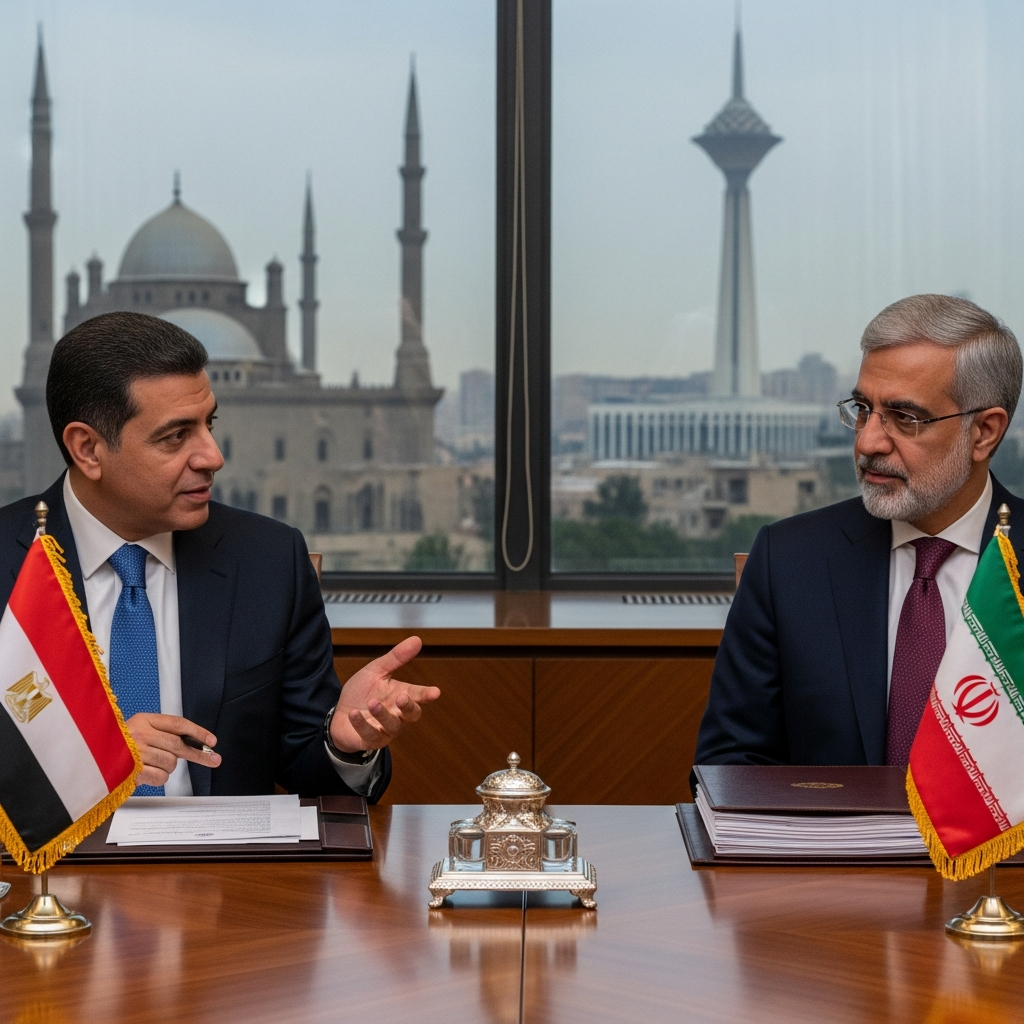
The call came as part of discussions on ways to enhance bilateral relations between Cairo and Tehran, where the ministers appreciated the pace of meetings and communications between the two sides in recent times. They affirmed their desire to continue consultations and coordination on bilateral topics of mutual interest and to enhance cooperation to achieve the common interests of both countries, according to ‘Masrawy’.
The ministers addressed developments in the Iranian nuclear file, emphasizing the need to continue efforts aimed at de-escalation, building trust, and creating conditions that provide a real opportunity for diplomatic solutions, focusing on resuming dialogue to reach a comprehensive agreement that considers the interests of all parties and contributes to achieving regional security and stability.
During the call, Abdel Aty expressed Egypt’s full support for the pivotal role played by the agency within the framework of the verification system under the Nuclear Non-Proliferation Treaty (NPT), stressing a constant commitment to maintaining the principle of the treaty’s universality and its credibility as a fundamental pillar of the global nuclear non-proliferation regime.
The Egyptian minister reiterated the desire to continue close coordination with the International Atomic Energy Agency in all fields of mutual interest. Regarding the Iranian nuclear file, Minister Badr Abdel Aty emphasized the importance of continuing international efforts aimed at de-escalation, building trust, and creating a suitable climate for ongoing cooperation, allowing a real opportunity for diplomatic solutions and resuming dialogue to reach a comprehensive and balanced agreement on the Iranian nuclear file that considers the interests of all parties and contributes to enhancing security and stability in the region.
On October 17, the Iranian Foreign Minister noted that with the expiration of UN Security Council Resolution 2231 on October 18, it will only adhere to its commitments under the Nuclear Non-Proliferation Treaty, which does not limit the scope of its nuclear program development.
On October 11, Iranian government spokesman Ali Rabiei stated that Iran had frozen the implementation of the agreement with the International Atomic Energy Agency, signed in Egypt in September, which outlined cooperation between the two sides, linking it to the resumption of the implementation of international Security Council resolutions related to sanctions against Iran. At the same time, it indicated its readiness to consider proposals for drafting a new agreement with the agency, with the Supreme National Security Council in Iran determining the form of interaction with it.
On the night of June 22, the United States launched strikes on three Iranian nuclear facilities in Natanz, Fordow, and Isfahan, after Israel began a military operation on the night of June 13, accusing Iran of executing a secret military nuclear program and targeting nuclear facilities, military leaders, and nuclear scientists.