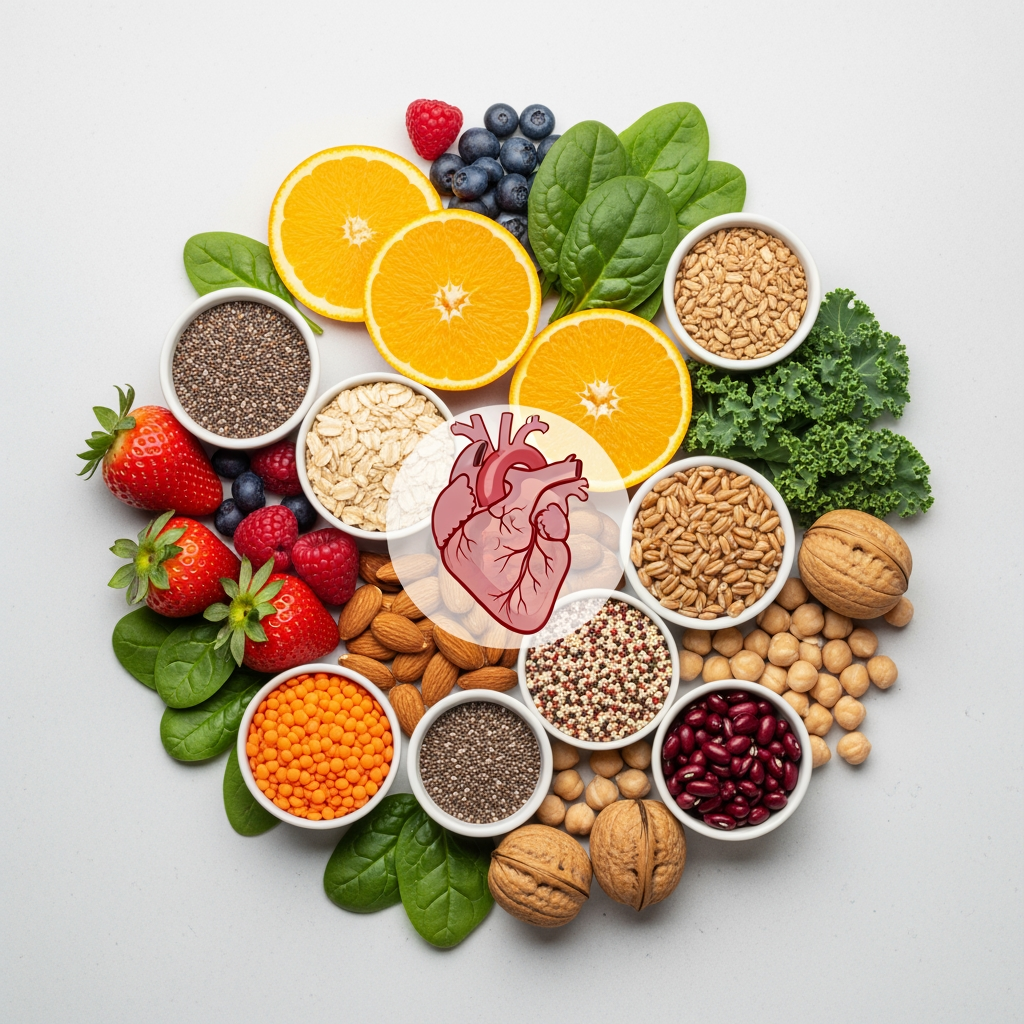
Dr. David Jenkins, a renowned professor of nutritional sciences at the University of Toronto, compares healthy eating to strategic financial investing.
“When crafting an investment portfolio, you diversify risks and rewards to maximize returns,” he explained.
This concept inspired the portfolio diet, which Dr. Jenkins introduced in the early 2000s. He discovered that a variety of cholesterol-lowering foods could significantly benefit heart health, including legumes, nuts, extra virgin olive oil, fruits, and vegetables.
The benefits are substantial: Some studies indicate the diet can lower LDL, or “bad” cholesterol, by about 30%, reducing coronary heart disease and stroke risks.
WHAT IS THE PORTFOLIO DIET?
Similar to the heart-healthy Mediterranean diet, the portfolio diet focuses on fiber, healthy fats, and plant-based proteins. Key components include nuts and seeds, legumes (especially soy-based products like tofu, tempeh, and soy milk), and sources of monounsaturated fats like extra virgin olive oil, canola oil, and avocados.
The diet also emphasizes foods rich in viscous fiber, found in plants like oats, barley, okra, eggplant, and chia seeds, as well as in fiber supplements like psyllium. Viscous fiber forms a gel-like substance in the intestines, binding to cholesterol to reduce its absorption, explained Andrea Glenn, an assistant professor of nutrition at New York University.
Phytosterols, naturally occurring plant compounds, are also crucial to the portfolio diet. These compounds, resembling cholesterol, compete with it for absorption, thus reducing the body’s cholesterol absorption, noted Penny Kris-Etherton, a professor emerita of nutrition at Pennsylvania State University. Phytosterols are found in nuts, fruits, vegetables, vegetable oils, and whole grains like wheat germ and rice bran.
The diet advises against consuming animal products high in saturated fats, like butter and red or processed meats, as they can increase LDL levels and the risk of high blood pressure, heart attack, and stroke. Conversely, monounsaturated fats help lower LDL.
WHAT DOES RESEARCH SUGGEST?
In 2003, Dr. Jenkins and his team published a small trial testing the portfolio diet, which showed it reduced cholesterol nearly as effectively as statins.
The study involved 46 adults with high cholesterol, divided into three groups: one on a low-saturated fat diet, another on the same diet with a statin, and a third following the portfolio diet. After a month, the portfolio diet group reduced LDL by about 29%, nearly matching the statin group’s 31% reduction. The low-saturated fat group saw an 8% reduction.
While the results were promising, Dr. Jenkins noted the study’s short duration limited insight into long-term benefits, and it only included individuals with high cholesterol.
Subsequent research supported the diet’s cholesterol-lowering potential, but most studies were short-term.
In 2023, Dr. Glenn and her team conducted a larger, longer study on 210,000 health professionals without cardiovascular disease. Over 30 years, they found those closely following the portfolio diet had a 14% lower risk of developing cardiovascular diseases than those who didn’t.
The study identified associations between the diet and reduced cardiovascular risks, not causation, and relied on self-reported data, which can be inaccurate. However, its scale and duration provided robust evidence of its benefits.
IS THE PORTFOLIO DIET EASY TO FOLLOW?
The portfolio diet offers daily targets: 50 grams of plant proteins, 45 grams of nuts and seeds, 45 grams of high-monounsaturated fats, 20 grams of viscous fiber, and 2 grams of plant sterols. Precise tracking isn’t necessary to reap cholesterol-lowering benefits.
Even partial adherence is beneficial, Dr. Glenn noted. For example, half an avocado meets the fat target, while a meal of broccoli, sweet potato, and brown rice covers up to 40% of the fiber goal.
Meeting the phytosterol target is challenging, said Hyunju Kim, an assistant professor of epidemiology at the University of Washington. A typical Western diet provides only 15% of the recommended amount, but phytosterol supplements can help, though food sources are preferable, Dr. Jenkins advised.
The portfolio diet’s flexibility aids sustainability, Dr. Kris-Etherton remarked, contrasting it with more restrictive diets like keto and paleo.
Prioritizing heart-healthy, plant-based foods limits space for cholesterol-raising foods high in saturated fats, Dr. Jenkins emphasized.