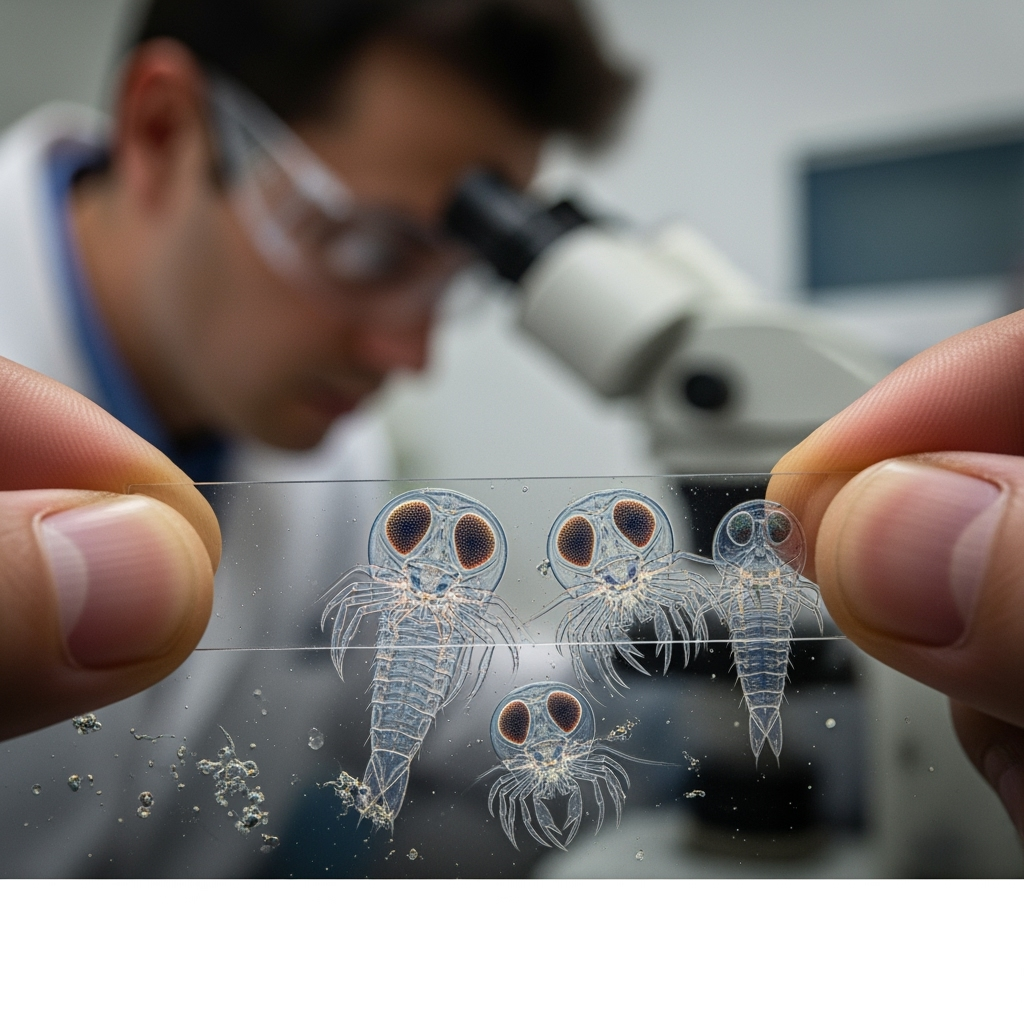
Scientists discovered microscopic facettotectan crustaceans in the 1880s, but they have yet to link the larva to the adult organism. This has led to speculation that, like their larger fictional extraterrestrial counterparts, facettotectan creatures might undergo a parasitic phase. Niklas Dreyer, a genome scientist at the Natural History Museum in Denmark, and his colleagues collected over 3,000 of these tiny creatures that were swimming on the ocean’s surface near Japan and built a genetic family tree based on the ribosomal RNA protein templates of the crustaceans.
Ecologist James Bernot from the University of Connecticut states, “We were finally able to confirm, in the field of big data science, that they are indeed related to barnacles, but not closely related to any other parasitic barnacle species.” While facettotectans are not as closely related to parasitic barnacles as expected, their hook-like structure and response to growth hormone strongly suggest that endoparasitism is their lifestyle — they live inside a living host, according to Science Alert. However, instead of doing this in their juvenile stage like xenomorphs, facettotectans live freely as juveniles and infect unknown host species as adults.
While we usually consider barnacles as small, harmless, and stationary lumps that like to stick to rocks and whales, some species prefer to attach from the inside. “They deceive their host, making it believe it is pregnant, and it starts nurturing this mass growing outside its body, but this mass is part of the barnacle and not actually the host’s eggs. Even if it infects a male crab, it becomes feminized and begins to behave like a pregnant female crab,” he adds.
Previous research revealed that when crustaceans are exposed to crustacean molting hormone, they emerge from their outer structures as unprotected worm-like creatures, just like those barnacles that parasitize crabs. Researchers believe this is a case of convergent evolution, where evolutionary selection pressures create the same physical or behavioral traits in species that are not direct descendants.