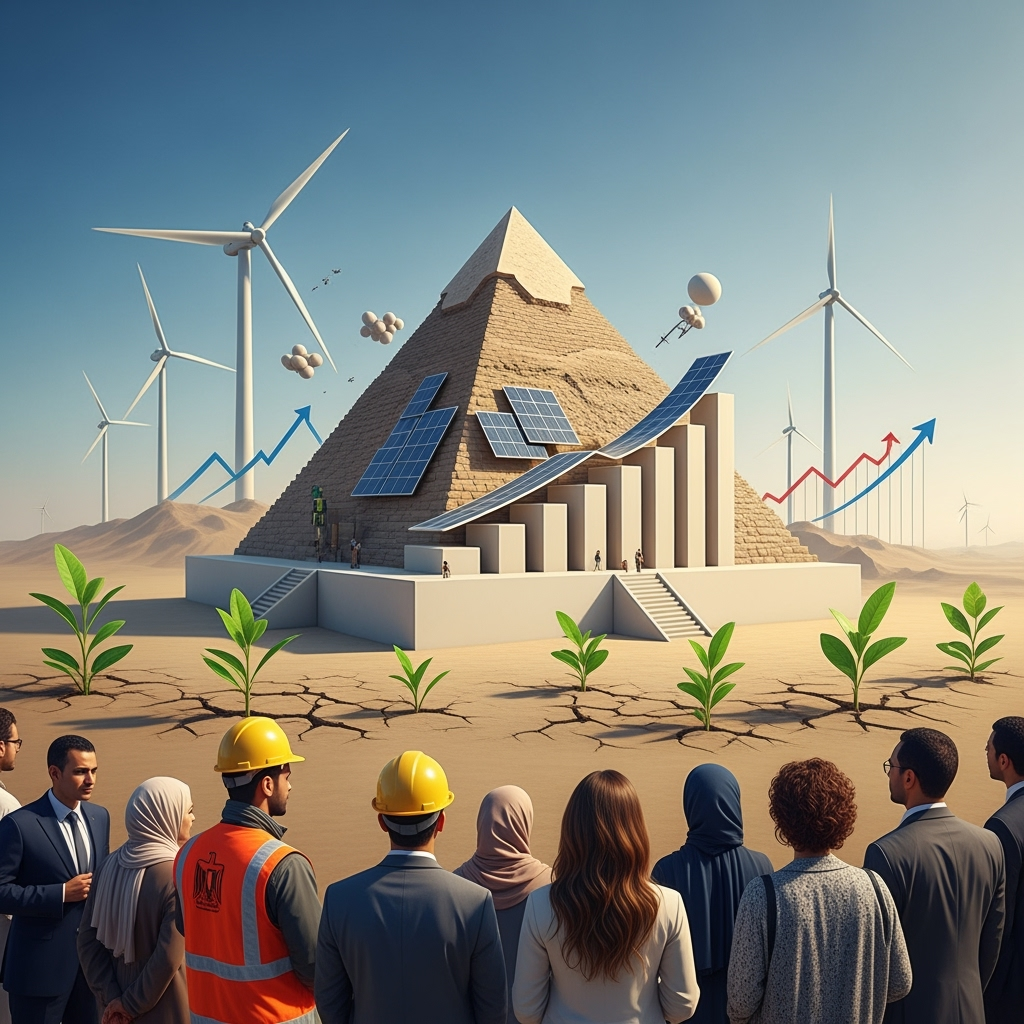
During his meeting with editors-in-chief of newspapers and news websites, he pointed out that the Egyptian government aims to achieve complete economic sustainability within five years, according to Egyptian media. Madbouly explained that the current priority is to reduce the trade deficit, noting that Egyptian exports are gradually improving, while nearly 80% of imports are concentrated in raw materials and essential medical supplies for industry and export. He added that increasing the supply of goods is the most prominent factor in controlling and reducing prices, emphasizing that Egyptian factories have returned to full production capacity, after previously operating at about 30%, including fertilizer factories.
Last Thursday, the International Monetary Fund urged Egypt to “accelerate the implementation of structural reforms to unlock growth potential, provide high-quality jobs to keep pace with population growth, and enhance the economy’s ability to withstand external shocks.” Kozak also indicated that “the first review of the ‘Resilience and Sustainability’ program will be conducted alongside the sixth review of the extended facility, and disbursements will only be made after reform requirements are met, with two key measures being evaluated at a total value of approximately $274 million.”
Last week, Egypt introduced a new “economic narrative” valid until 2030, focusing on five main tradable sectors as part of its plan to enhance development. It is noteworthy that since the flotation of the pound, Egypt has adopted a policy aimed at increasing its foreign currency reserves, which have risen by more than $10 billion, according to the Central Bank of Egypt. The influx of funds from the “Ras Al-Hikma” deal, the IMF loan, and agreements with the World Bank and the International Finance Corporation have also helped restore balance, turning a net foreign assets deficit in the banking sector from a negative $29 billion to a surplus of $14.3 billion.