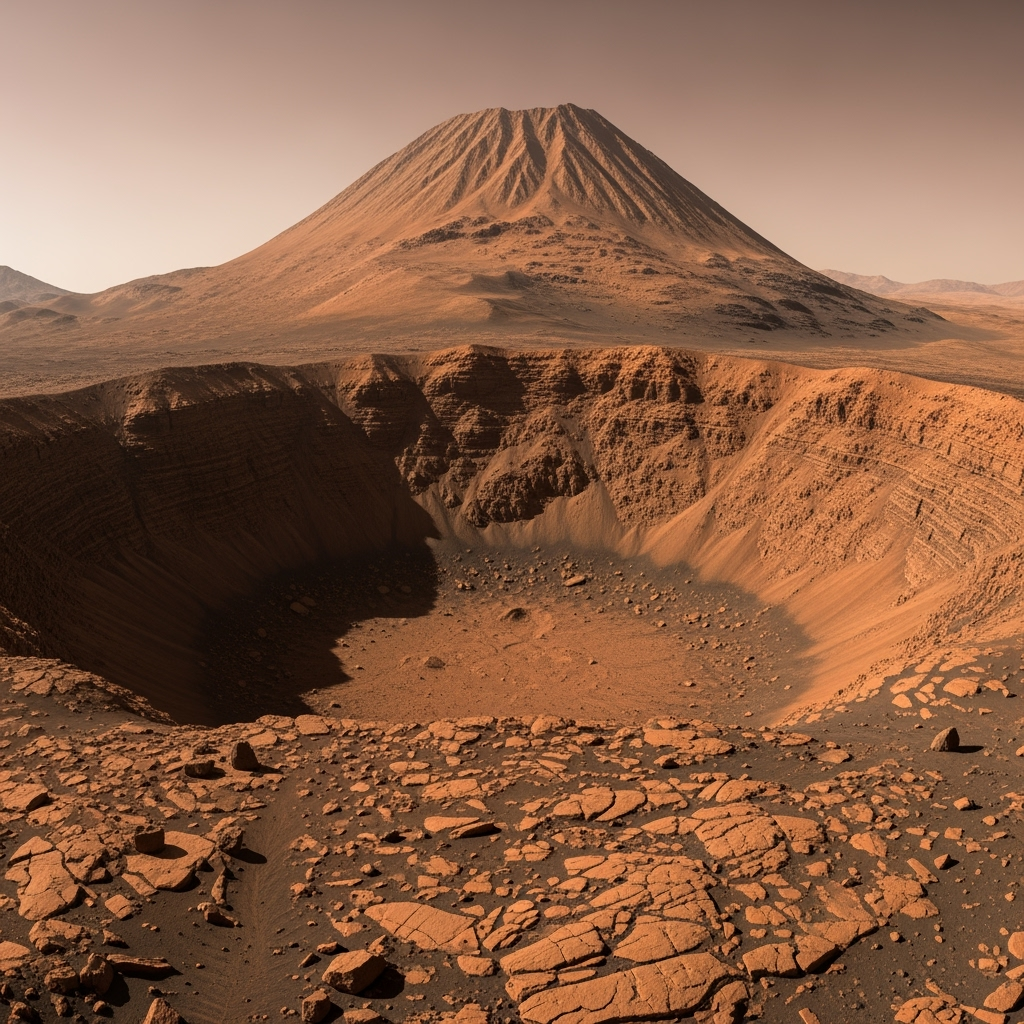
The “Gale” crater is a large crater on the surface of Mars, and it is a key site for studying the planet’s geological and climatic history, in addition to the potential for previous or current life. The abundance of craters on this planet is due to its thin atmosphere, which provides less protection from collisions compared to Earth.
A newspaper revealed that the small formation found by the rover, which is no more than a few centimeters wide, is remarkably similar to the branching coral reefs found in Earth’s oceans or to a piece of volcanic fulgurites. Fulgurites are minerals fused by the heat of a lightning strike when it hits the ground. Mars may no longer have water, but it is rich in two elements: dust and wind.
Its massive sandstorms can obscure the entire planet for consecutive months, which is radically different from Earth’s climate. These storms erode and sculpt the surface with enormous erosive force. Among other similar formations discovered by Curiosity are strange slender towers and a rock resembling a flower.
Other bizarre formations include a bubbly rock resembling frog eggs, a rock resembling a shrunken face, and a rock resembling a bone. The various rock formations might make you wish you could collect rocks on Mars.