On Wednesday, India’s government pledged to bring to justice those responsible for the deadly car explosion in the capital, along with their collaborators and sponsors.
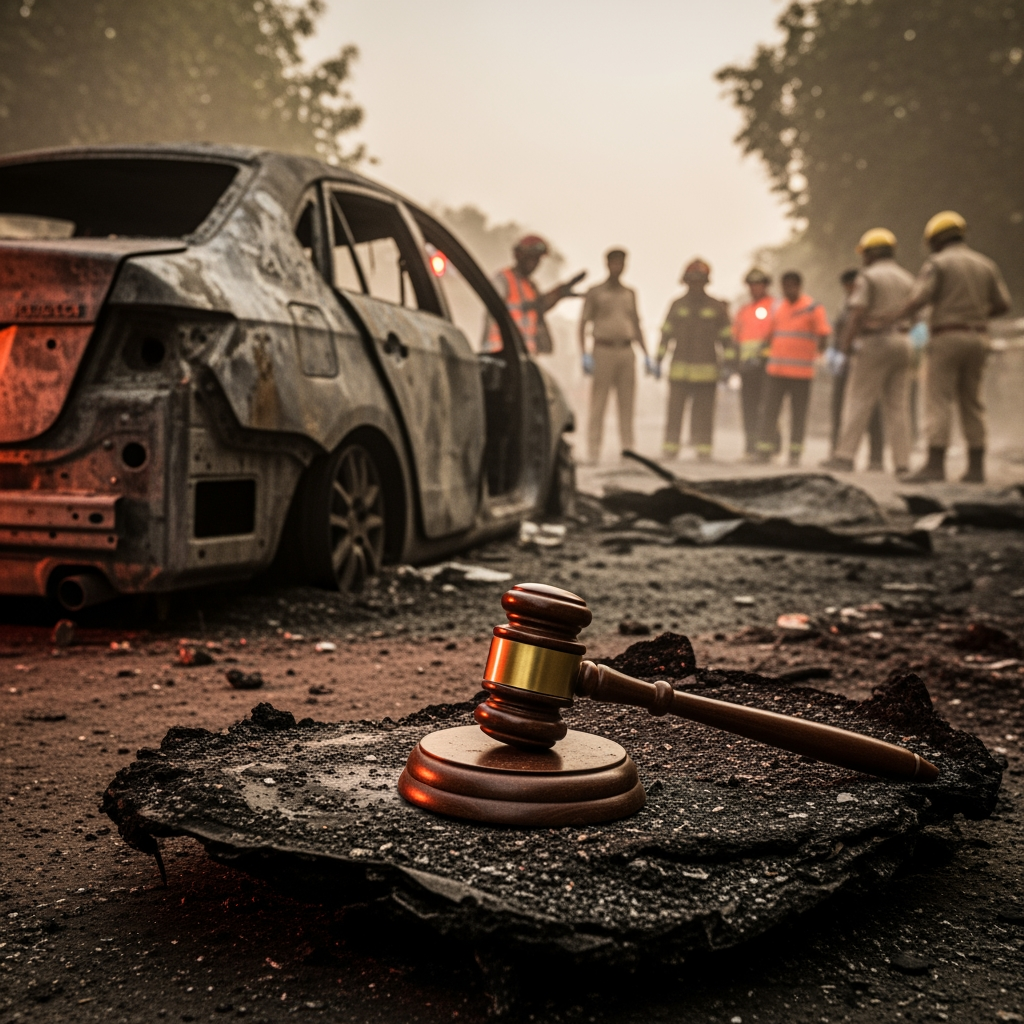
The explosion on Monday resulted in the deaths of at least 12 people and injured 30 others, as reported by hospital officials.
This incident was the most severe security breach since April 22, when clashes with Pakistan followed the killing of 26 mainly Hindu civilians at Pahalgam, a tourist spot in Indian-administered Kashmir.
“A heinous terror act was committed by anti-national forces through a car blast near the Red Fort,” the cabinet stated after a meeting led by Prime Minister Narendra Modi.
This marked the first time India officially recognized the blast as a terrorist attack.
The iconic Red Fort, located in the bustling Old Delhi area, is a famous landmark and site of the prime minister’s Independence Day address.
The cabinet expressed “deep sorrow” over the loss of life.
While it did not specify the attackers, it reaffirmed India’s “zero tolerance for terrorism in all forms.”
It denounced the attack as a “despicable and cowardly act resulting in the loss of innocent lives.”
Car Explosion in Traffic
Ritu Saxena, chief medical officer of Delhi’s LNJP hospital, confirmed to AFP on Wednesday that “12 people have died and more than 30 are injured.”
Witnesses told AFP the car exploded amid traffic, engulfing people in flames.
The explosion occurred hours after Indian police arrested a group and seized explosives and assault rifles.
Police linked the men to Jaish-e-Mohammed, a Pakistan-based extremist group, and Ansar Ghazwat-ul-Hind, a Kashmir branch of Al-Qaeda.
Both are designated terrorist organizations in India.
The government called for an urgent investigation to ensure “the perpetrators, collaborators, and sponsors are swiftly identified and brought to justice.”
The National Investigation Agency of India is leading the probe into the blast.
The government reiterated its “unwavering commitment to protect the lives” of its citizens and its ongoing dedication to national security.
It also expressed gratitude to foreign governments for their support messages.
Following the April attack in Pahalgam, Indian authorities quickly accused Pakistan of supporting the attackers, allegations denied by Islamabad.
That incident led to clashes between the nuclear-armed rivals in May, resulting in over 70 deaths from missile, drone, and artillery fire before a ceasefire was achieved.
On Tuesday, after a suicide bombing in Islamabad killed 12 people, Pakistan’s Prime Minister Shehbaz Sharif accused “Indian-backed terrorist proxies.”
India dismissed these “groundless and unfounded” claims from what it called an “evidently irrational Pakistani leadership.”
The Islamabad attack was claimed by a faction of the Pakistani Taliban.