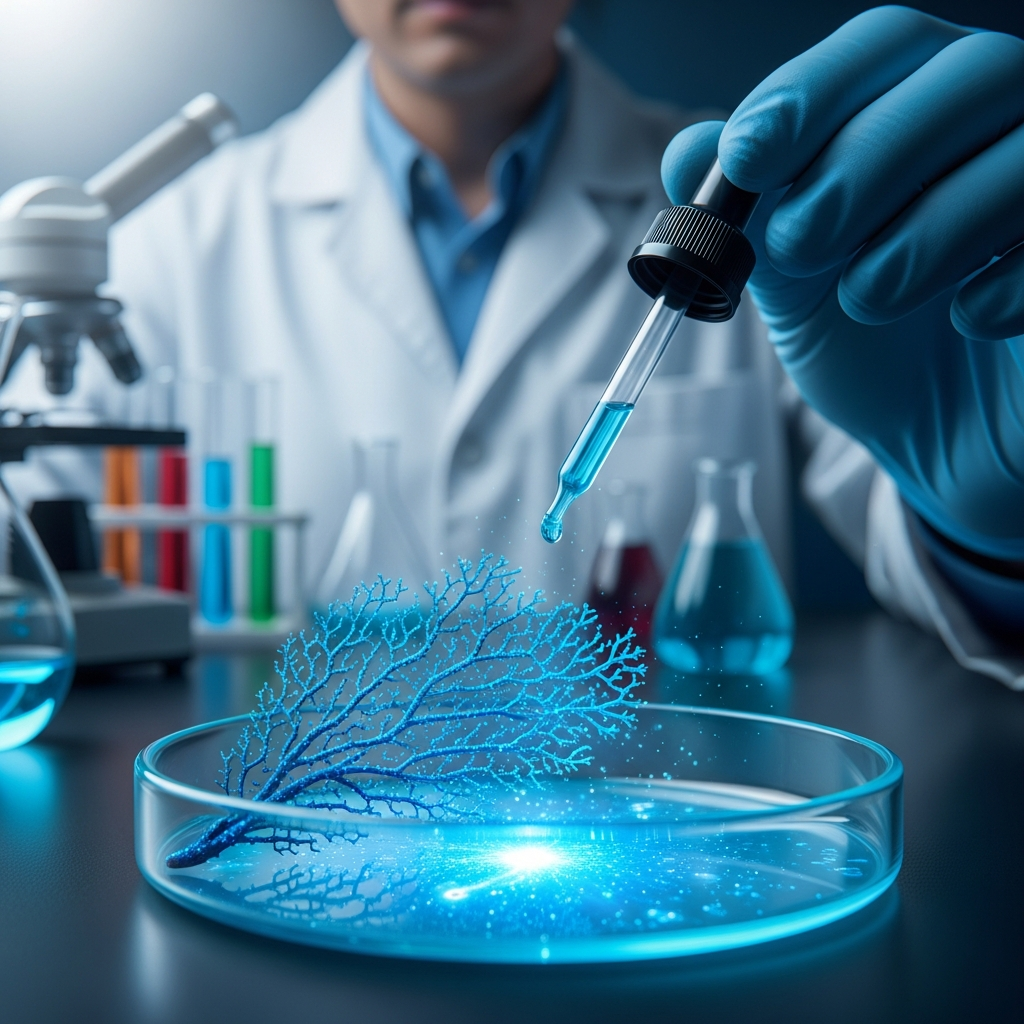
A report from the institute indicated that “in their search for new and effective cancer treatments, scientists are increasingly turning to the global ocean as an inexhaustible reservoir of unique and complex materials.” Researchers from the Pacific Institute of Bioorganic Chemistry, Far Eastern Branch of the Russian Academy of Sciences, have made another discovery in this field. They found that polysaccharides from the marine bacterium “Kopetia marina” can selectively stimulate the self-destruction process in acute myeloid leukemia cells, a type of blood cancer.
According to the research study, scientists detailed how the capsular polysaccharide works and discovered that its mechanism involves two independent pathways. In both cases, the polysaccharide stimulates the process of “apoptosis” in cancer cells. The function of any material significantly depends on its structure, and researchers clearly demonstrated this by removing sulfate groups from the polysaccharide molecule. As a result of this modification, the polysaccharide completely lost its anti-cancer capability, as it no longer stimulated apoptosis, induced tumor necrosis factor-alpha (TNF-α) production, or caused oxidative stress. Therefore, sulfate groups are essential for the biological effects of the polysaccharide.
The study mentioned that “this discovery undoubtedly represents a significant step forward, but we are still far from developing a new drug… Nevertheless, this work once again highlights the immense potential of marine microorganisms as a source of unique compounds for future medicines. Scientists will now determine the effectiveness of this mechanism in other types of cancer cells and will confirm the material’s efficacy and safety in animal studies.”