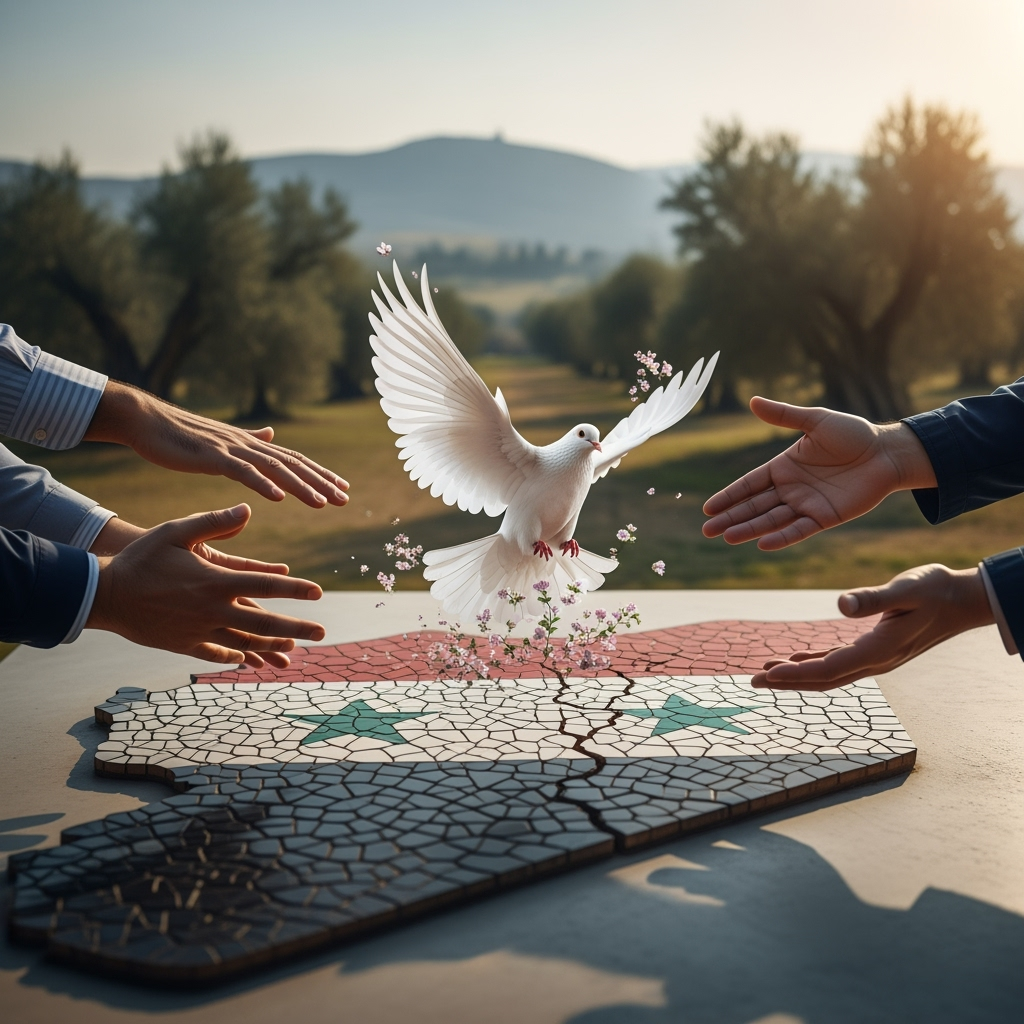
President Ahmed Al Sharaa of Syria stated that the nation’s reunification post-civil war “should not involve bloodshed,” dismissing the idea of division while accusing Israel of interference in the south.
These comments, broadcast by state television on Sunday, coincided with protests in Syria’s Sweida province, where hundreds gathered to condemn last month’s sectarian violence and demand self-determination for the Druze-majority region.
“Our future battle to unify Syria must avoid bloodshed and military force… it should be based on understanding, as the nation is weary of warfare,” Sharaa expressed during a dialogue with leaders from Idlib province and other senior figures.
“I don’t perceive a threat of disintegration for Syria. There are those who wish to divide Syria and form cantons… this is impossible,” he stated, according to a meeting recording shared by state media.
“Certain factions aim to seize power through regional support, including Israel and others, but this is highly challenging and unfeasible,” he remarked.
At the Sweida protest, some participants waved the Israeli flag, calling for the region’s self-determination.
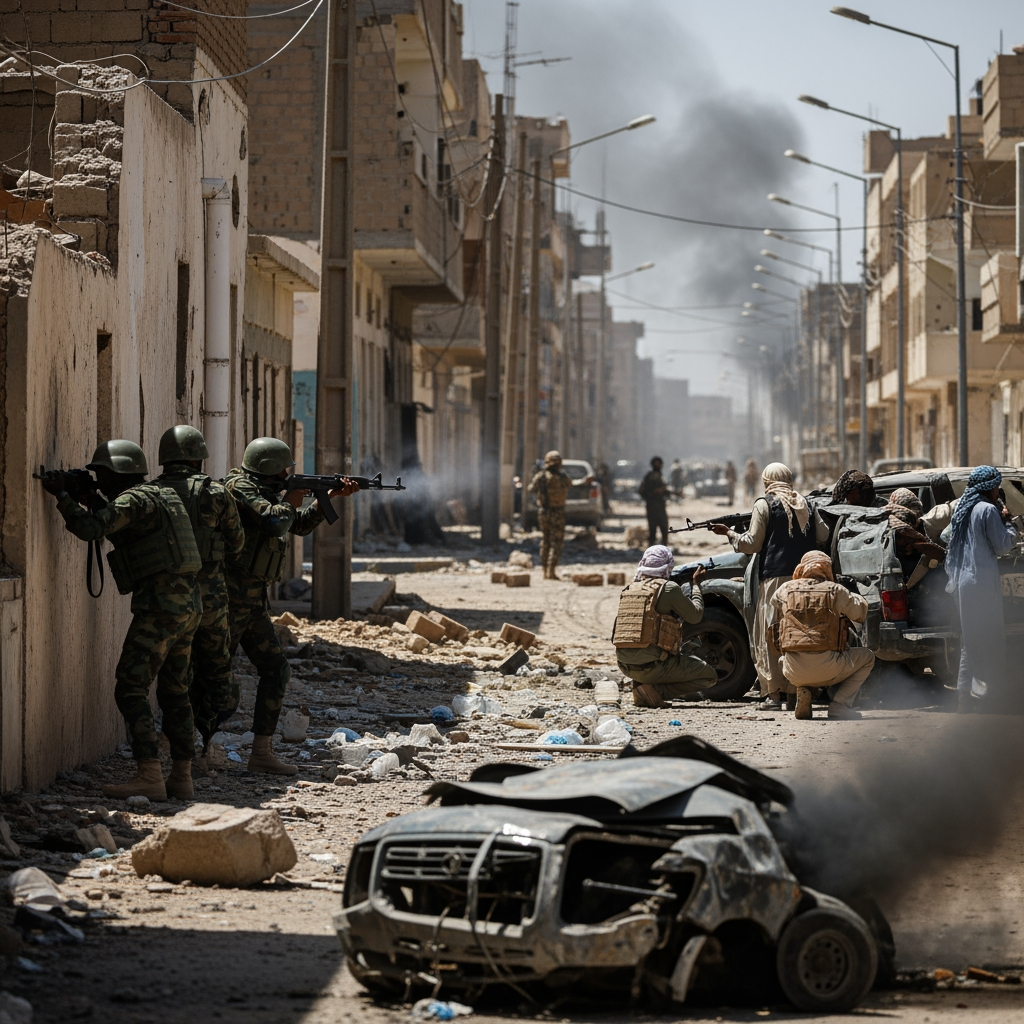
The violence in Sweida, which began on July 13, started with clashes between Druze fighters and Sunni Bedouins but quickly involved government forces, with Israeli airstrikes reported.
Syrian officials claimed their intervention aimed to halt the conflict, although witnesses, Druze groups, and the Syrian Observatory for Human Rights accused them of siding with the Bedouins and committing atrocities against the Druze, including summary executions.
Sharaa acknowledged that Sweida “experienced numerous violations from all parties… even some Syrian security forces and army members committed violations.”
The government must “hold all violators accountable,” regardless of their affiliations, he asserted.
“Israel is directly interfering in Sweida, attempting to weaken the state or justify meddling in the south,” Sharaa stated.
Israel, which has a Druze community, claims it acts to protect this minority and enforce demilitarization in southern Syria.
Syria’s new leadership is negotiating with a semi-autonomous Kurdish administration controlling the north and northeast, advocating for decentralization, which Damascus opposes.
The implementation of a March 10 agreement to integrate Kurdish civil and military institutions into the state is stalled due to disagreements.
“We are currently discussing how to implement” the agreement, Sharaa explained.