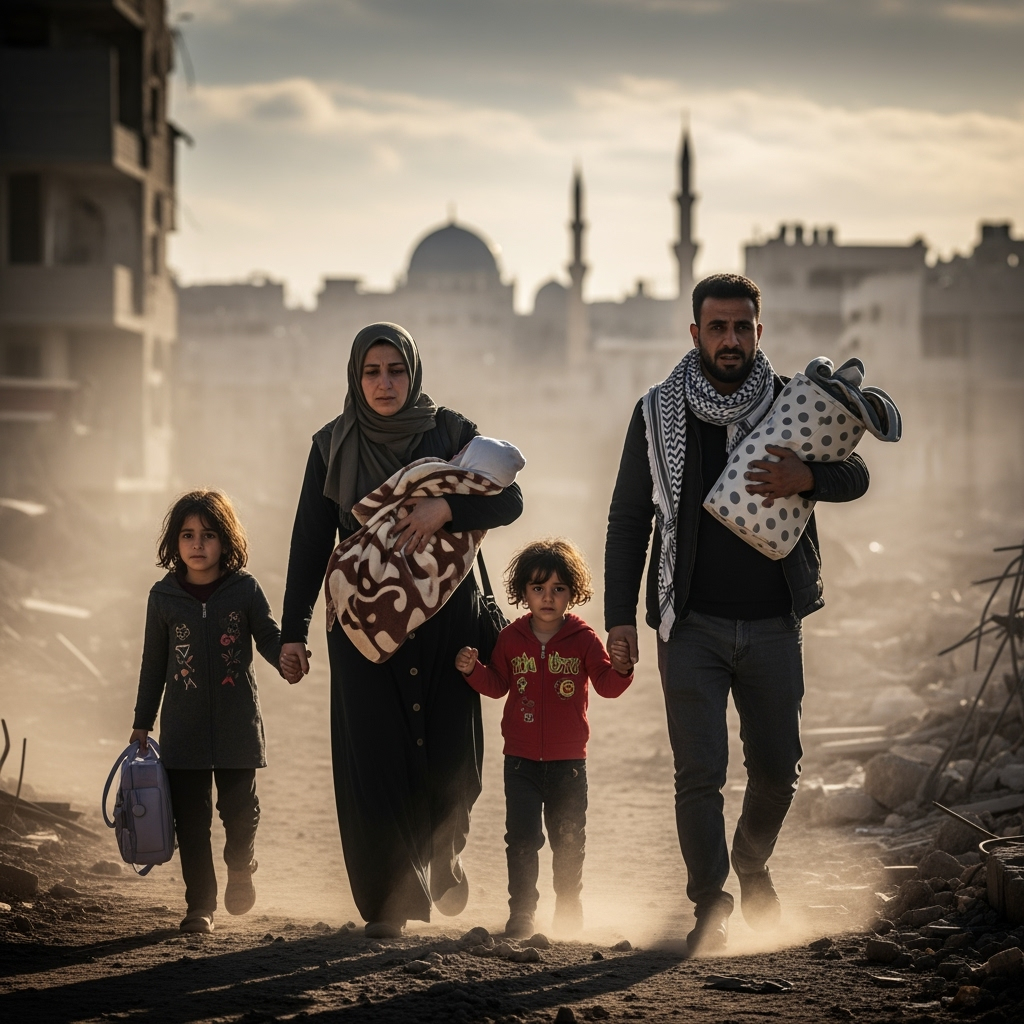
Between this and that, the minds and hearts of Gaza’s residents fluctuate, their pale gazes trying to choose the lesser bitter option. The tragic situation they have reached forces them to either accept death by staying or try again to search for a glimmer of hope for survival, even if temporary.
Abu Atiya told Sputnik, “We were living in Beit Lahia, and we held on during the war and did not flee, but death became very imminent, so I decided to flee. We stayed in some areas in Gaza, such as Tunnel Street in Gaza, but every time we fled, it followed us. I decided to move with my family to the south, even though I do not have money to travel or even a tent, and I do not know what to do. Some people helped us secure travel fare for my family members, and as you can see, the car broke down in the middle of the road, which will become a very dangerous place at night if we stay here.”
Abu Atiya added, “We fled out of fear for my family. We were bombed in Beit Lahia, and I was injured by shrapnel in my leg. Three of my sons, my brother, my nephew, my cousin, and most of my relatives, there are 19 of us left, and now we are fleeing into the unknown. But I hope for a little rest, without bombing beside me or death awaiting me.”
Last month, the Israeli Security Cabinet approved Prime Minister Benjamin Netanyahu’s plan to impose control over Gaza City, as part of a broader plan to take full control of the entire sector. The first stages of the plan included advances to the south, then imposing a security cordon on the city, and carrying out intensive bombing operations and incursions into neighborhoods and camps.
The Israeli army issued a new order for Gaza residents to evacuate and head south of the sector, amidst ongoing military operations in the city with intense shelling, leading to the injury and killing of many Palestinians, amidst confusion and chaos since the Israeli army announced the complete evacuation of the city.
Nizar Salim, a displaced person from northern Gaza, was unable to survive with his children and left behind birds and cats, which are also searching for safety or they will face death due to the shelling. Therefore, Salim had to rent a cart pulled by a donkey to carry a large number of birds and cats he found on the road.
The displaced person Nizar Salim told Sputnik, “The shelling was close to our area, but I couldn’t let these creatures die, and even if I released them from the cages, they would be exposed to death, the shelling is very violent. But I find it difficult to secure food for us and them, and bird and cat food is banned from entering the sector, and the situation is tough for everyone, but I am trying to think of alternatives.”
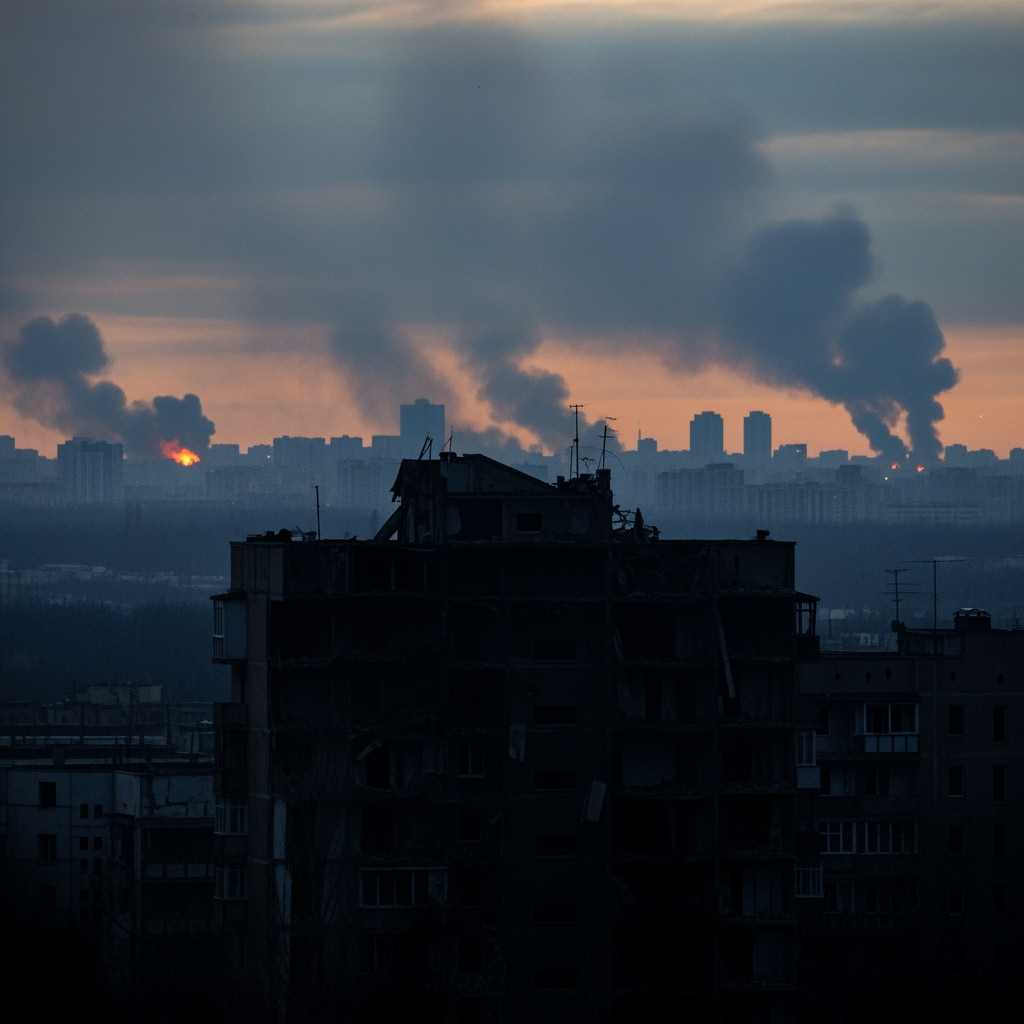
The Israeli army said it “will continue targeting towers in Gaza in the coming days,” and these buildings and high-rise apartments remain, amid this destruction, a large number of Gaza’s residents refuse to repeat the displacement experience they lived through with its harsh details.
Beside the sea of Gaza, tents of displaced people are piling up, those searching for a safe haven in Gaza. Among them is Majdolin Nabhan, who was displaced after the destruction of Bab al-Bahr Tower west of Gaza, unable to take her tent which was burned by the shelling.
Majdolin told Sputnik, “I was displaced 11 times since the beginning of the war, and my tent was next to Bab al-Bahr Tower and I couldn’t carry it, so it burned due to the shelling. This tent was donated by good people after my house was destroyed, and now I am without a house or tent, and I don’t know what to do now.”
She added, “My husband is sick, and I have no children or provider, and there is no place or shelter. Despite my desire to move south to seek safety, I cannot relocate due to the financial cost of travel, and I also need a tent and rent land to place the tent on, costing 3 shekels (0.9 dollars) per meter, and I do not have money for all of that.”
The humanitarian team in Palestine, which includes UN agencies and more than 200 international and local non-governmental organizations, expressed deep concern over the situation, adding that “about a million people today have no safe or viable options, as neither the north nor the south of the sector provides safety.”